Muñoz-Blat Irene, Pérez-Moraga Raúl, Castillo-Marco Nerea, Cordero Teresa, Ochando Ana, Ortega-Sanchís Sheila, Parras-Moltó Marcos, Monfort-Ortiz Rogelio, Satorres-Perez Elena, Novillo Blanca, Perales Alfredo, Gormley Matthew, Granados-Aparici Sofia, Noguera Rosa, Roson Beatriz, Fisher Susan J, Simón Carlos, Garrido-Gómez Tamara
Carlos Simon Foundation, Valencia, Spain.
INCLIVA Health Research Institute, Valencia, Spain.
Nat Med. 2025 Feb;31(2):502-513. doi: 10.1038/s41591-024-03407-7. Epub 2025 Jan 7.
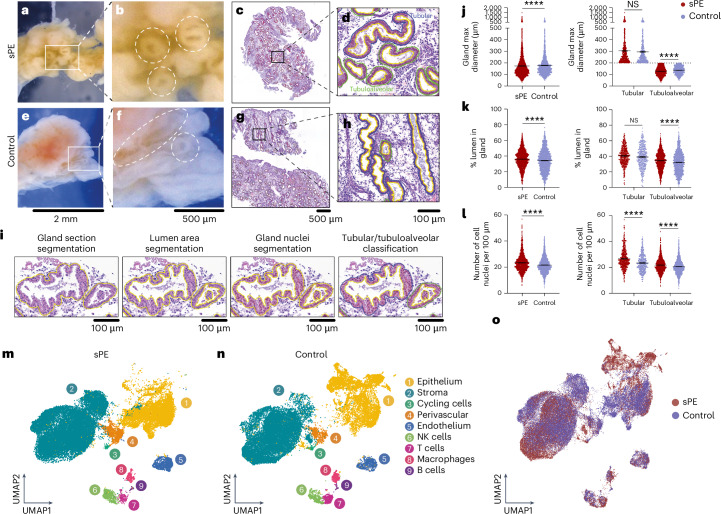
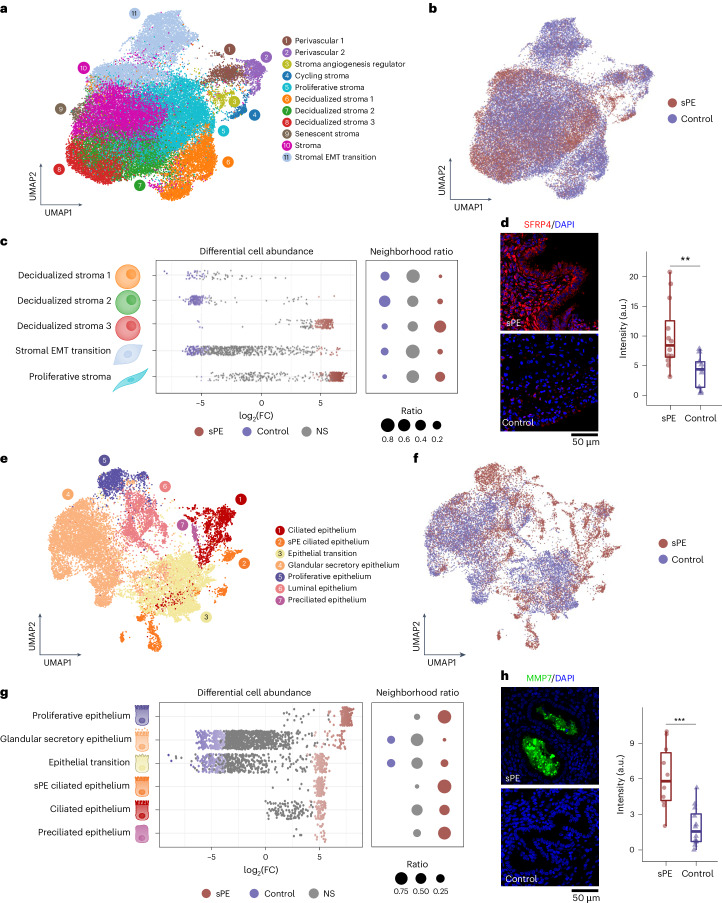
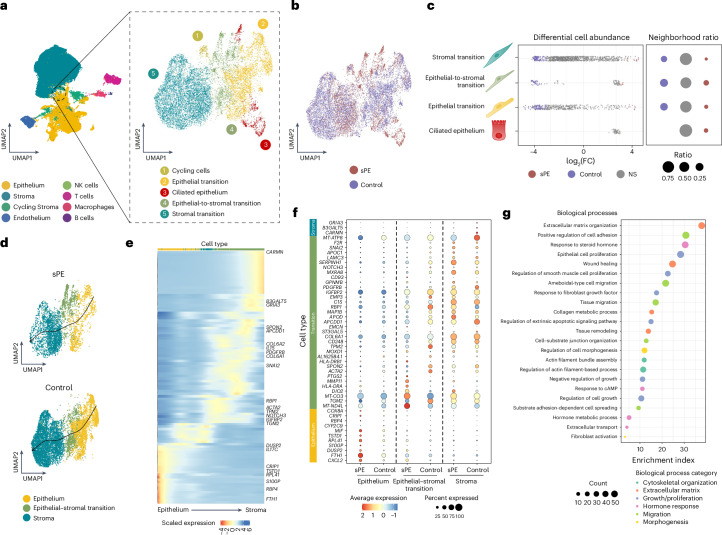
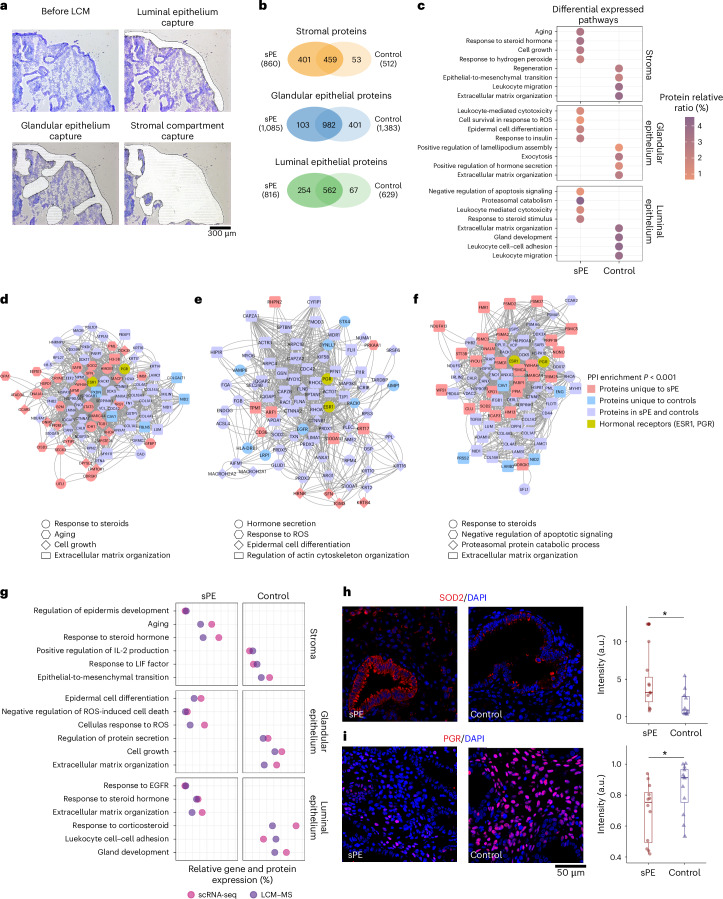
Endometrial decidualization resistance (DR) is implicated in various gynecological and obstetric conditions. Here, using a multi-omic strategy, we unraveled the cellular and molecular characteristics of DR in patients who have suffered severe preeclampsia (sPE). Morphological analysis unveiled significant glandular anatomical abnormalities, confirmed histologically and quantified by the digitization of hematoxylin and eosin-stained tissue sections. Single-cell RNA sequencing (scRNA-seq) of endometrial samples from patients with sPE (n = 11) and controls (n = 12) revealed sPE-associated shifts in cell composition, manifesting as a stromal mosaic state characterized by proliferative stromal cells (MMP11 and SFRP4) alongside IGFBP1 decidualized cells, with concurrent epithelial mosaicism and a dearth of epithelial-stromal transition associated with decidualization. Cell-cell communication network mapping underscored aberrant crosstalk among specific cell types, implicating crucial pathways such as endoglin, WNT and SPP1. Spatial transcriptomics in a replication cohort validated DR-associated features. Laser capture microdissection/mass spectrometry in a second replication cohort corroborated several scRNA-seq findings, notably the absence of stromal to epithelial transition at a pathway level, indicating a disrupted response to steroid hormones, particularly estrogens. These insights shed light on potential molecular mechanisms underpinning DR pathogenesis in the context of sPE.
子宫内膜蜕膜化抵抗(DR)与多种妇产科疾病有关。在此,我们采用多组学策略,揭示了重度子痫前期(sPE)患者DR的细胞和分子特征。形态学分析揭示了明显的腺体解剖学异常,经苏木精和伊红染色组织切片数字化进行组织学确认和量化。对sPE患者(n = 11)和对照组(n = 12)的子宫内膜样本进行单细胞RNA测序(scRNA-seq),发现sPE相关的细胞组成变化,表现为一种基质镶嵌状态,其特征是增殖性基质细胞(MMP11和SFRP4)与IGFBP1蜕膜化细胞并存,同时伴有上皮镶嵌现象以及与蜕膜化相关的上皮-基质转化缺乏。细胞间通讯网络图谱强调了特定细胞类型之间的异常串扰,涉及诸如内皮糖蛋白、WNT和SPP1等关键途径。复制队列中的空间转录组学验证了与DR相关的特征。第二个复制队列中的激光捕获显微切割/质谱分析证实了scRNA-seq的多项发现,特别是在途径水平上不存在基质向上皮的转化,表明对类固醇激素,尤其是雌激素的反应受到破坏。这些见解揭示了sPE背景下DR发病机制的潜在分子机制。