Center for Bioinformatics and Computational Biology, Houston Methodist Research Institute, Houston, TX, USA.
Center for Cardiovascular Regeneration, Houston Methodist Research Institute, Houston, TX, USA.
Nat Biotechnol. 2024 Jan;42(1):99-108. doi: 10.1038/s41587-023-01728-5. Epub 2023 Apr 3.
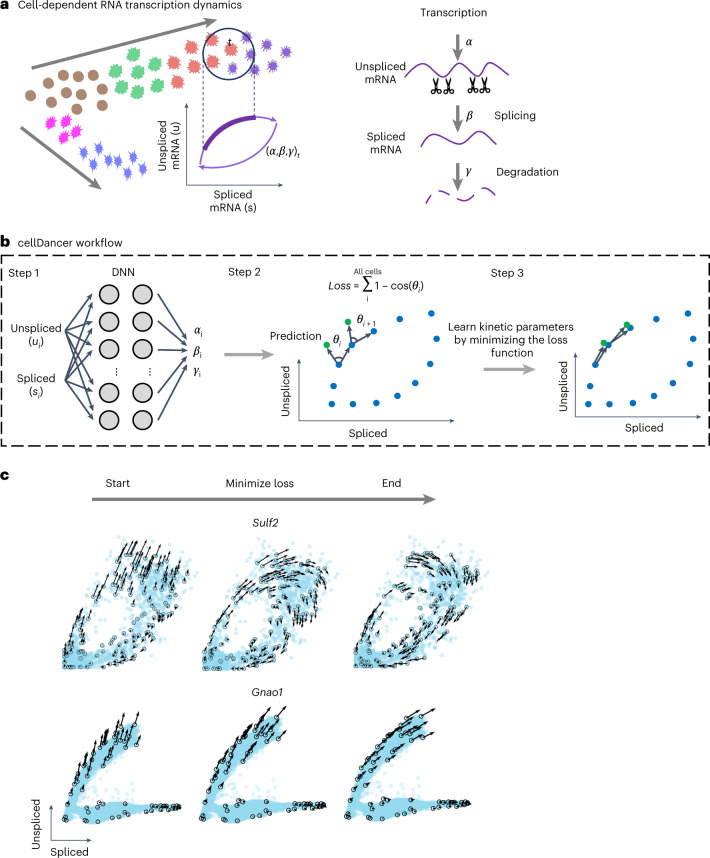
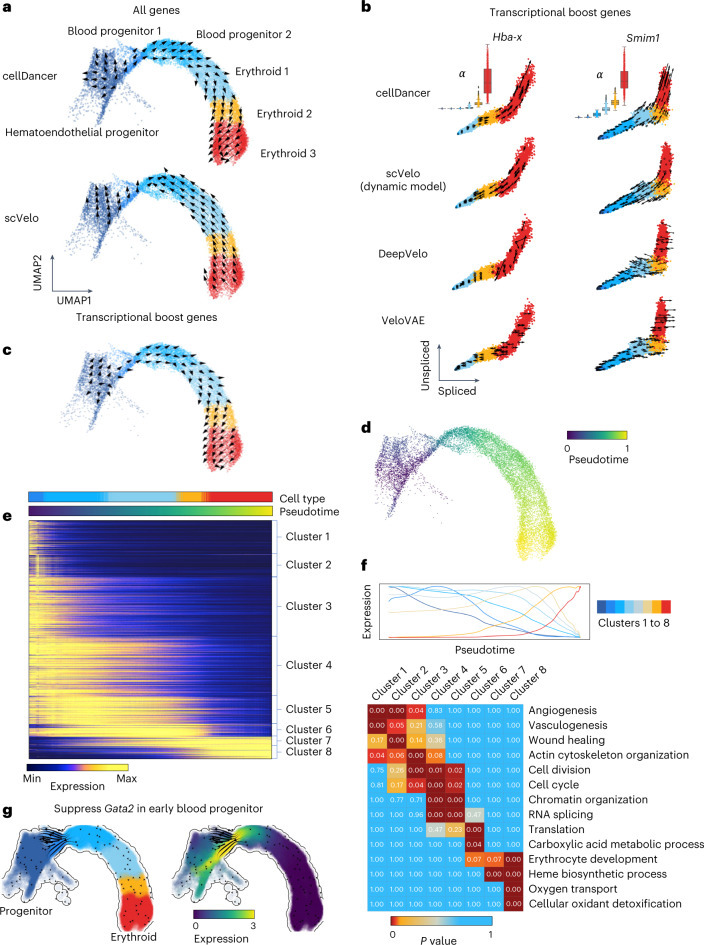
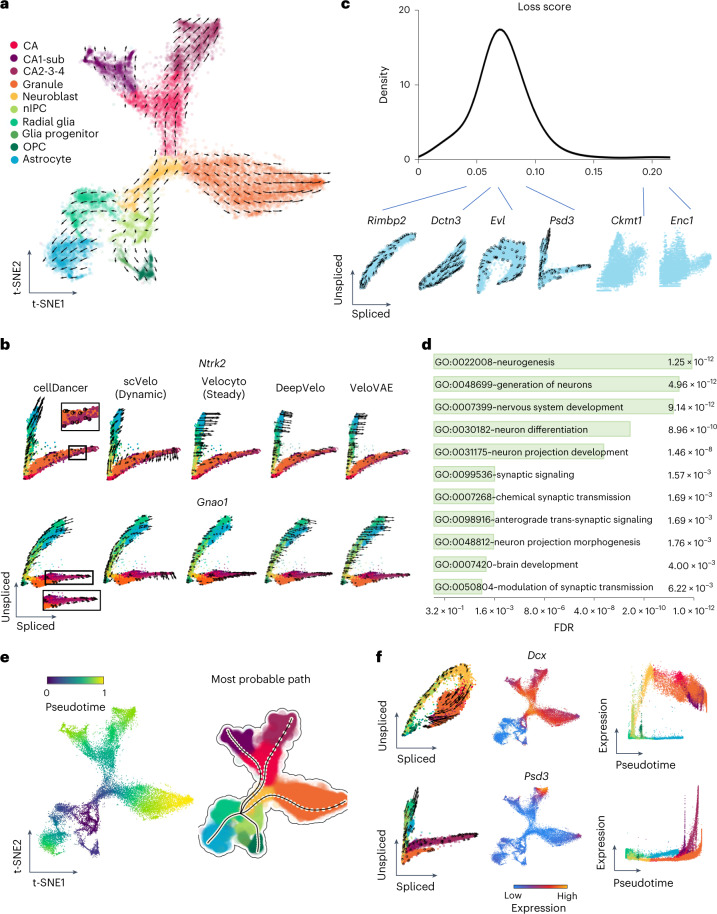
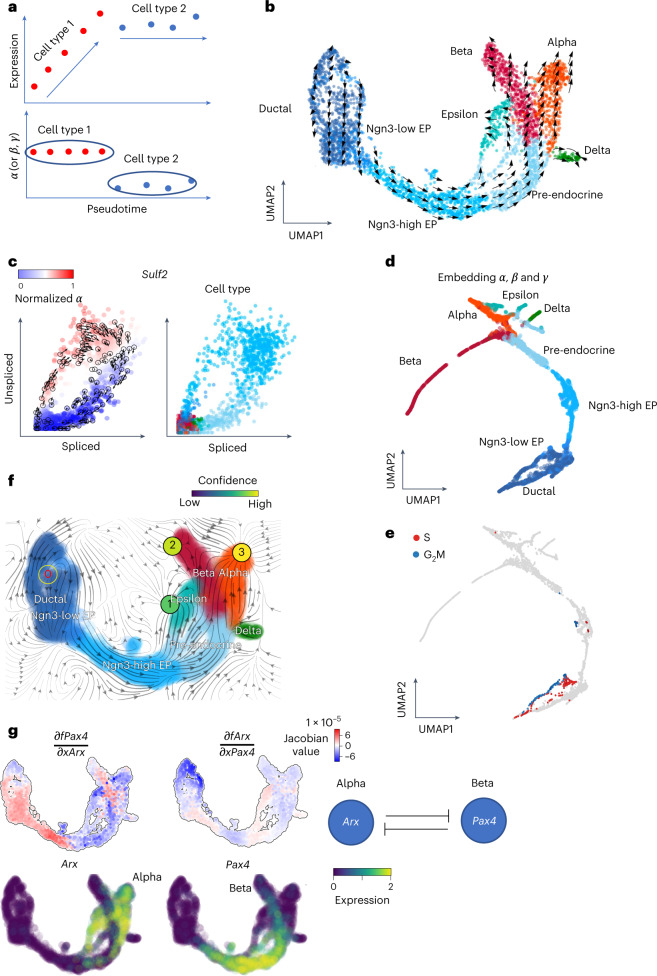
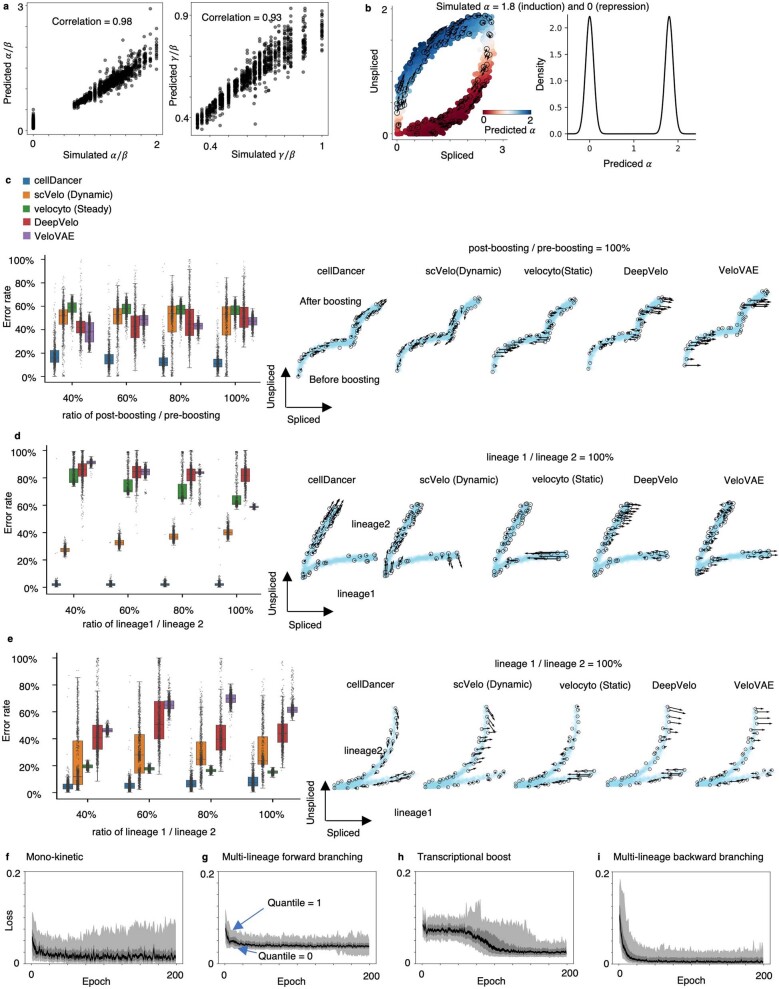
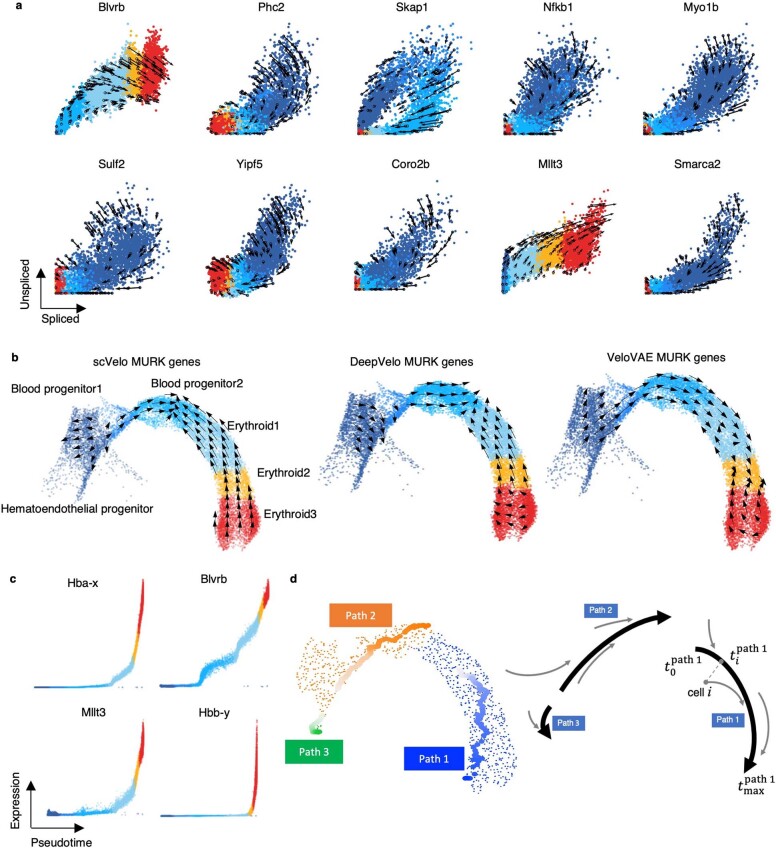
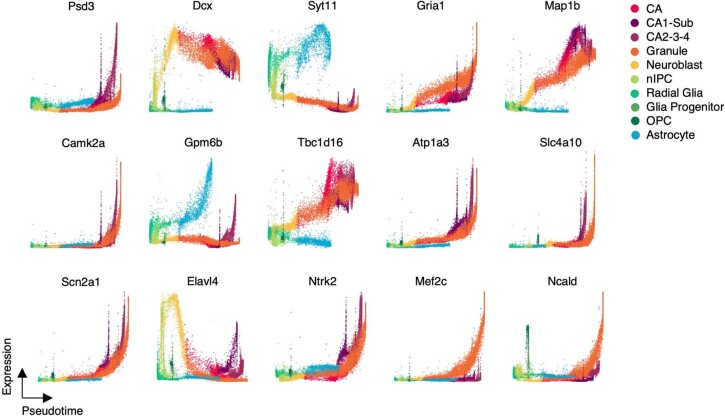
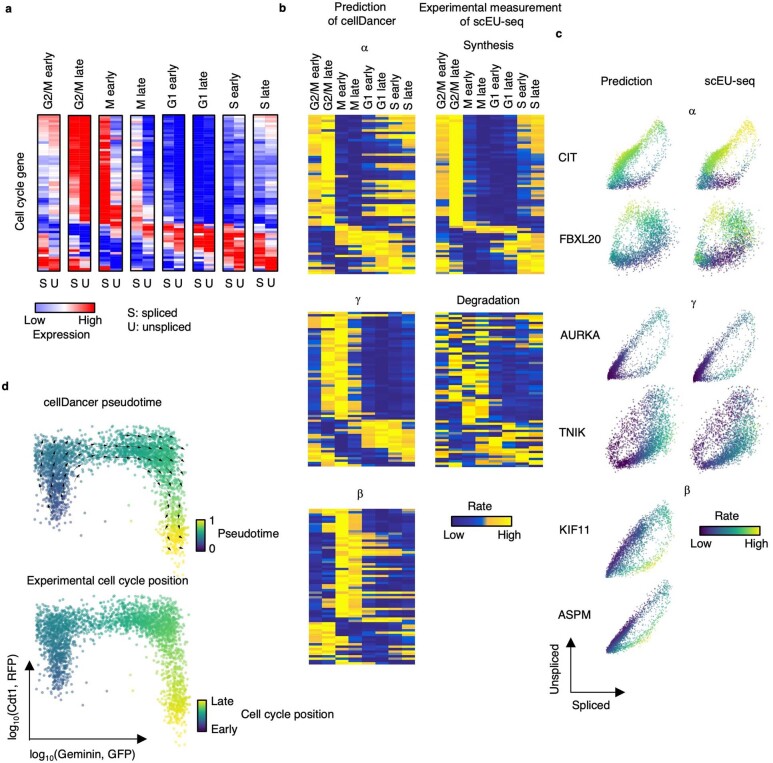
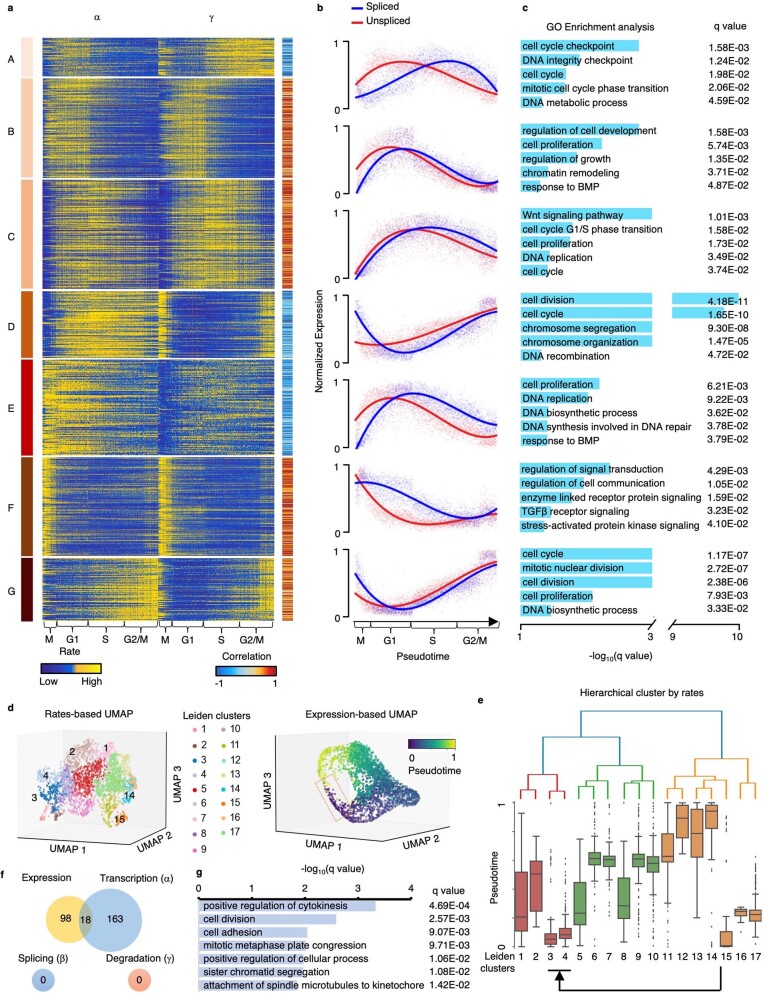
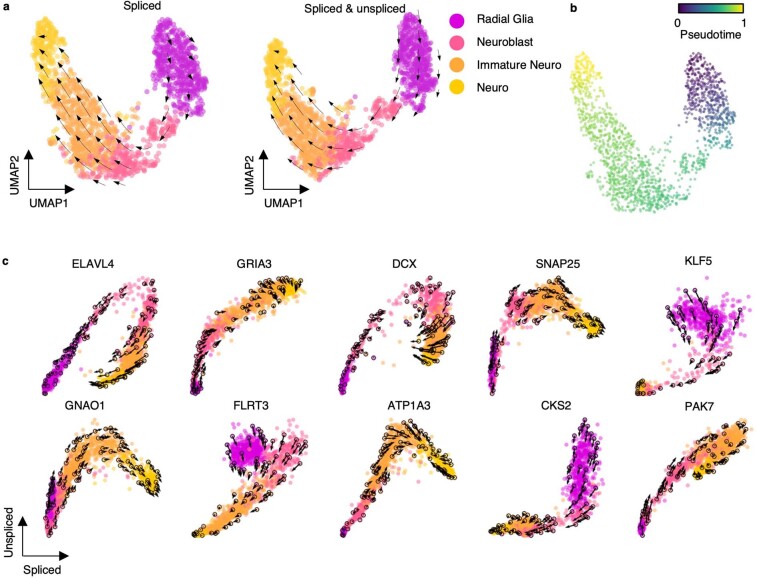
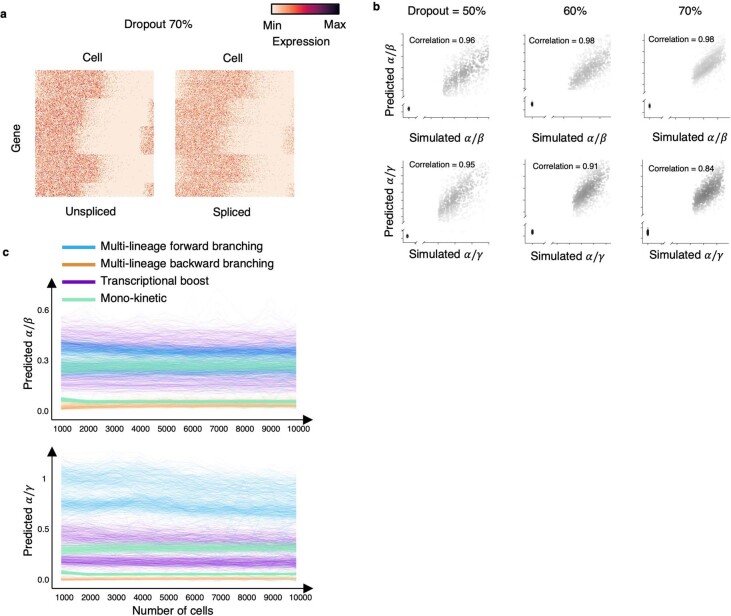
RNA velocity provides an approach for inferring cellular state transitions from single-cell RNA sequencing (scRNA-seq) data. Conventional RNA velocity models infer universal kinetics from all cells in an scRNA-seq experiment, resulting in unpredictable performance in experiments with multi-stage and/or multi-lineage transition of cell states where the assumption of the same kinetic rates for all cells no longer holds. Here we present cellDancer, a scalable deep neural network that locally infers velocity for each cell from its neighbors and then relays a series of local velocities to provide single-cell resolution inference of velocity kinetics. In the simulation benchmark, cellDancer shows robust performance in multiple kinetic regimes, high dropout ratio datasets and sparse datasets. We show that cellDancer overcomes the limitations of existing RNA velocity models in modeling erythroid maturation and hippocampus development. Moreover, cellDancer provides cell-specific predictions of transcription, splicing and degradation rates, which we identify as potential indicators of cell fate in the mouse pancreas.
RNA 速度为从单细胞 RNA 测序 (scRNA-seq) 数据推断细胞状态转变提供了一种方法。传统的 RNA 速度模型从 scRNA-seq 实验中的所有细胞中推断出通用的动力学,因此在细胞状态具有多阶段和/或多谱系转变的实验中表现不可预测,因为不再假设所有细胞的动力学速率相同。在这里,我们提出了 cellDancer,这是一种可扩展的深度神经网络,它可以从其邻居那里为每个细胞局部推断速度,然后传递一系列局部速度,以提供对速度动力学的单细胞分辨率推断。在模拟基准中,cellDancer 在多种动力学状态、高辍学率数据集和稀疏数据集上表现出稳健的性能。我们表明,cellDancer 克服了现有 RNA 速度模型在建模红细胞成熟和海马体发育方面的局限性。此外,cellDancer 提供了转录、剪接和降解速率的细胞特异性预测,我们将其确定为小鼠胰腺中细胞命运的潜在指标。