Yang Renjie, Zou Yujie, Li Liang, Liu Weiyin Vivian, Liu Changsheng, Wen Zhi, Zha Yunfei
Department of Radiology, Renmin Hospital of Wuhan University, No. 238 Jiefang Road, Wuchang District, Wuhan, 430060, China.
Reproductive Medicine Center, Renmin Hospital of Wuhan University, Wuhan, 430060, China.
Sci Rep. 2025 Jan 7;15(1):1241. doi: 10.1038/s41598-024-84812-3.
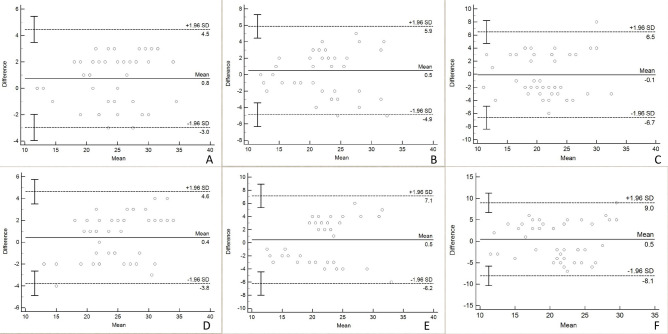
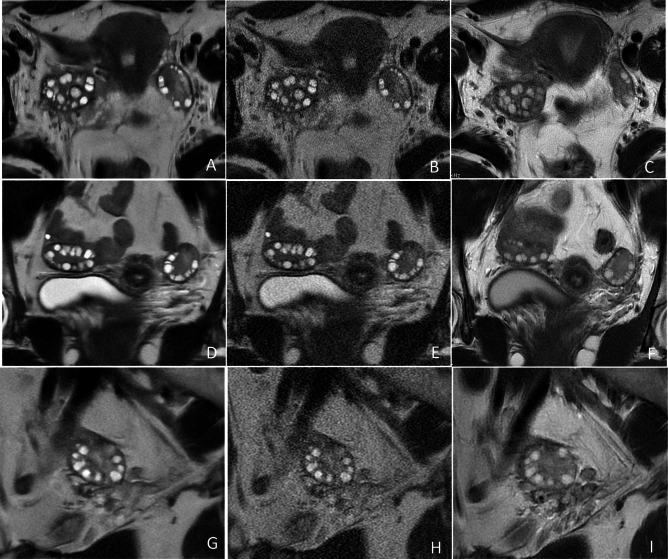
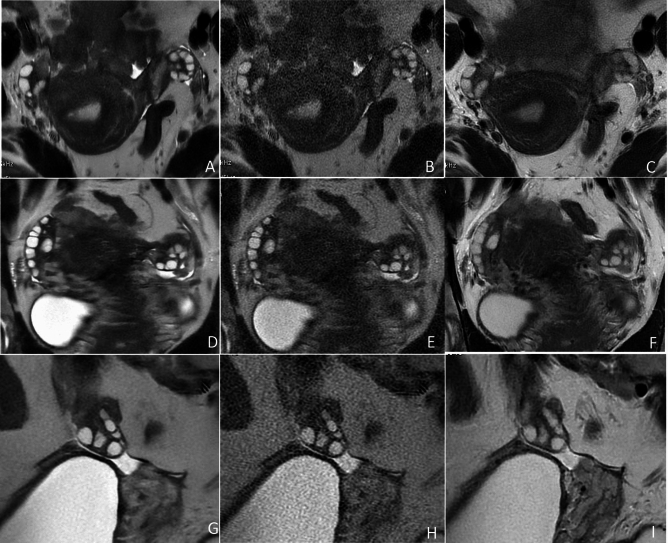
Follicle count, a pivotal metric in the adjunct diagnosis of polycystic ovary syndrome (PCOS), is often underestimated when assessed via transvaginal ultrasonography compared to MRI. Nevertheless, the repeatability of follicle counting using traditional MR images is still compromised by motion artifacts or inadequate spatial resolution. In this prospective study involving 22 PCOS patients, we employed periodically rotated overlapping parallel lines with enhanced reconstruction (PROPELLER) and single-shot fast spin-echo (SSFSE) T2-weighted sequences to suppress motion artifacts in high-resolution ovarian MRI. Additionally, deep learning (DL) reconstruction was utilized to compensate noise in SSFSE imaging. We compared the performance of DL reconstruction SSFSE (SSFSE-DL) images with conventional reconstruction SSFSE (SSFSE-C) and PROPELLER images in follicle detection, employing qualitative indices (blurring artifacts, subjective noise, and conspicuity of follicles) and the repeatability of follicle number per ovary (FNPO) assessment. Despite similar subjective noise between SSFSE-DL and PROPELLER as assessed by one observer, SSFSE-DL images outperformed SSFSE-C and PROPELLER images across all three qualitative indices, resulting in enhanced repeatability in FNPO assessment. These results highlighted the potential of DL reconstruction high-resolution SSFSE imaging as a more dependable method for identifying polycystic ovary, thus facilitating more accurate diagnosis of PCOS in future clinical practices.
卵泡计数是多囊卵巢综合征(PCOS)辅助诊断中的一个关键指标,与磁共振成像(MRI)相比,经阴道超声检查评估时往往会被低估。然而,使用传统磁共振图像进行卵泡计数的可重复性仍然受到运动伪影或空间分辨率不足的影响。在这项涉及22名PCOS患者的前瞻性研究中,我们采用了周期性旋转重叠平行线增强重建(PROPELLER)和单次激发快速自旋回波(SSFSE)T2加权序列来抑制高分辨率卵巢MRI中的运动伪影。此外,利用深度学习(DL)重建来补偿SSFSE成像中的噪声。我们在卵泡检测中比较了DL重建SSFSE(SSFSE-DL)图像与传统重建SSFSE(SSFSE-C)和PROPELLER图像的性能,采用定性指标(模糊伪影、主观噪声和卵泡的清晰度)以及每个卵巢卵泡数(FNPO)评估的可重复性。尽管一名观察者评估的SSFSE-DL和PROPELLER之间主观噪声相似,但SSFSE-DL图像在所有三个定性指标上均优于SSFSE-C和PROPELLER图像,从而提高了FNPO评估的可重复性。这些结果突出了DL重建高分辨率SSFSE成像作为一种更可靠的方法来识别多囊卵巢的潜力,从而在未来临床实践中有助于更准确地诊断PCOS。