Saez-Calveras Nil, Vaquer-Alicea Jaime, White Charles L, Tak Yogesh, Cosentino Stephanie, Faust Phyllis L, Louis Elan D, Diamond Marc I
Center for Alzheimer's and Neurodegenerative Diseases, Peter O'Donnell Jr. Brain Institute, University of Texas Southwestern Medical Center, Dallas, TX, USA.
Department of Neurology, Peter O'Donnell Jr. Brain Institute, University of Texas Southwestern Medical Center, Dallas, TX, USA.
Acta Neuropathol. 2025 Jan 8;149(1):6. doi: 10.1007/s00401-024-02843-6.
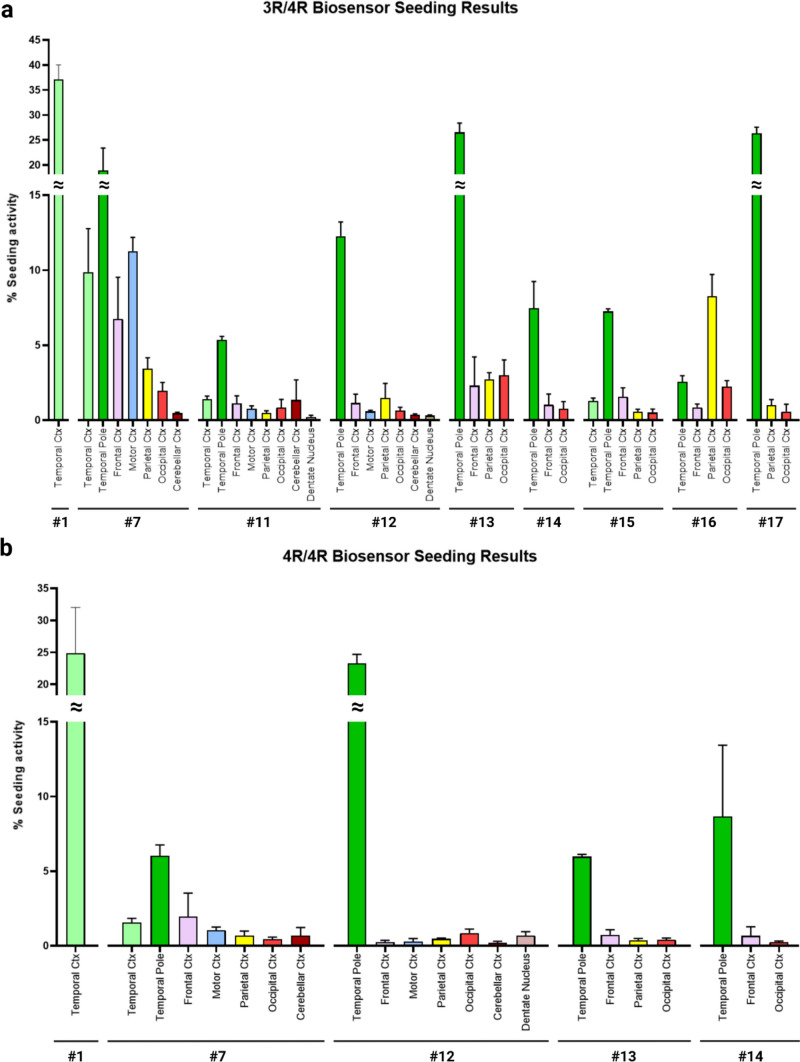
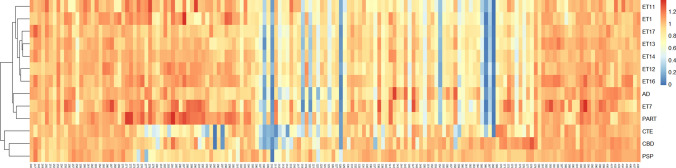
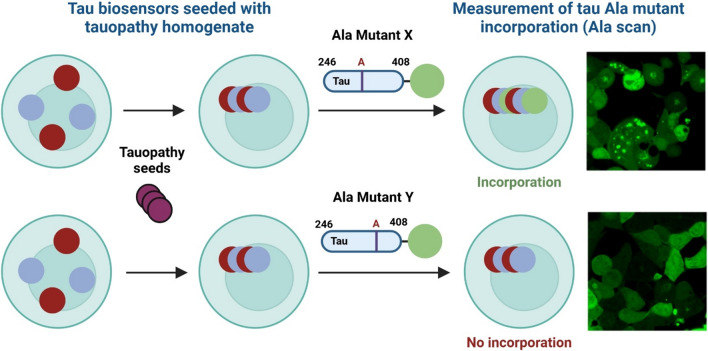
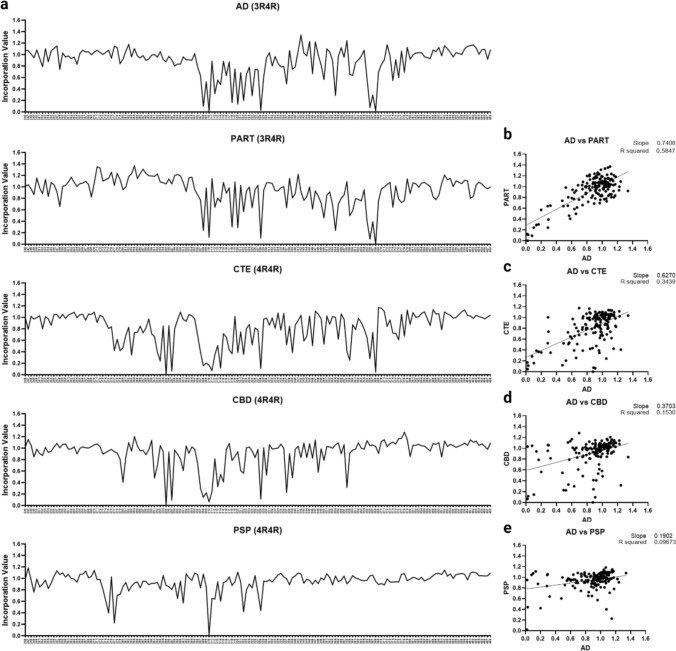
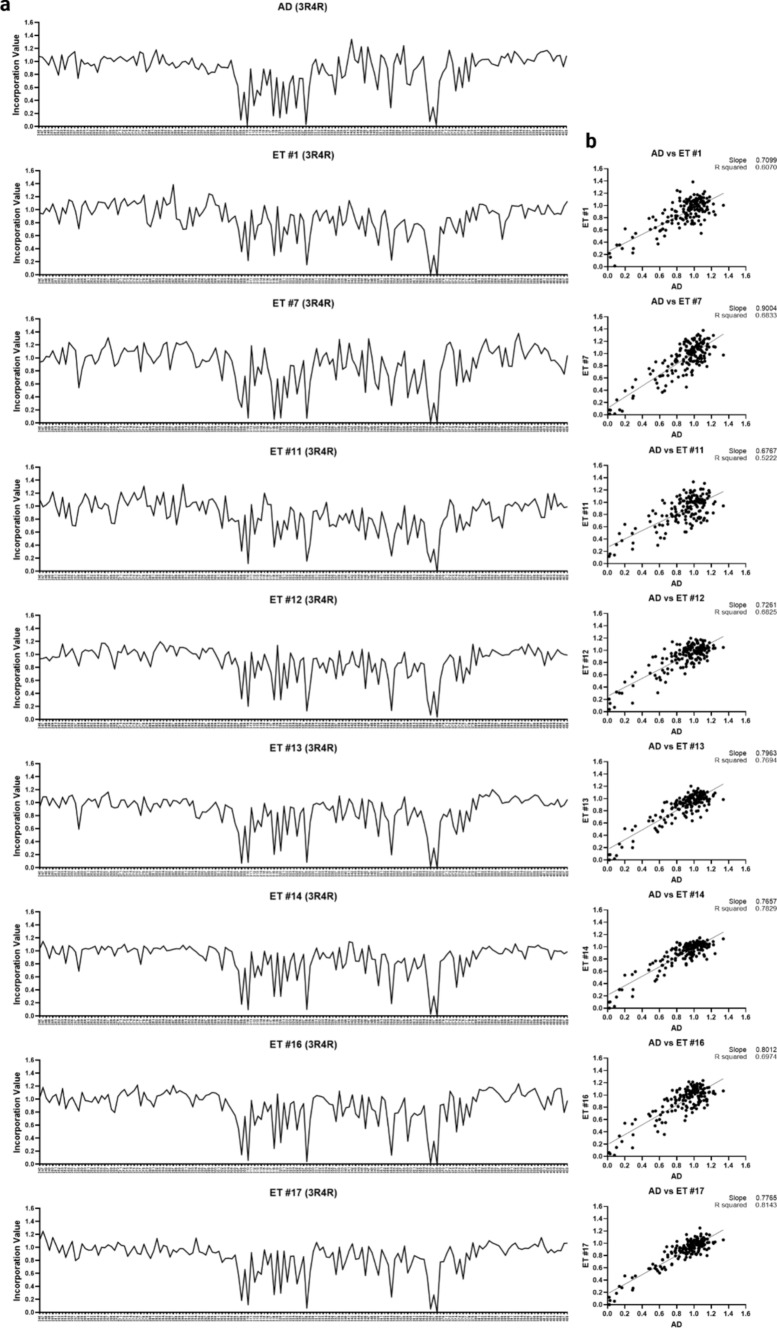
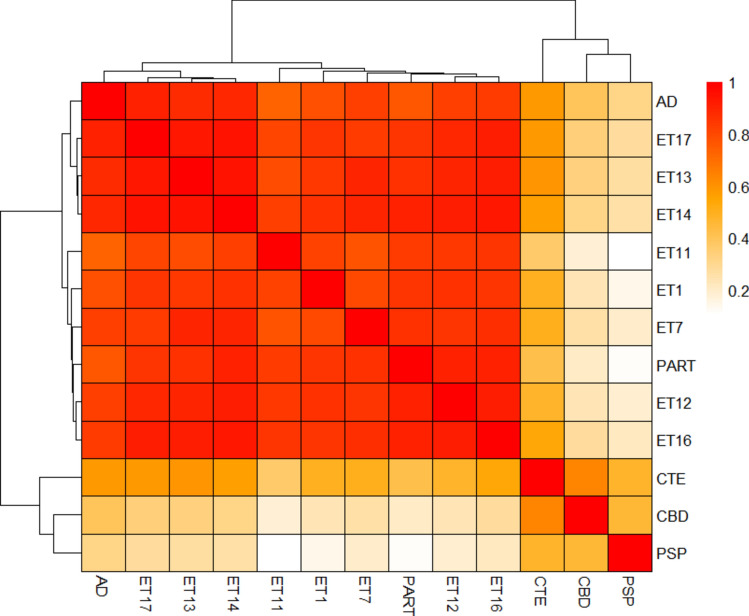
Neurodegenerative tauopathies are characterized by the deposition of distinct fibrillar tau assemblies, whose rigid core structures correlate with defined neuropathological phenotypes. Essential tremor (ET) is a progressive neurological disorder that, in some cases, is associated with cognitive impairment and tau accumulation. In this study, we explored tau assembly conformation in ET patients with tau pathology using cytometry-based tau biosensor assays. These assays quantify the tau seeding activity present in brain homogenates by detecting the conversion of intracellular tau-fluorescent protein fusions from a soluble to an aggregated state. Pathogenic tau assemblies exhibit seeding barriers, where a specific assembly structure cannot serve as a template for a native monomer if the amino acid sequences are incompatible. We recently leveraged this species barrier to define tauopathies systematically by substituting alanine (Ala) into the tau monomer and measuring its incorporation into seeded aggregates within biosensor cells. This Ala scan precisely classified the conformation of tau seeds from various tauopathies. In this study, we analyzed 18 ET patient brains with tau pathology, detecting robust tau seeding activity in 9 (50%) of the cases, predominantly localized to the temporal pole and temporal cortex. We further examined 8 of these ET cases using the Ala scan and found that the amino acid requirements for tau monomer incorporation into aggregates seeded from ET brain homogenates were identical to those of Alzheimer's disease (AD) and primary age-related tauopathy (PART), and distinct from other tauopathies, such as corticobasal degeneration (CBD), chronic traumatic encephalopathy (CTE), and progressive supranuclear palsy (PSP). These findings indicate that in a pathologically confined subset of ET cases with significant tau pathology, tau assembly cores are identical to those seen in AD and PART. This could facilitate more precise diagnosis and targeted therapies for ET patients presenting with cognitive impairment.
神经退行性tau蛋白病的特征是不同的纤维状tau蛋白聚集体沉积,其刚性核心结构与特定的神经病理表型相关。特发性震颤(ET)是一种进行性神经系统疾病,在某些情况下与认知障碍和tau蛋白积累有关。在本研究中,我们使用基于细胞术的tau生物传感器检测方法,探索了存在tau蛋白病变的ET患者中tau蛋白聚集体的构象。这些检测通过检测细胞内tau荧光蛋白融合体从可溶状态到聚集状态的转化,来量化脑匀浆中存在的tau蛋白种子活性。致病性tau蛋白聚集体表现出种子障碍,即如果氨基酸序列不兼容,特定的聚集体结构不能作为天然单体的模板。我们最近利用这种物种障碍,通过将丙氨酸(Ala)替代tau单体并测量其掺入生物传感器细胞内的种子聚集体中,来系统地定义tau蛋白病。这种丙氨酸扫描精确地分类了来自各种tau蛋白病的tau蛋白种子的构象。在本研究中,我们分析了18例存在tau蛋白病变的ET患者的大脑,在9例(50%)病例中检测到强大的tau蛋白种子活性,主要定位于颞极和颞叶皮质。我们进一步使用丙氨酸扫描检查了其中8例ET病例,发现tau单体掺入ET脑匀浆种子聚集体中的氨基酸需求与阿尔茨海默病(AD)和原发性年龄相关tau蛋白病(PART)相同,与其他tau蛋白病不同,如皮质基底节变性(CBD)、慢性创伤性脑病(CTE)和进行性核上性麻痹(PSP)。这些发现表明,在具有显著tau蛋白病变的ET病例的病理局限亚组中,tau蛋白聚集体核心与AD和PART中所见的相同。这可能有助于对出现认知障碍的ET患者进行更精确的诊断和靶向治疗。