Papavero Luca, Wilke Jana, Ali Nawar, Schawjinski Kathrin, Holtdirk Annette, Schoeller Karsten
Clinic for Spine Surgery, Schoen Clinic Hamburg Eilbek, Academic Hospital of the University Medical Center Eppendorf, Hamburg, Germany.
CRO - Dr. med. Kottmann GmbH & Co., Hamm, Germany.
Brain Spine. 2024 Mar 22;4:102785. doi: 10.1016/j.bas.2024.102785. eCollection 2024.
It is reasonable to assume that lumbar spinal stenosis (LSS) affects the cauda nerve roots also at night.
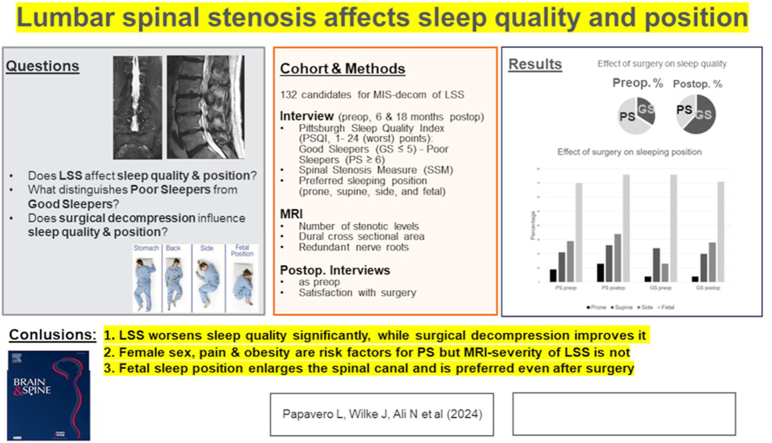
Does microsurgical decompression influence sleep quality and position?
A study nurse interviewed 140 patients scheduled for LSS decompression using the Pittsburgh Sleep Quality Index (PSQI), Spinal Stenosis Measure (SSM), Numeric Rating Scale (NRS) for back and leg pain, Douleur Neuropathique (DN4), and Charlson Comorbidity Index. Epidemiologic and MRI data were collected along with self-reported rankings of preferred sleep positions (prone, supine, side, and fetal). Follow-up interviews were conducted by telephone six and 18 months after discharge. Statistical analysis was performed using SSPS 24, with significance set at p < 0.05.
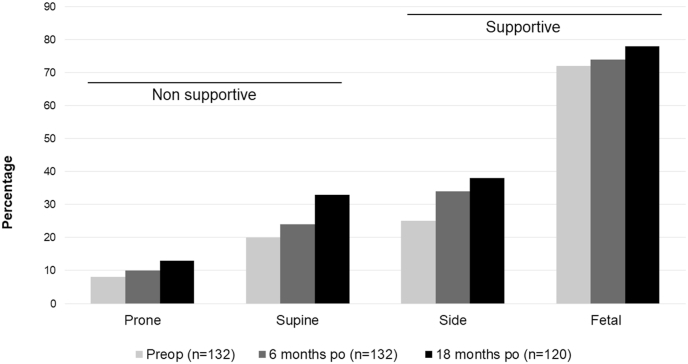
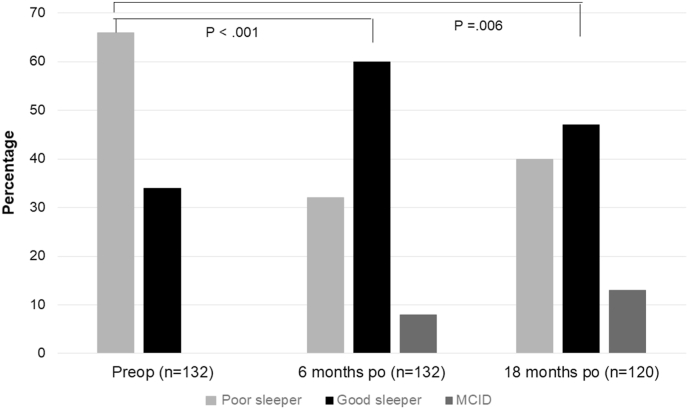
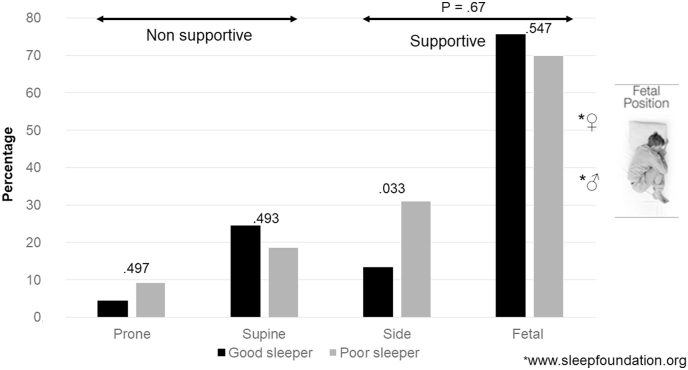
132 patients (55% female, mean age 73 years) were evaluated. Preoperatively, 45 (34.1%) patients were classified as good sleepers (GS: PSQI ≤5, range 1-21 (worst)) and 87 (65.9%) as poor sleepers (PS: PSQI ≥6). Decompression surgery reversed the relationship between PS (31.8%) and GS (68.2%, recovered/improved). Protective fetal sleeping position was the most common (≥70%) before and after surgery for both PS and GS. Risk factors for PS included female sex (p = 0.03), obesity (p = 0.03), high NRS back pain score (p = 0.008), and high SSM symptom score (p = 0.004). MRI imaging did not differ between PS and GS.
LSS had a negative effect on sleep quality, whereas surgical decompression had a positive effect. The protective fetal sleeping position was the preferred position both before and after surgery.
可以合理推测,腰椎管狭窄症(LSS)在夜间也会影响马尾神经根。
显微手术减压会影响睡眠质量和睡眠姿势吗?
一名研究护士使用匹兹堡睡眠质量指数(PSQI)、椎管狭窄测量量表(SSM)、背部和腿部疼痛数字评定量表(NRS)、神经病理性疼痛量表(DN4)以及查尔森合并症指数,对140例计划接受LSS减压手术的患者进行了访谈。收集了流行病学和MRI数据以及患者自我报告的偏好睡眠姿势(俯卧、仰卧、侧卧和胎儿式)排名。出院后6个月和18个月通过电话进行随访访谈。使用SSPS 24进行统计分析,显著性设定为p < 0.05。
对132例患者(55%为女性,平均年龄73岁)进行了评估。术前,45例(34.1%)患者被归类为睡眠良好者(GS:PSQI≤5,范围1 - 21(最差)),87例(65.9%)为睡眠不佳者(PS:PSQI≥6)。减压手术逆转了PS(31.8%)和GS(68.2%,恢复/改善)之间的关系。无论是PS组还是GS组,术前和术后最常见的保护姿势都是胎儿式睡眠姿势(≥70%)。PS的危险因素包括女性(p = 0.03)、肥胖(p = 0.03)、NRS背痛评分高(p = 0.008)和SSM症状评分高(p = 0.004)。PS组和GS组的MRI成像没有差异。
LSS对睡眠质量有负面影响,而手术减压有积极影响。术前和术后,保护胎儿式睡眠姿势都是首选姿势。