Brouwer Calvin G, Tusscher Marieke R Ten, de Roos Bente M, Gootjes Elske C, Buffart Tineke E, Versteeg Kathelijn S, Mast Isa H, Streppel Mirte M, Werter Inge M, May Anne M, Verheul Henk M W, Buffart Laurien M
Department of Medical BioSciences (HP 928), Radboud University Medical Center, Geert Grooteplein Zuid 10, 6525GA, Nijmegen, The Netherlands.
Department of Medical Oncology, Radboud University Medical Center, Nijmegen, The Netherlands.
Support Care Cancer. 2025 Jan 8;33(2):82. doi: 10.1007/s00520-024-09101-1.
Patients with metastatic colorectal cancer (mCRC) undergoing systemic treatment often experience toxicities. Although exercise may improve physical fitness and quality of life and counteract treatment toxicity, knowledge in patients with mCRC is limited. The ongoing randomized controlled AMICO trial evaluates the effects of supervised exercise on clinical outcomes. The present qualitative study was a pre-planned part of this trial aiming to capture adherence, satisfaction, and perceived effects of exercise among patients with mCRC.
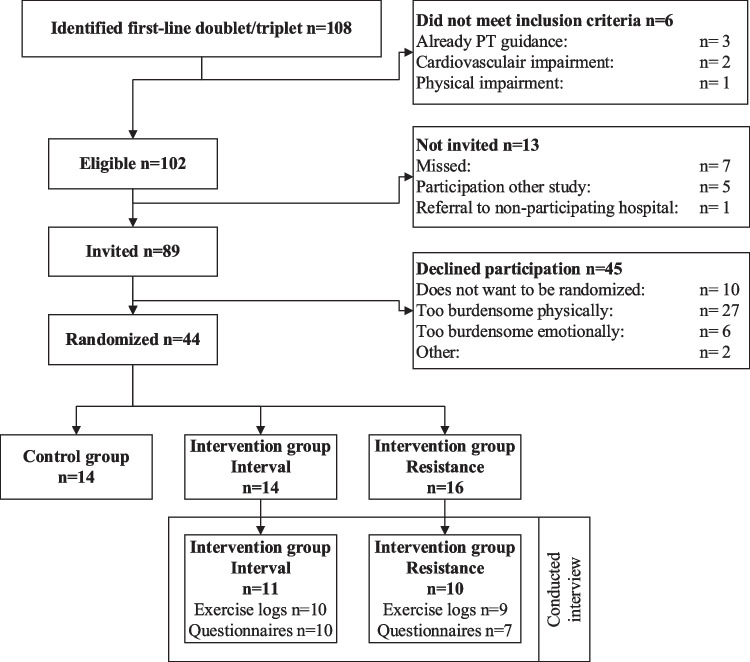
Patients with mCRC receiving first-line systemic treatment were randomized (1:1:1) to a control group or one of two supervised exercise arms including continuous aerobic exercise with either resistance exercises or high-intensity interval training. Semi-structured interviews with patients in the exercise arms were transcribed verbatim and thematically analyzed. Descriptive data on adherence (exercise logs) and satisfaction (questionnaire) was collected to complement and contextualize the qualitative findings.
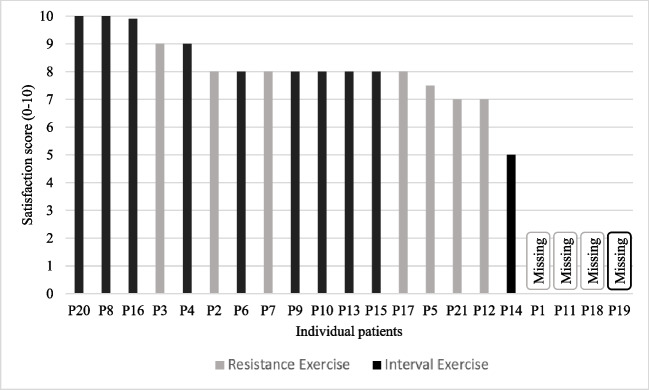
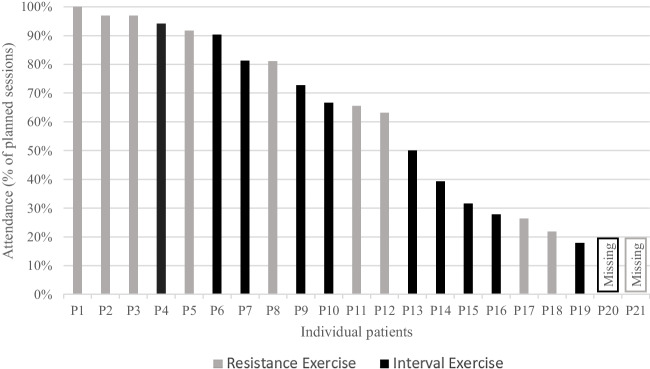
Twenty-one patients were interviewed. Median exercise attendance was 67% [IQR 35-91], and the median satisfaction score was 8 [IQR 8-9] out of 10. Patients valued the guidance and knowledge of the physical therapist and expressed interindividual preferences regarding training content. Patients experienced that exercise improved their physical and mental wellbeing and helped them to endure treatment. Perceived exercise barriers were treatment toxicity, physical problems, and hospital appointments. Perceived exercise facilitators included adequate tailoring and internal or external motivation.
Patients with mCRC appreciated exercise during systemic treatment and perceived several beneficial effects, both physically and mentally. Exercise attendance varied and barriers were mainly treatment- and disease-related.
Clinical trial.
NCT04754672. Date of registration: 04-12-2020.
接受全身治疗的转移性结直肠癌(mCRC)患者常出现毒性反应。尽管运动可能改善身体素质和生活质量,并抵消治疗毒性,但mCRC患者对此的了解有限。正在进行的随机对照AMICO试验评估了有监督运动对临床结局的影响。本定性研究是该试验预先计划的一部分,旨在了解mCRC患者的运动依从性、满意度及感知到的运动效果。
接受一线全身治疗的mCRC患者被随机(1:1:1)分为对照组或两个有监督运动组之一,其中一个运动组为持续有氧运动加抗阻运动,另一个为高强度间歇训练。对运动组患者进行的半结构化访谈逐字转录并进行主题分析。收集关于依从性(运动日志)和满意度(问卷)的描述性数据,以补充和阐释定性研究结果。
共访谈了21名患者。运动参与率中位数为67%[四分位间距35 - 91],满意度评分中位数为8分[四分位间距8 - 9](满分10分)。患者重视物理治疗师的指导和知识,并对训练内容表达了个体偏好。患者认为运动改善了他们的身心健康,并帮助他们耐受治疗。感知到的运动障碍包括治疗毒性、身体问题和医院预约。感知到的运动促进因素包括适当的个性化调整以及内在或外在动机。
mCRC患者在全身治疗期间认可运动,并感知到身心方面的多种有益效果。运动参与率各不相同,障碍主要与治疗和疾病相关。
临床试验。
NCT04754672。注册日期:2020年12月4日。