Kim Bo-Eun, Jothi Ravi, Kim Da Woon, Park Dong Suk
Microbial Safety Division, National Institute of Agricultural Sciences, Rural Development Administration, Wanju, 55365, Republic of Korea.
Sci Rep. 2025 Jan 8;15(1):1357. doi: 10.1038/s41598-024-81508-6.
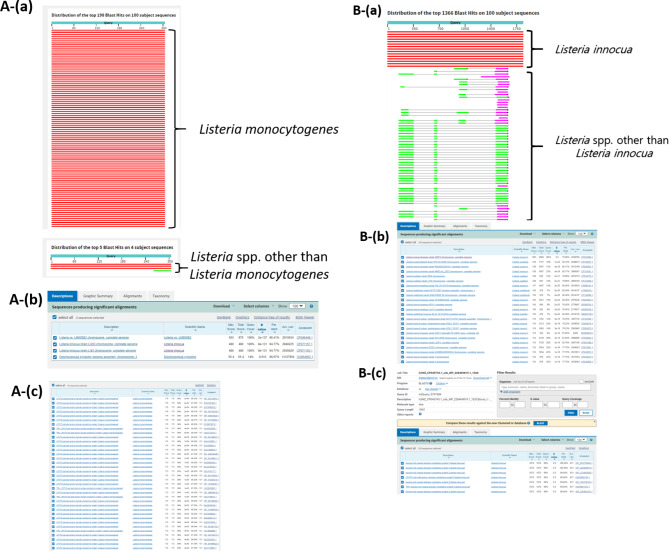
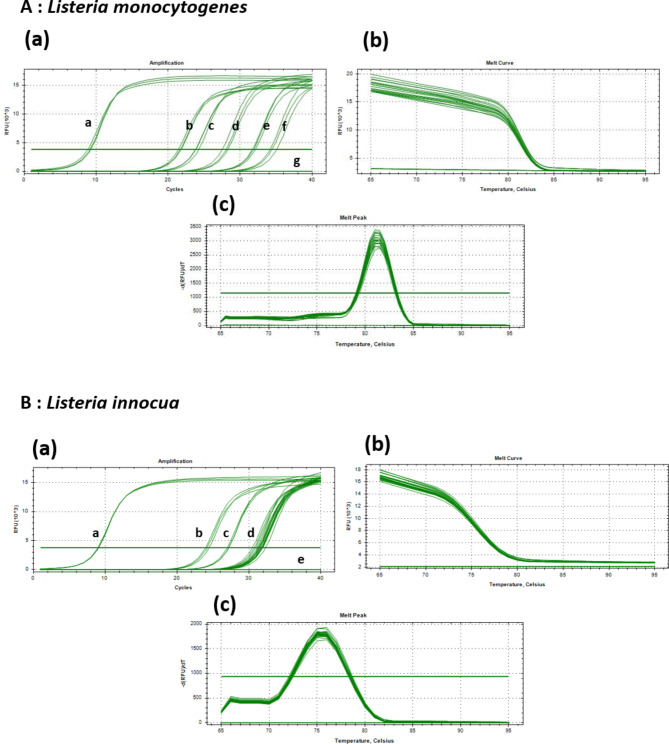
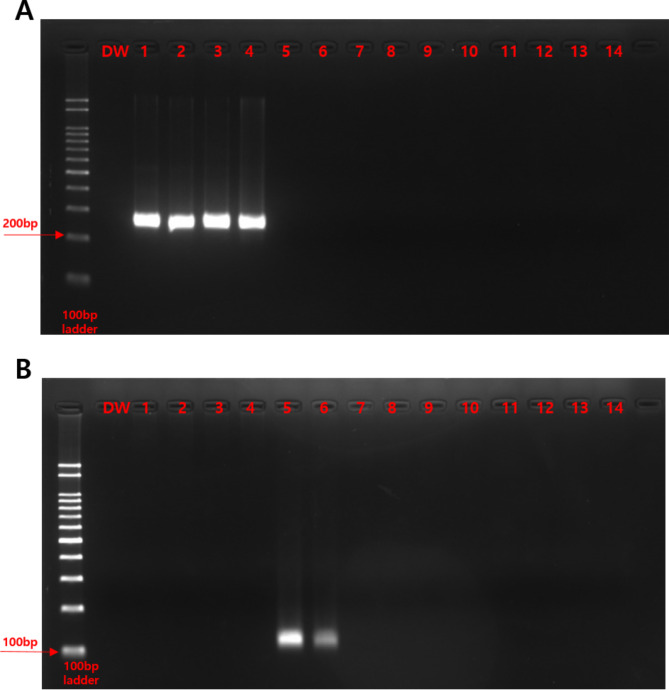
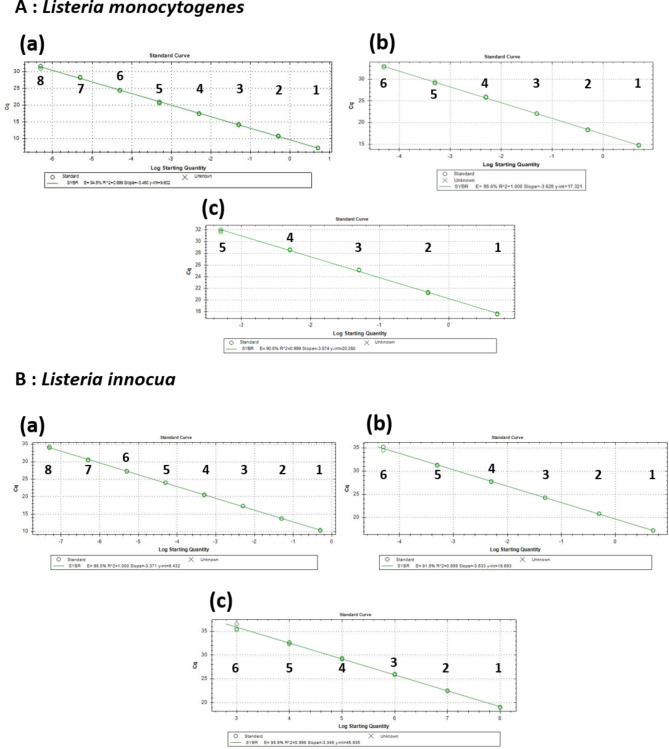
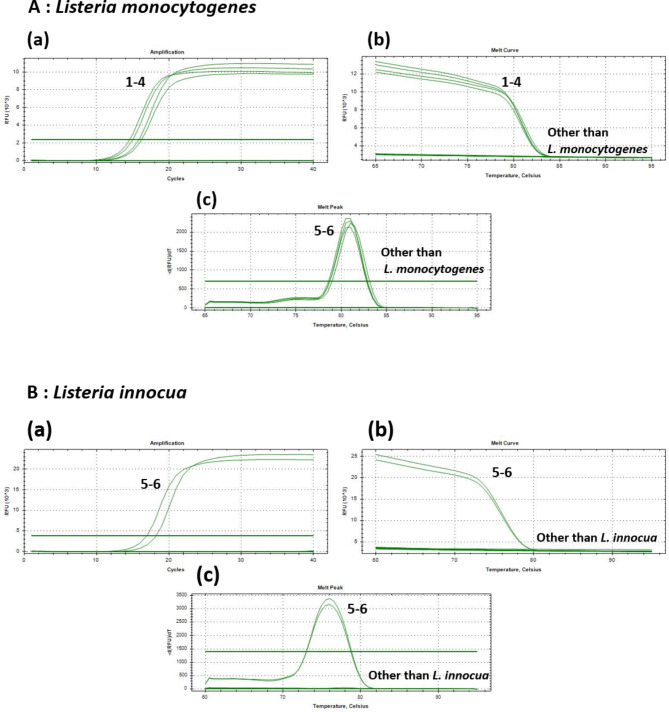
The close genetic resemblance between Listeria monocytogenes and Listeria innocua, combined with their presence in similar environments, poses challenges for species-specific detection in food products. Ensuring food safety through microbiological standards necessitates reliable detection of pathogens like L. monocytogenes and L. innocua throughout the food chain using appropriate analytical techniques. This study aims to develop, identify, and validate a SYBR Green qPCR-based genetic marker designed to detect L. monocytogenes and L. innocua. By performing a comparative analysis of the complete genome sequences of L. monocytogenes (ATCC 12392) and L. innocua (CFSAN044836), a unique gene region encoding a hypothetical protein with an LPXTG cell wall anchor domain (GCF_003031895.1) in L. monocytogenes and leucine-rich repeats (GCF_009648575.1) in L. innocua was identified. Primers targeting these specific region were designed and validated for their effectiveness in detecting L. monocytogenes/L. innocua using both conventional PCR and qPCR techniques. These primers exhibited high sensitivity and specificity in amplifying L. monocytogenes and L. innocua among different Listeria species. The sensitivity and specificity of the primers were further confirmed through standard curve analysis using three different templates: cloned DNA (as a positive control), genomic DNA, and bacterial cell suspension. Additionally, the primers were rigorously tested and validated for their accuracy in directly detecting the targeted strains in live enoki mushroom samples. This direct qPCR method offers significant advantages for the rapid and precise detection of L. monocytogenes and L. innocua, potentially enhancing the efficiency of diagnostic and monitoring processes within food and vegetable distribution systems.
单核细胞增生李斯特菌和无害李斯特菌之间密切的遗传相似性,以及它们在相似环境中的存在,给食品中特定物种的检测带来了挑战。通过微生物标准确保食品安全需要在整个食物链中使用适当的分析技术可靠地检测诸如单核细胞增生李斯特菌和无害李斯特菌等病原体。本研究旨在开发、鉴定和验证一种基于SYBR Green qPCR的遗传标记,用于检测单核细胞增生李斯特菌和无害李斯特菌。通过对单核细胞增生李斯特菌(ATCC 12392)和无害李斯特菌(CFSAN044836)的全基因组序列进行比较分析,在单核细胞增生李斯特菌中鉴定出一个独特的基因区域,该区域编码一种具有LPXTG细胞壁锚定结构域的假定蛋白(GCF_003031895.1),在无害李斯特菌中鉴定出富含亮氨酸重复序列(GCF_009648575.1)。针对这些特定区域设计了引物,并使用常规PCR和qPCR技术验证了它们在检测单核细胞增生李斯特菌/无害李斯特菌方面的有效性。这些引物在扩增不同李斯特菌属物种中的单核细胞增生李斯特菌和无害李斯特菌时表现出高灵敏度和特异性。通过使用三种不同模板进行标准曲线分析进一步证实了引物的灵敏度和特异性:克隆DNA(作为阳性对照)、基因组DNA和细菌细胞悬液。此外,还对引物在直接检测活金针菇样品中目标菌株的准确性进行了严格测试和验证。这种直接qPCR方法为快速、精确地检测单核细胞增生李斯特菌和无害李斯特菌提供了显著优势,有可能提高食品和蔬菜分销系统内诊断和监测过程的效率。