P Meenakshi Devi, A Muna, Ali Yasser, V Sumanth
Department of Information Technology, K.S.R. College of Engineering, Tiruchengode, Tamilnadu, 637215, India.
Centre for Research Impact & Outcome, Chitkara University Institute of Engineering and Technology, Chitkara University, Rajpura, Punjab, 140401, India.
BMC Med Imaging. 2025 Jan 8;25(1):12. doi: 10.1186/s12880-024-01538-4.
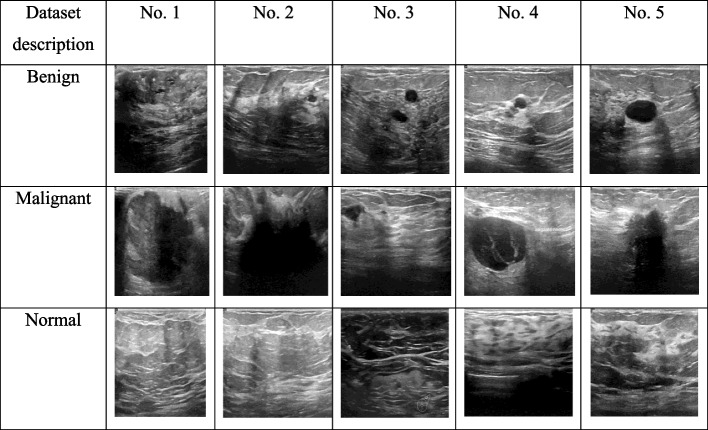
Breast cancer is a leading cause of death among women, and early detection is crucial for improving survival rates. The manual breast cancer diagnosis utilizes more time and is subjective. Also, the previous CAD models mostly depend on manmade visual details that are complex to generalize across ultrasound images utilizing distinct techniques. Distinct imaging tools have been utilized in previous works such as mammography and MRI. However, these imaging tools are costly and less portable than ultrasound imaging. Also, ultrasound imaging is a non-invasive method commonly used for breast cancer screening. Hence, the paper presents a novel deep learning model, BCDNet, for classifying breast tumors as benign or malignant using ultrasound images.
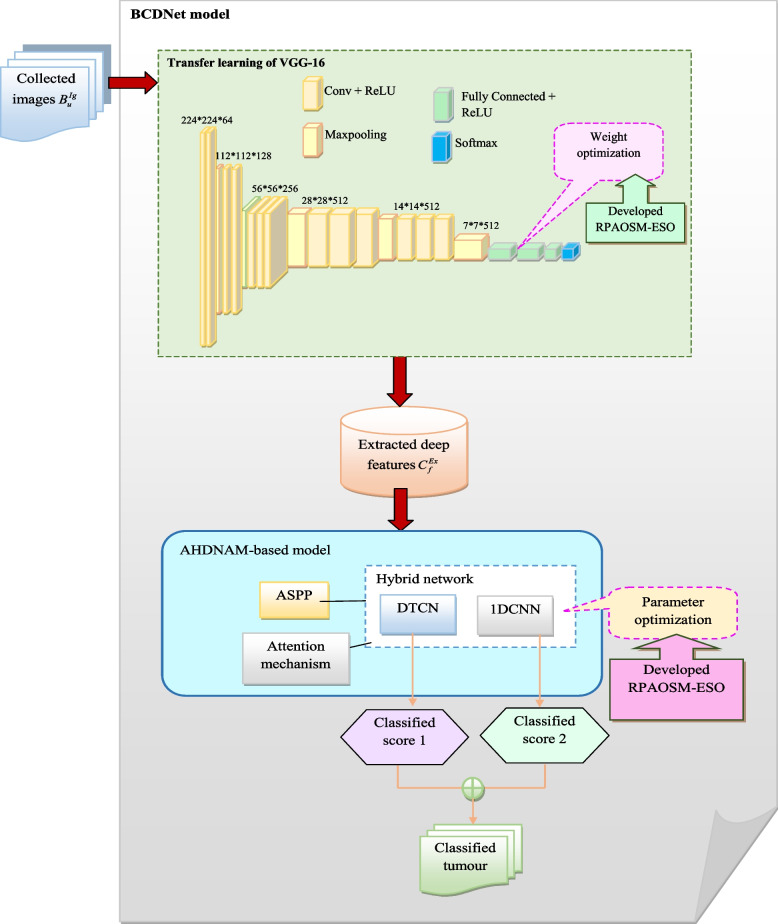
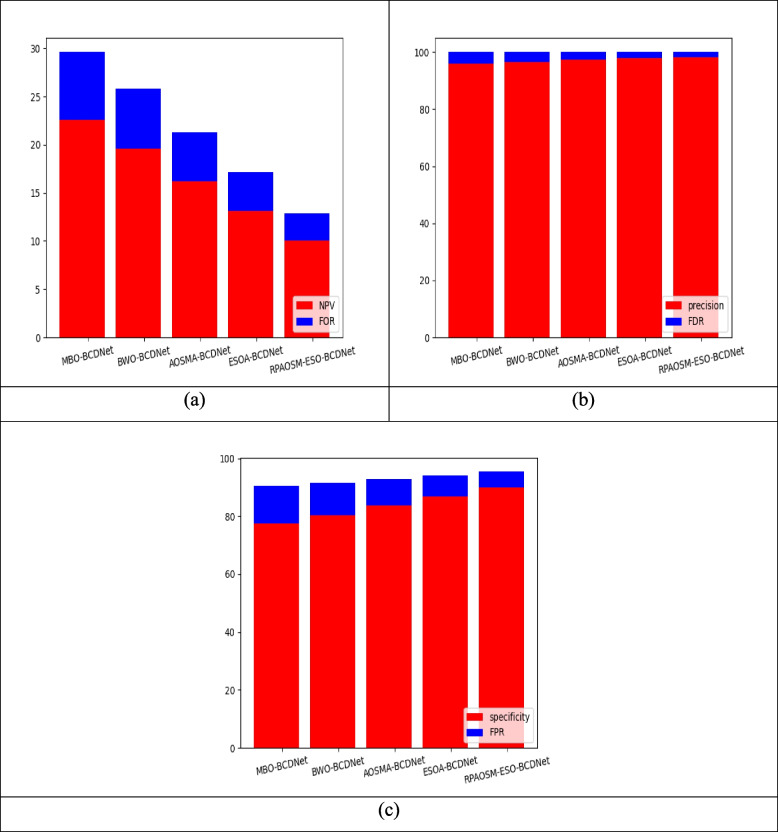
The primary aim of the study is to design an effective breast cancer diagnosis model that can accurately classify tumors in their early stages, thus reducing mortality rates. The model aims to optimize the weight and parameters using the RPAOSM-ESO algorithm to enhance accuracy and minimize false negative rates.
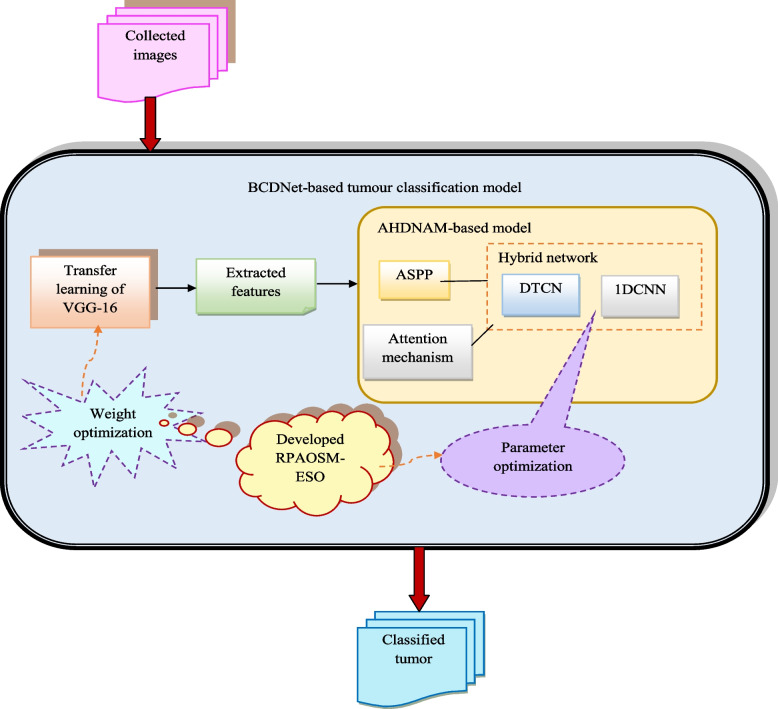
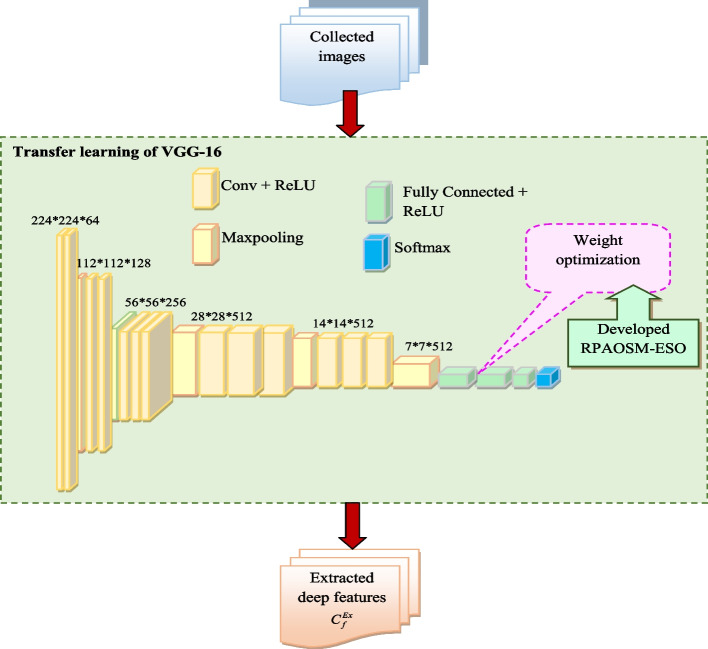
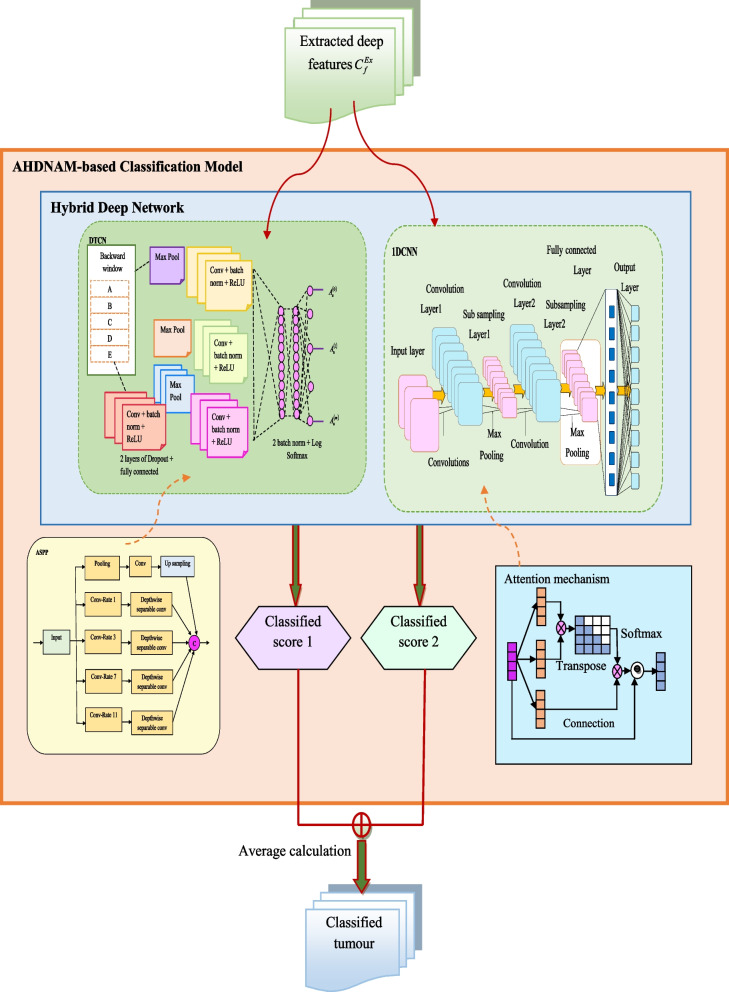
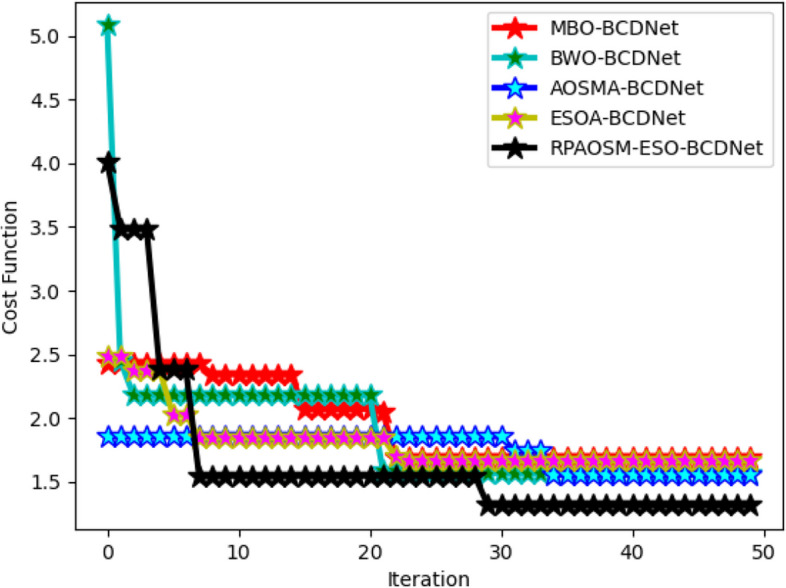
The BCDNet model utilizes transfer learning from a pre-trained VGG16 network for feature extraction and employs an AHDNAM classification approach, which includes ASPP, DTCN, 1DCNN, and an attention mechanism. The RPAOSM-ESO algorithm is used to fine-tune the weights and parameters.
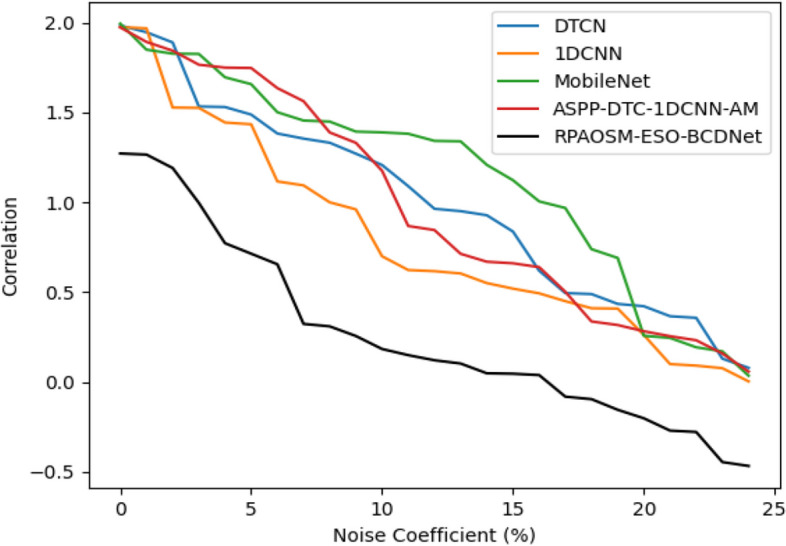
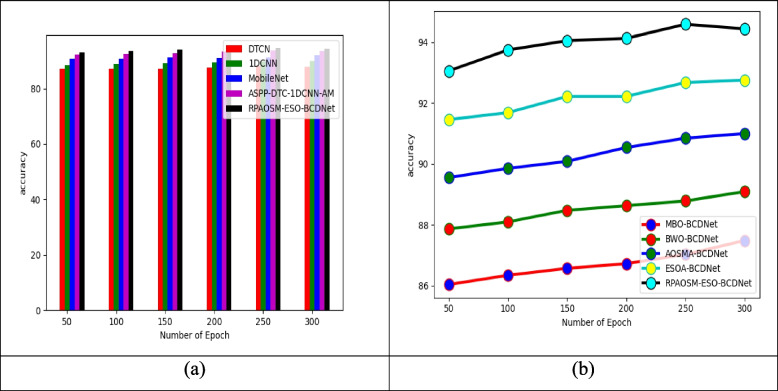
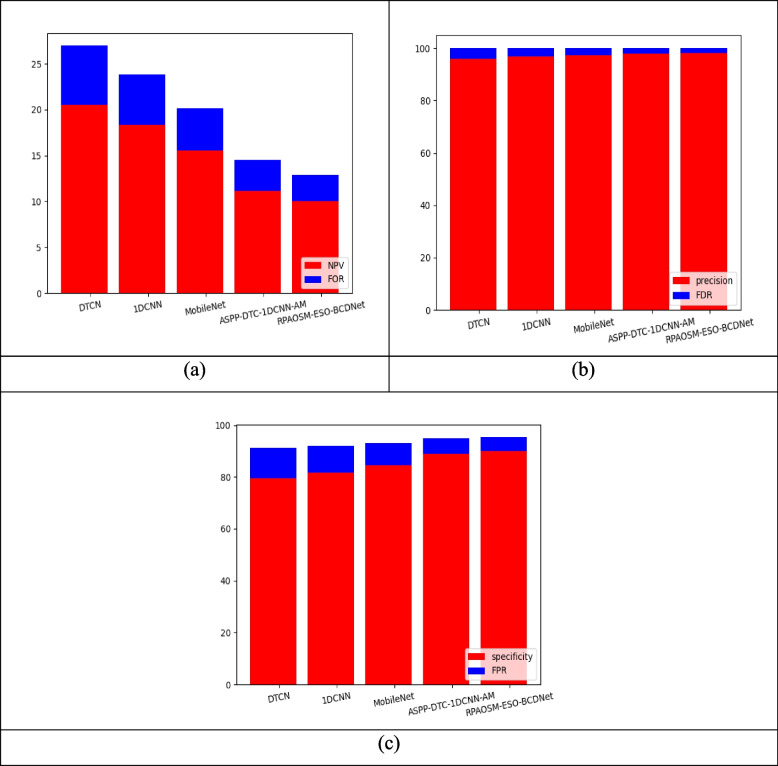
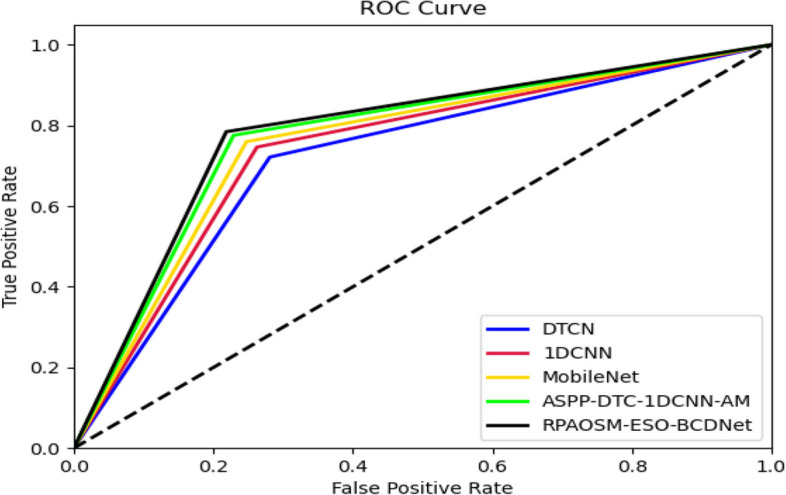
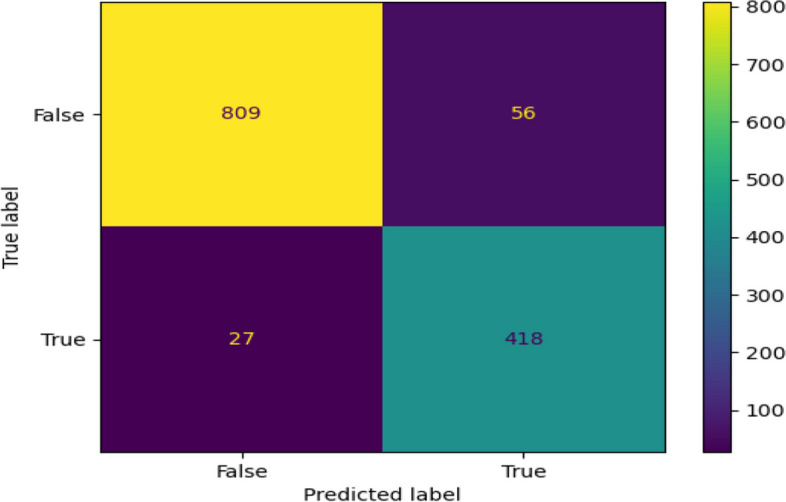
The RPAOSM-ESO-BCDNet-based breast cancer diagnosis model provided 94.5 accuracy rates. This value is relatively higher than the previous models such as DTCN (88.2), 1DCNN (89.6), MobileNet (91.3), and ASPP-DTC-1DCNN-AM (93.8). Hence, it is guaranteed that the designed RPAOSM-ESO-BCDNet produces relatively accurate solutions for the classification than the previous models.
The BCDNet model, with its sophisticated feature extraction and classification techniques optimized by the RPAOSM-ESO algorithm, shows promise in accurately classifying breast tumors using ultrasound images. The study suggests that the model could be a valuable tool in the early detection of breast cancer, potentially saving lives and reducing the burden on healthcare systems.
乳腺癌是女性死亡的主要原因之一,早期检测对于提高生存率至关重要。人工乳腺癌诊断耗时且主观。此外,以前的计算机辅助诊断(CAD)模型大多依赖于人为的视觉细节,这些细节难以通过不同技术在超声图像中进行通用化。以前的研究中使用了不同的成像工具,如乳腺X线摄影和磁共振成像(MRI)。然而,这些成像工具成本高昂且不如超声成像便携。此外,超声成像是一种常用于乳腺癌筛查的非侵入性方法。因此,本文提出了一种新颖的深度学习模型BCDNet,用于使用超声图像将乳腺肿瘤分类为良性或恶性。
该研究的主要目的是设计一种有效的乳腺癌诊断模型,能够在早期准确地对肿瘤进行分类,从而降低死亡率。该模型旨在使用RPAOSM-ESO算法优化权重和参数,以提高准确性并最小化假阴性率。
BCDNet模型利用预训练的VGG16网络进行迁移学习以提取特征,并采用AHDNAM分类方法,其中包括空洞空间金字塔池化(ASPP)、深度可分离卷积网络(DTCN)、一维卷积神经网络(1DCNN)和注意力机制。RPAOSM-ESO算法用于微调权重和参数。
基于RPAOSM-ESO-BCDNet的乳腺癌诊断模型准确率达到94.5%。该值相对高于以前的模型,如DTCN(88.2%)、1DCNN(89.6%)、MobileNet(91.3%)和ASPP-DTC-1DCNN-AM(93.8%)。因此,可以保证所设计的RPAOSM-ESO-BCDNet在分类方面比以前的模型产生更准确的结果。
BCDNet模型凭借其由RPAOSM-ESO算法优化的复杂特征提取和分类技术,在使用超声图像准确分类乳腺肿瘤方面显示出前景。该研究表明,该模型可能是早期检测乳腺癌的有价值工具,有可能挽救生命并减轻医疗系统的负担。