Weller Matthew B, Kiefer Walter S
Department of Earth and Environmental Sciences, Jonsson-Rowland Science Center, Rensselaer Polytechnic Institute, Troy, NY, USA.
Lunar and Planetary Institute/USRA, Houston, TX, USA.
Sci Adv. 2025 Jan 10;11(2):eadn9861. doi: 10.1126/sciadv.adn9861.
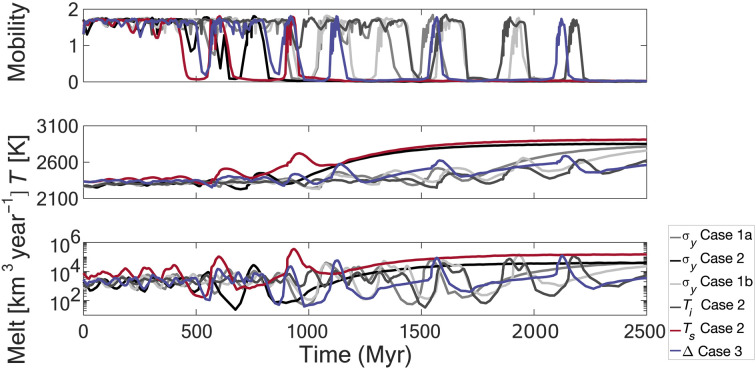
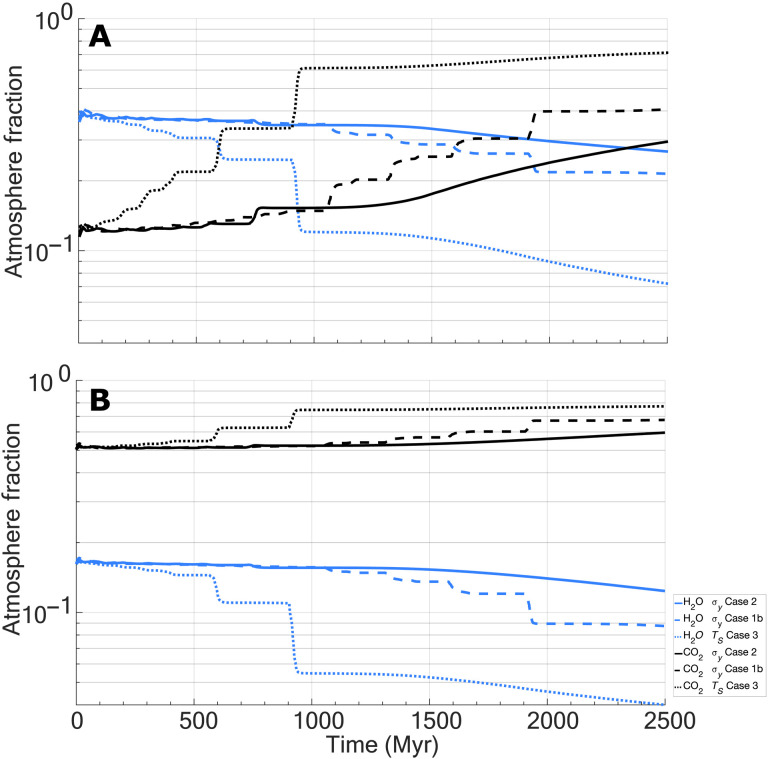
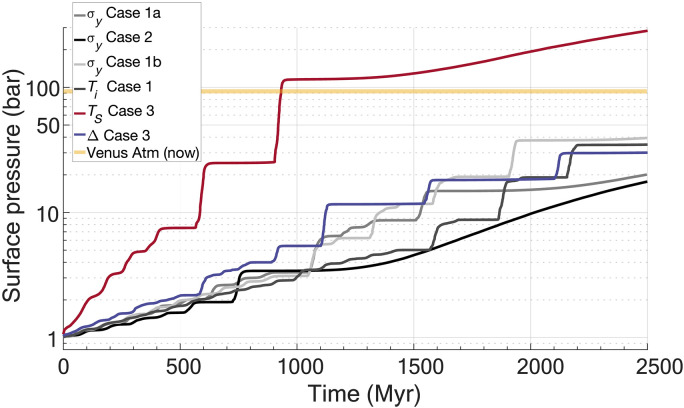
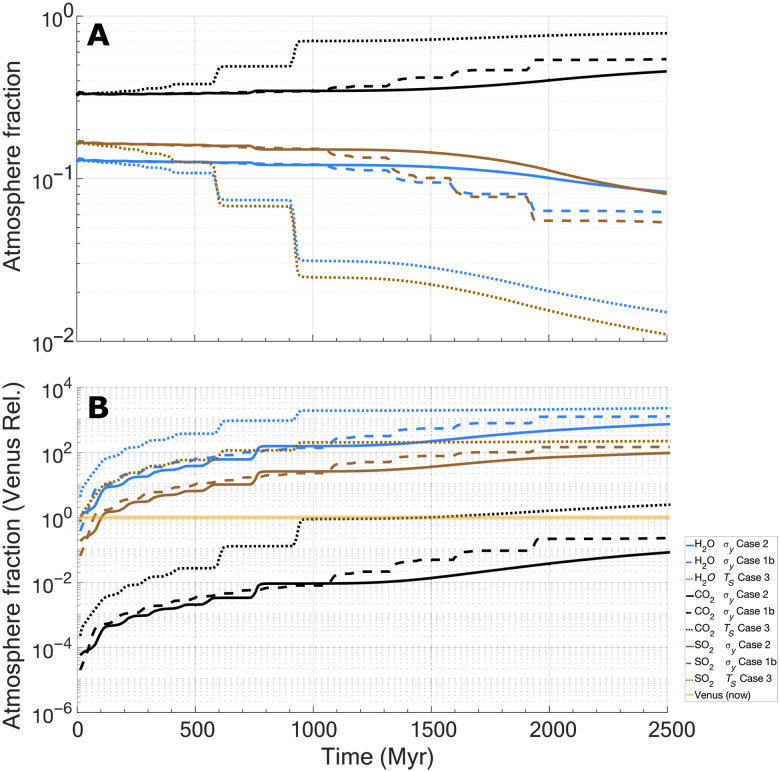
A key question in the planetary sciences centers on the divergence between the sibling planets, Venus and Earth. Venus currently does not operate with plate tectonics, and its thick atmosphere has led to extreme greenhouse conditions. It is unknown if this state was set primordially or if Venus was once more Earth-like. Here, we explore Venus as an example of a planet that recently transitioned between tectonic regimes. Our results show that transitions naturally lead to substantial resurfacing and melt-generated outgassing from lithosphere-breaking events and overturns, with 3 to 10 bars of atmosphere generated per overturn over ~60-million year timescales and ~10 to 100 bars outgassed over billion-year time frames. We find that the observation of Venus with a thick greenhouse atmosphere and the inferences of currently low volcanic rates and previous prodigious volcanic rates are consistent with a planet that has undergone a transition in tectonics, suggesting that Venus once hosted clement surface conditions and was more Earth-like.
行星科学中的一个关键问题聚焦于姊妹行星金星和地球之间的差异。金星目前不存在板块构造活动,其浓厚的大气层导致了极端的温室环境。尚不清楚这种状态是初始就存在的,还是金星曾经更类似地球。在此,我们以金星为例,探讨一个近期在构造体制之间转变的行星。我们的研究结果表明,转变自然会导致大量的表面重塑以及因岩石圈破裂事件和翻转而产生的熔体脱气,在约6000万年的时间尺度上,每次翻转会产生3至10巴的大气层,在十亿年的时间框架内会有10至100巴的气体脱气。我们发现,对有着浓厚温室大气层的金星的观测以及当前低火山活动速率和过去极高火山活动速率的推断,与一颗经历了构造转变的行星是一致的,这表明金星曾经拥有温和的表面条件,且更类似地球。