Liu Renfeng, Zhao Erkang, Wang Yejing, Zuo Hua, Li Lanlan, Xia Qingyou, He Huawei
Integrative Science Center of Germplasm Creation in Western China (Chongqing) Science City, Biological Science Research Center, Southwest University, Chongqing, 400715, China.
Chongqing Engineering and Technology Research Center for Novel Silk Materials, Chongqing Key Laboratory of Soft-Matter Material Manufacturing, Southwest University, Chongqing, 400715, China.
J Nanobiotechnology. 2025 Jan 10;23(1):11. doi: 10.1186/s12951-024-03055-6.
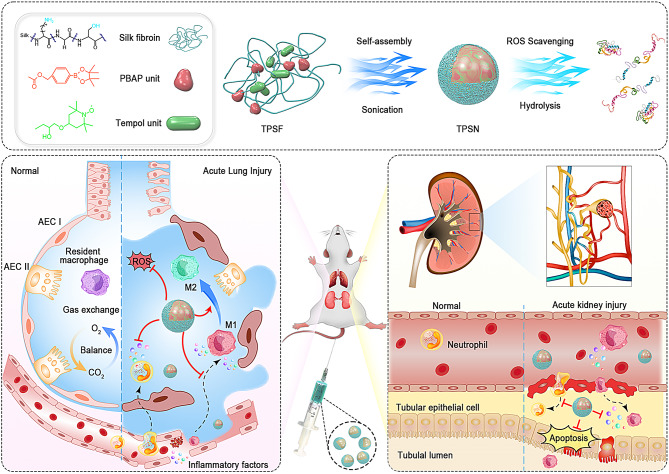
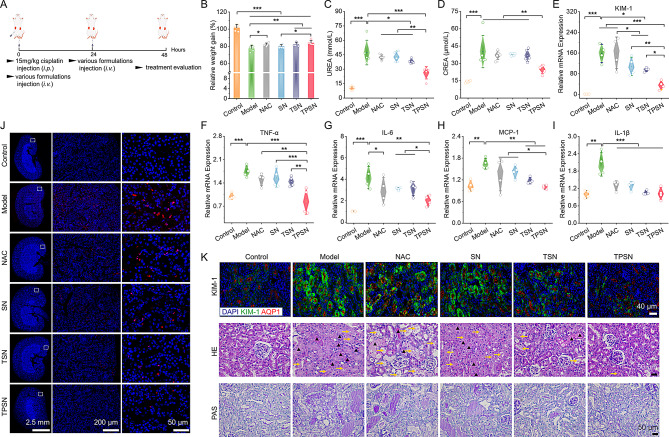
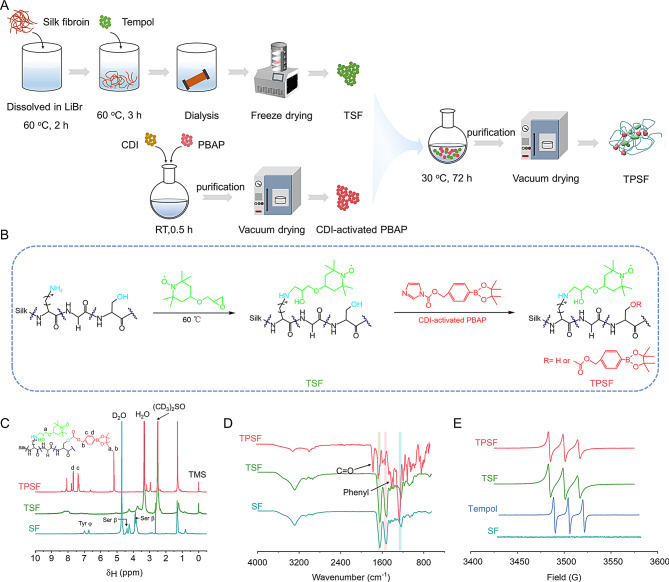
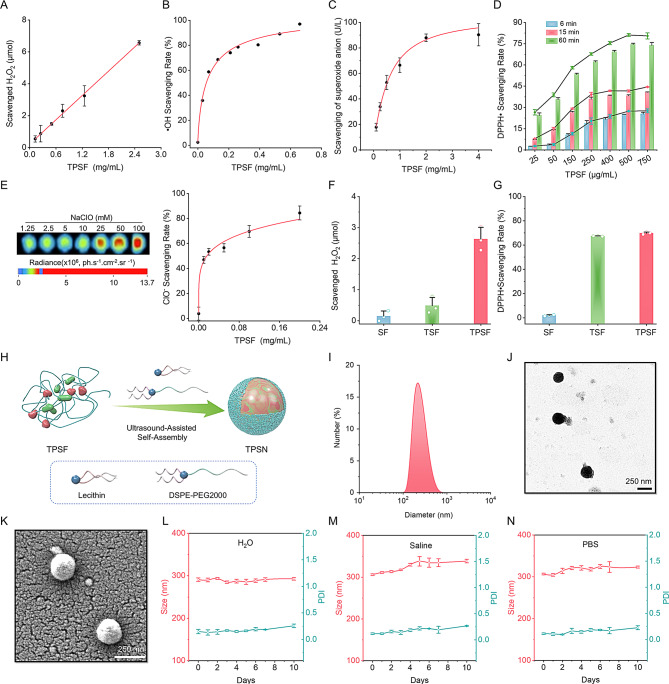
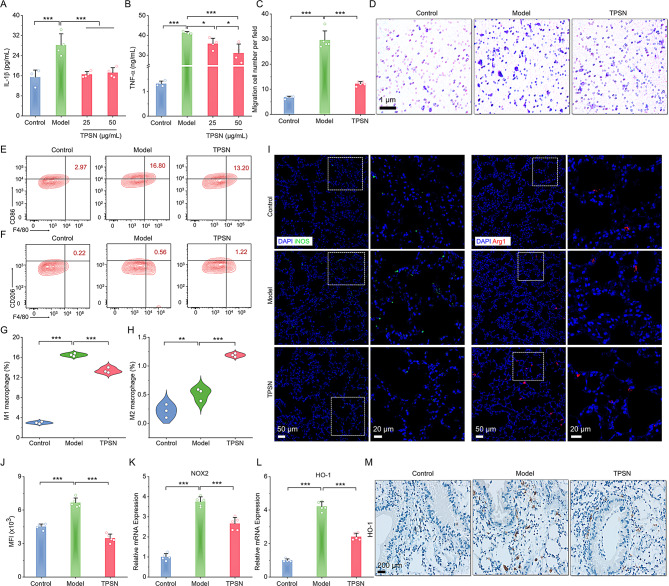
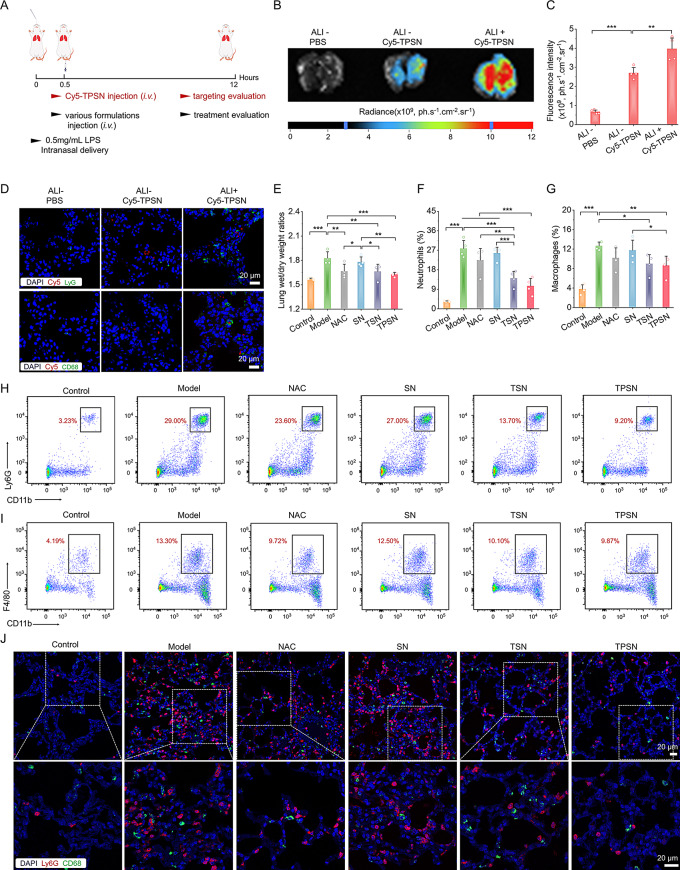
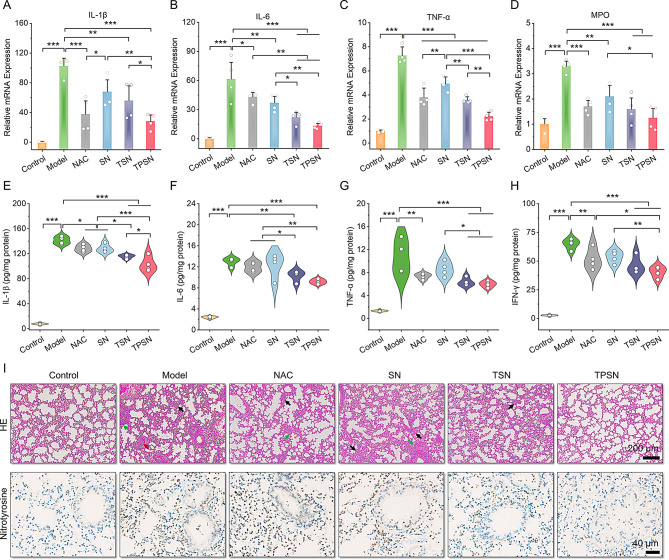
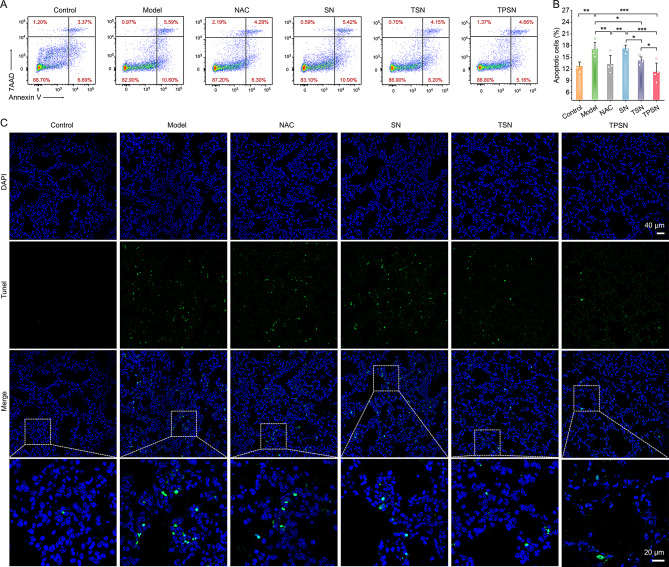
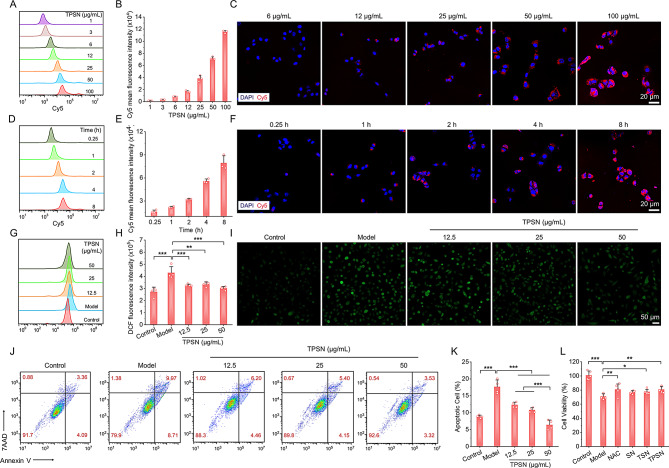
Significant progress has been made in the development of potential therapies for diseases associated with inflammation and oxidative stress. Nevertheless, the availability of effective clinical treatments remains limited. Herein, we introduce a novel silk-based bioactive material, TPSF, developed by sequentially conjugating Tempol and phenylboronic acid pinacol ester to silk fibroin. This innovative reactive oxygen species (ROS) scavenging material not only effectively eliminates free radicals and hydrogen peroxide but also readily self-assembles into nanoparticle forms (TPSN). In vitro experiments have demonstrated that TPSN exhibits significant anti-inflammatory activities and cytoprotective effects against ROS-mediated damage. Consistently, in murine models of acute lung and kidney injury, TPSN outperforms the small-molecule antioxidant NAC, exhibiting superior therapeutic efficacy. Mechanistically, TPSN has the capability to reprogram M1-like macrophages toward an M2-like state. Importantly, biocompatibility assays confirm that TPSN has good safety profiles. Consequently, TPSN, characterized by its favorable protective effects and excellent biocompatibility, exhibits considerable promise as a therapeutic intervention for inflammation-related diseases. This innovative strategy, which incorporates multifunctional antioxidant components into the silk fibroin matrix, effectively addresses oxidative stress and acute inflammation. Furthermore, it highlights the potential of modified silk fibroin materials in the management and mitigation of inflammation-led tissue damage.
在与炎症和氧化应激相关疾病的潜在治疗方法开发方面已取得显著进展。然而,有效的临床治疗方法仍然有限。在此,我们介绍一种新型的基于丝绸的生物活性材料TPSF,它是通过将Tempol和苯硼酸频哪醇酯依次与丝素蛋白偶联而开发的。这种创新的活性氧(ROS)清除材料不仅能有效消除自由基和过氧化氢,还能很容易地自组装成纳米颗粒形式(TPSN)。体外实验表明,TPSN具有显著的抗炎活性以及对ROS介导损伤的细胞保护作用。同样,在急性肺损伤和肾损伤的小鼠模型中,TPSN的表现优于小分子抗氧化剂NAC,展现出卓越的治疗效果。从机制上讲,TPSN能够将M1样巨噬细胞重编程为M2样状态。重要的是,生物相容性检测证实TPSN具有良好的安全性。因此,TPSN具有良好的保护作用和出色的生物相容性,作为炎症相关疾病的治疗干预手段展现出巨大潜力。这种将多功能抗氧化成分整合到丝素蛋白基质中的创新策略,有效地解决了氧化应激和急性炎症问题。此外,它突出了改性丝素蛋白材料在管理和减轻炎症导致的组织损伤方面的潜力。