Cruz-Chamorro Ivan, Álvarez-López Ana Isabel, Santos-Sánchez Guillermo, Álvarez-Sánchez Nuria, Pedroche Justo, Millán-Linares María Del Carmen, Lardone Patricia Judith, Carrillo-Vico Antonio
Instituto de Biomedicina de Sevilla, IBiS/Hospital Universitario Virgen del Rocío/CSIC/Universidad de Sevilla, 41013 Seville, Spain.
Departamento de Bioquímica Médica y Biología Molecular e Inmunología, Facultad de Medicina, Universidad de Sevilla, 41009 Seville, Spain.
Int J Mol Sci. 2024 Dec 24;26(1):32. doi: 10.3390/ijms26010032.
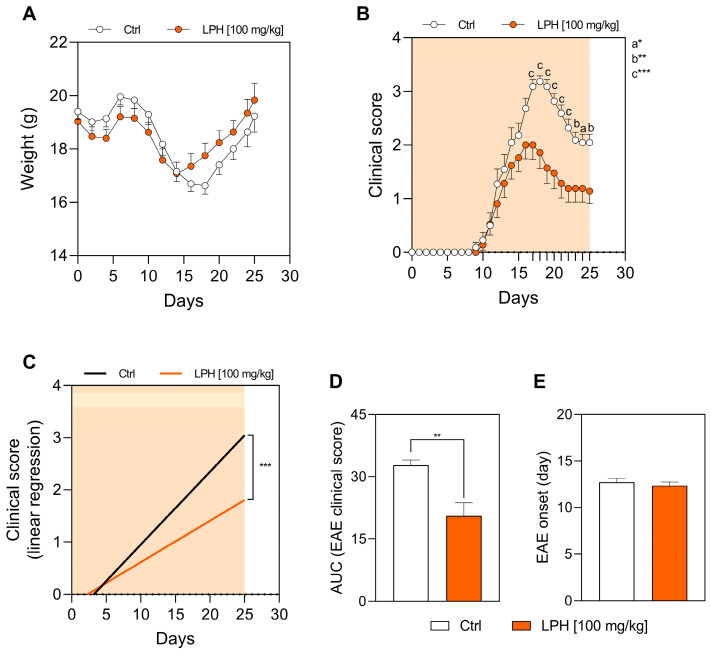
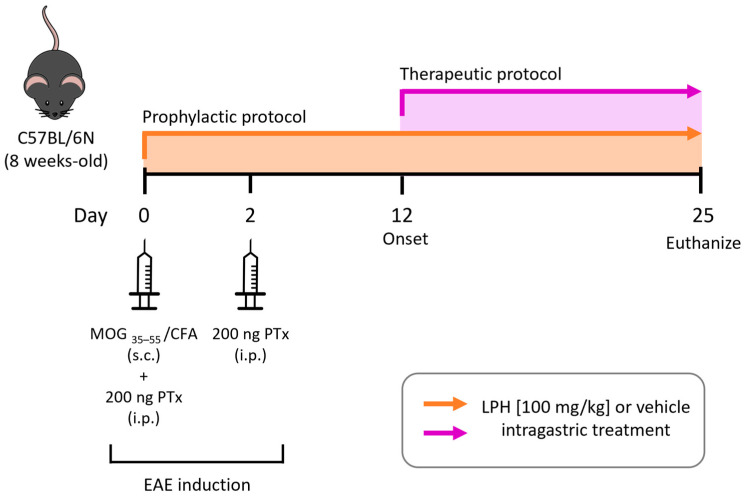
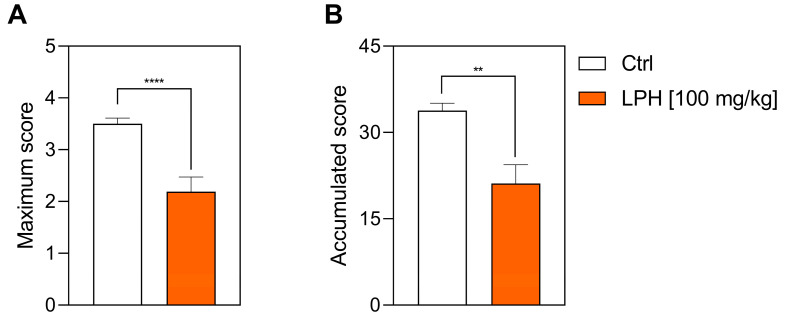
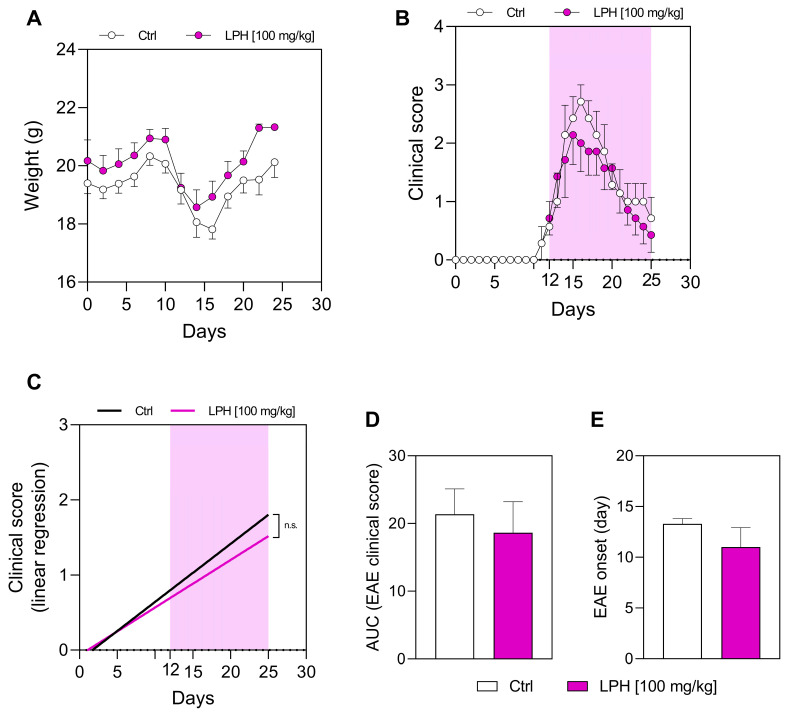
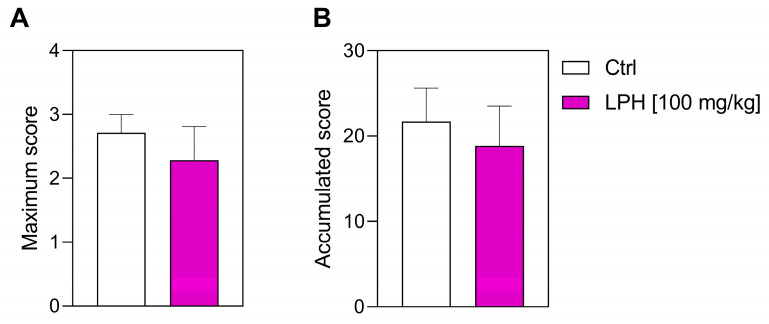
Multiple sclerosis (MS) is a neurodegenerative disease, with inflammation and oxidative stress in the central nervous system being the main triggers. There are many drugs that reduce the clinical signs of MS, but none of them cure the disease. Food proteins have been shown to contain encrypted peptides that can be released after hydrolysis and exert numerous biological activities. Recently, we have demonstrated the anti-inflammatory and antioxidant activities of a lupin protein hydrolysate (LPH) both in vitro and in vivo. Therefore, the aim of this study was to evaluate whether LPH is capable of reducing the clinical signs of experimental autoimmune encephalomyelitis (EAE), a mouse model of MS. EAE was induced in female C57BL/6N mice and they were treated intragastrically with LPH (100 mg/kg) or vehicle (control group) from day 0 (prophylactic approach) or from the onset of the disease (day 12 post-induction; therapeutic approach) and the clinical score of each mouse was recorded daily. Prophylactic treatment with LPH reduced the clinical score of the mice compared to the control group, as well as the maximum and cumulative scores, without changing the day of onset of the symptoms while the therapeutic intervention did not significantly improve the severity of the disease. For the first time, we demonstrated that prophylactic administration of LPH reduces the severity of MS, suggesting a potential nutraceutical or new functional foods in neuroinflammation. However, further studies are needed to confirm this nutritional effect in a clinical context.
多发性硬化症(MS)是一种神经退行性疾病,中枢神经系统的炎症和氧化应激是主要诱因。有许多药物可减轻MS的临床症状,但没有一种能治愈该疾病。已证明食物蛋白含有经水解后可释放并发挥多种生物活性的加密肽。最近,我们已在体外和体内证实了羽扇豆蛋白水解物(LPH)的抗炎和抗氧化活性。因此,本研究的目的是评估LPH是否能够减轻实验性自身免疫性脑脊髓炎(EAE,一种MS小鼠模型)的临床症状。在雌性C57BL/6N小鼠中诱导EAE,并从第0天(预防性方法)或疾病发作时(诱导后第12天;治疗性方法)开始用LPH(100mg/kg)或赋形剂(对照组)对它们进行胃内给药,每天记录每只小鼠的临床评分。与对照组相比,LPH预防性治疗降低了小鼠的临床评分以及最高和累积评分,同时不改变症状发作的天数,而治疗性干预并未显著改善疾病的严重程度。我们首次证明,预防性给予LPH可降低MS的严重程度,这表明在神经炎症方面LPH具有作为潜在营养保健品或新型功能性食品的可能性。然而,需要进一步研究以在临床背景下证实这种营养作用。