Manuskiatti Woraphong, Wannawittayapa Teerapat, Buranaporn Panyapat, Wanitphadeedecha Rungsima, Lizarondo Felix Paolo J, Nokdhes Yanin
Department of Dermatology, Faculty of Medicine Siriraj Hospital, Mahidol University, Bangkok, Thailand.
Department of Dermatology, University of the Philippines-Philippine General Hospital, Manila, Philippines.
Lasers Surg Med. 2025 Feb;57(2):177-186. doi: 10.1002/lsm.23878. Epub 2025 Jan 12.
Noninvasive aesthetic procedures for facial rejuvenation are gaining popularity. Conventional treatments, such as radiofrequency (RF) and high-intensity focused ultrasound (HIFU), primarily improve skin quality but do not address the deeper musculoaponeurotic structures that affect facial laxity. A novel approach that delivers synchronized RF with high intensity facial electrical stimulation (HIFES) thought to target both the skin and underlying musculoaponeurotic framework to effectively enhance facial laxity has been investigated.
To assess the long-term efficacy and safety of combined synchronous RF and HIFES therapies in treating facial skin laxity among Asian subjects.
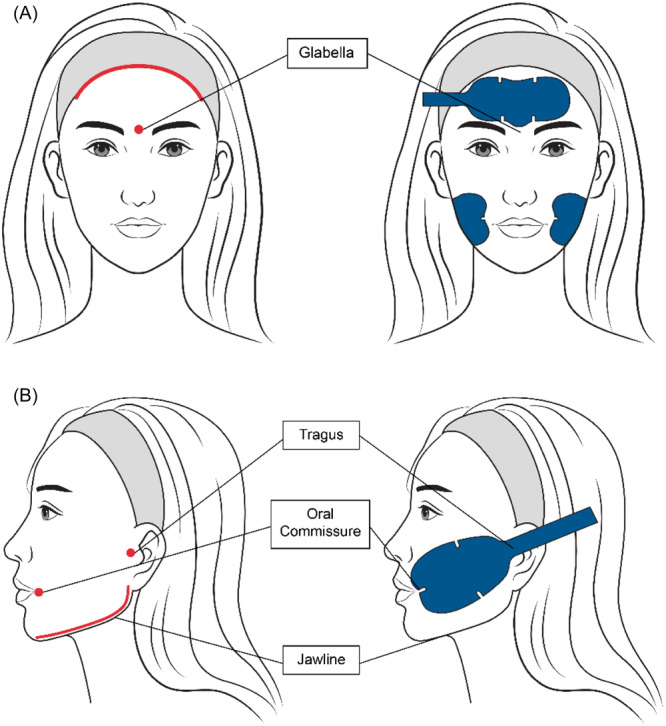
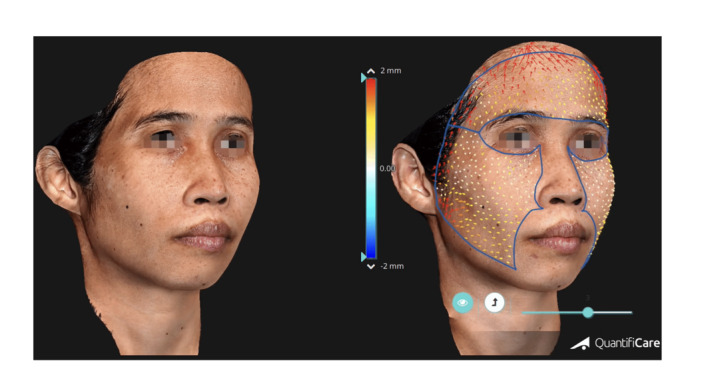
In this prospective, evaluator-blinded study, 15 participants aged 40-65 years with mild to moderate facial skin laxity were enrolled. Each underwent four weekly treatments using a synchronized RF and HIFES system using noninvasive electrode applicators on the forehead and cheeks. Objective assessments included forehead and cheek lifting measurements using a 3D photographic system, eyebrow lifting measurement using ImageJ software, skin texture and melanin levels using Antera 3D®, and skin elasticity using Cutometer® MPA 580. Additionally, patients provided self-assessments regarding their perceived level of improvement. Assessments were conducted at baseline, before the 3rd treatment, and at 1 month, 3 months, and 6 months after the last treatment.
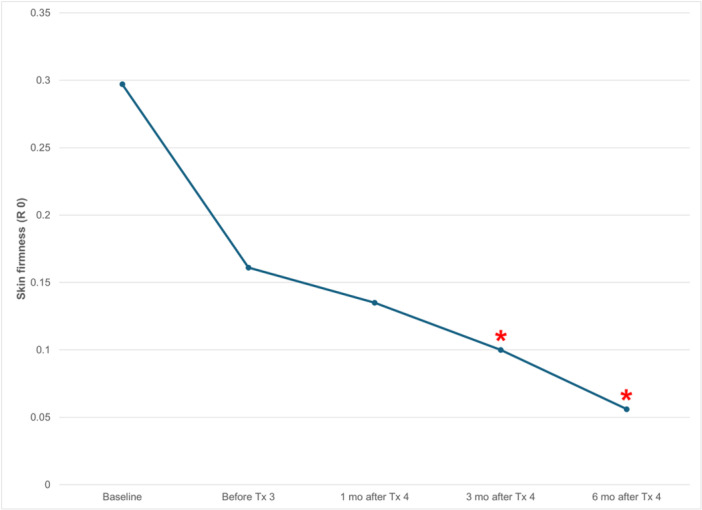
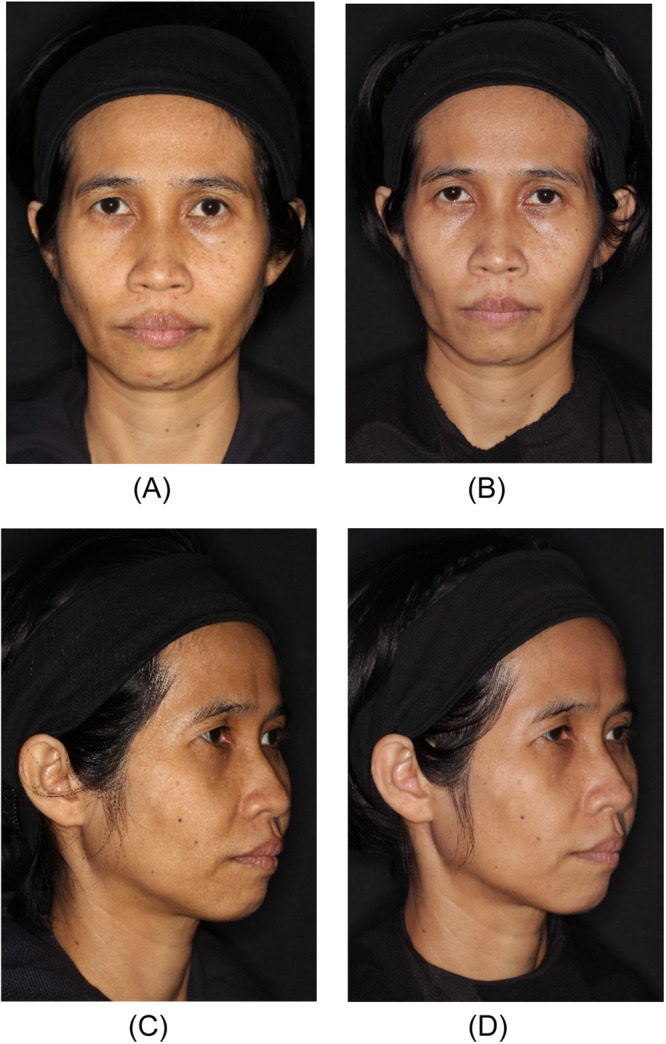
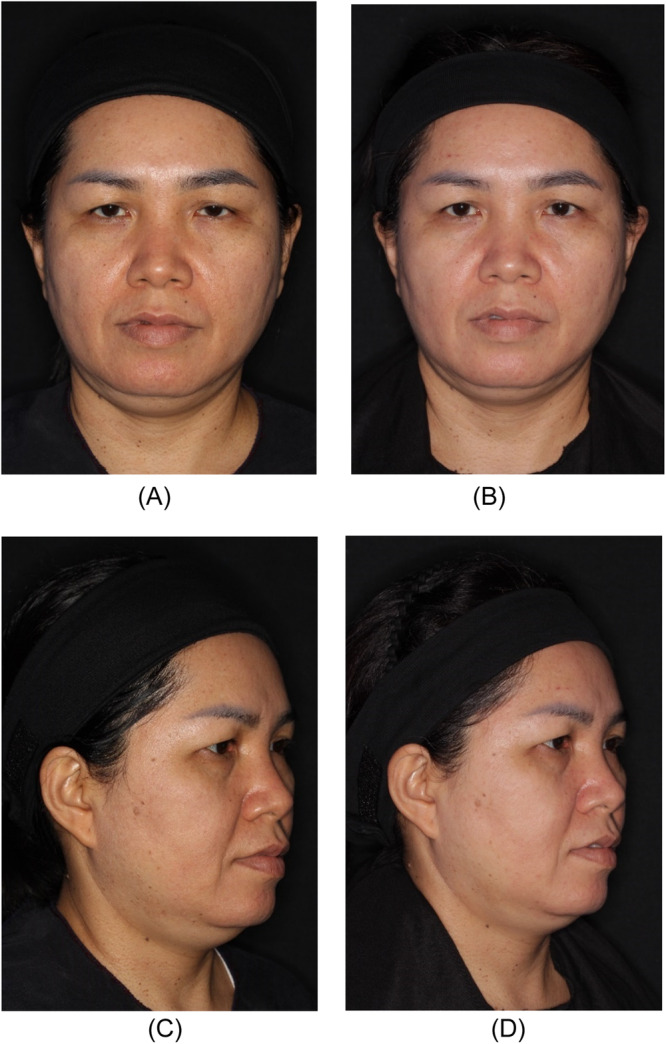
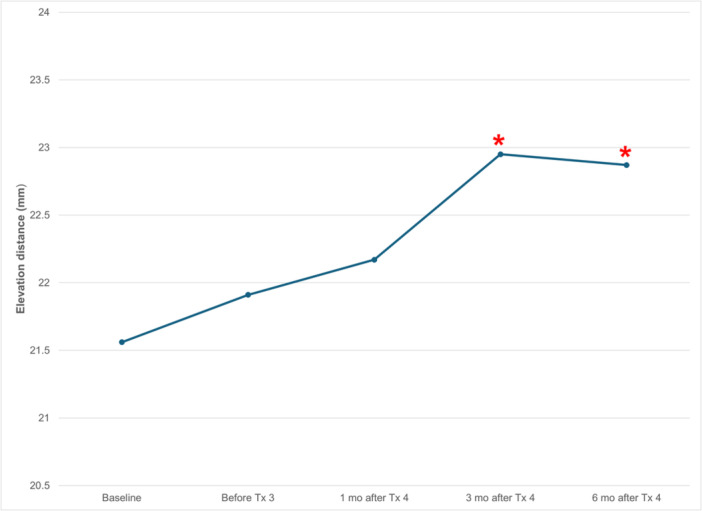
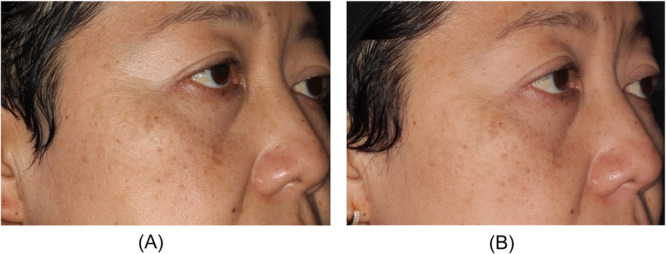
All participants completed the study. Significant improvements were observed in forehead and cheek lifting sustained at 6 months (p < 0.0001). A significant eyebrow lift of 1.39 mm was observed at 3 months (p = 0.0087), with a sustained lifting distance of 1.31 mm at 6 months (p = 0.0021). Skin firmness improved substantially (p < 0.0001), with R0 (skin firmness) increasing by 81.24% at 6 months. Skin texture improved notably in the crow's feet area (13.82% improvement at 3 months, p = 0.049). Melanin levels decreased significantly in the crow's feet and forehead regions. Treatment was well tolerated, with pain scores decreasing from 3.5 ± 1.8 to 1.6 ± 1.0 by the fourth session. No serious adverse events occurred.
Combined synchronous RF and HIFES therapy is a safe and effective Noninvasive method of improving facial skin laxity and quality in Asian subjects. Lasers Surg. Med. 00:00-00, 2024. © 2024 Wiley Periodicals LLC.
用于面部年轻化的非侵入性美容手术越来越受欢迎。传统治疗方法,如射频(RF)和高强度聚焦超声(HIFU),主要改善皮肤质量,但未涉及影响面部松弛的更深层肌肉腱膜结构。一种新方法已被研究,该方法通过高强度面部电刺激(HIFES)与射频同步作用,旨在针对皮肤和深层肌肉腱膜框架,有效改善面部松弛。
评估同步射频和HIFES联合疗法治疗亚洲受试者面部皮肤松弛的长期疗效和安全性。
在这项前瞻性、评估者盲法研究中,招募了15名年龄在40 - 65岁之间、面部皮肤轻度至中度松弛的参与者。每位参与者使用同步射频和HIFES系统,通过无创电极在额头和脸颊进行每周一次,共四次的治疗。客观评估包括使用3D摄影系统测量额头和脸颊提升情况,使用ImageJ软件测量眉部提升情况,使用Antera 3D®测量皮肤纹理和黑色素水平,以及使用Cutometer® MPA 580测量皮肤弹性。此外,患者对自身感知到的改善程度进行自我评估。评估在基线、第三次治疗前、最后一次治疗后1个月、3个月和6个月进行。
所有参与者均完成研究。在6个月时观察到额头和脸颊提升有显著改善(p < 0.0001)。在3个月时观察到眉部显著提升1.39毫米(p = 0.0087),在6个月时持续提升距离为1.31毫米(p = 0.0021)。皮肤紧致度大幅改善(p < 0.0001),6个月时R0(皮肤紧致度)增加了81.24%。鱼尾纹区域的皮肤纹理显著改善(3个月时改善13.82%,p = 0.049)。鱼尾纹和额头区域的黑色素水平显著降低。治疗耐受性良好,到第四次治疗时疼痛评分从3.5 ± 1.8降至1.6 ± 1.0。未发生严重不良事件。
同步射频和HIFES联合疗法是一种安全有效的非侵入性方法,可改善亚洲受试者的面部皮肤松弛和质量。《激光外科学与医学》00:00 - 00,2024年。© 2024威利期刊有限责任公司