Sun Peiyu, Wang Shunhe, Hu Ling, Huang Yinhu, Wang Yaping
Lab of Stem Cells and Tissue Engineering, Chongqing Medical University, 400016 Chongqing, China; Department of Pathology, Chongqing Medical University, 400016 Chongqing, China.
Lab of Stem Cells and Tissue Engineering, Chongqing Medical University, 400016 Chongqing, China; Department of Histology and Embryology, Chongqing Medical University, 400016 Chongqing, China.
Actas Esp Psiquiatr. 2025 Jan;53(1):49-61. doi: 10.62641/aep.v53i1.1812.
Neural stem cells (NSCs) disrupt with aging, contributing to neurodegeneration. Ginsenoside Rg1 (Rg1), a compound found in Ginseng, is known for its anti-aging effects; however, its role in the progression of aging NSCs remains unclear. Therefore, this investigation explored the impact of Rg1 on the growth and maturation of aging NSC and elucidated its underlying molecular mechanisms.
Initially, mouse models of brain aging were successfully established using D-galactose (D-gal) injection. Mice received Rg1 treatment along with D-gal administration. Brain tissues and NSCs were isolated and analyzed for pathological changes, gene expression, and cellular function. In vitro, experiments used aging NSCs treated with Rg1 to assess cell viability, proliferation, differentiation, and senescence markers.
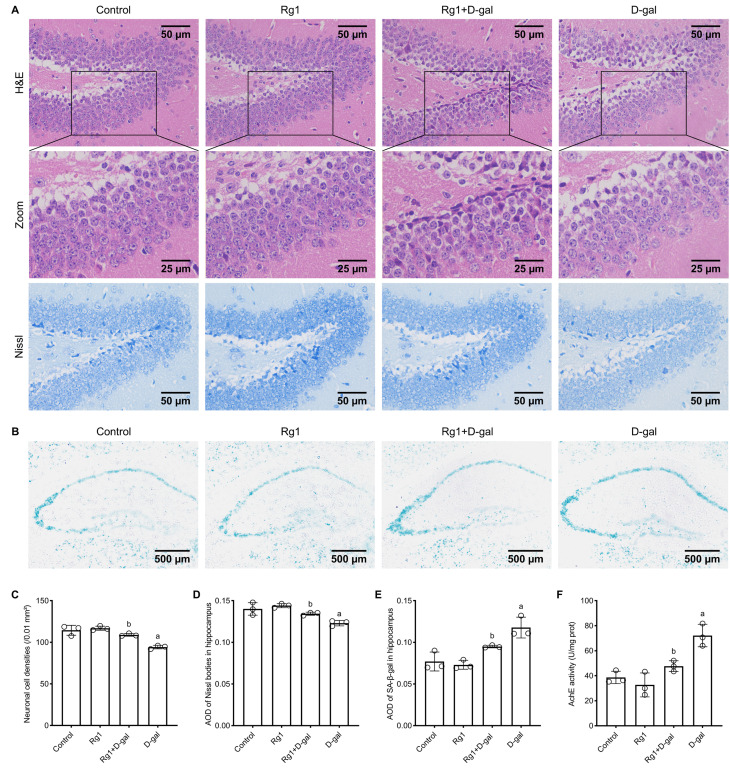
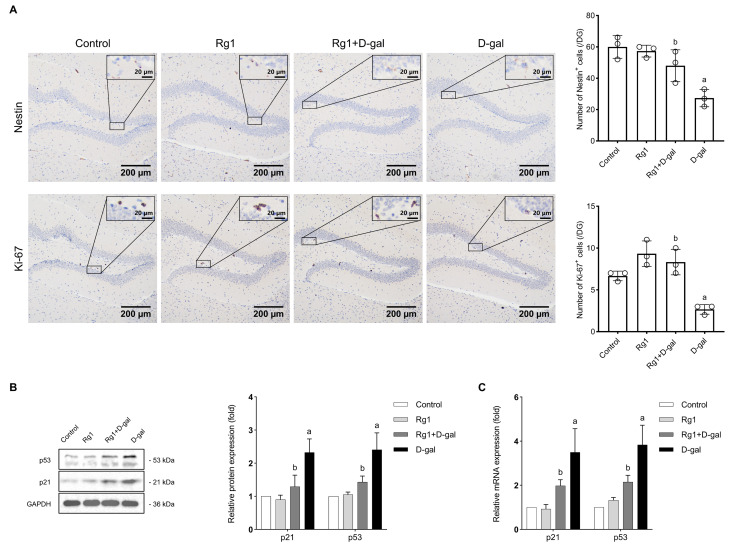
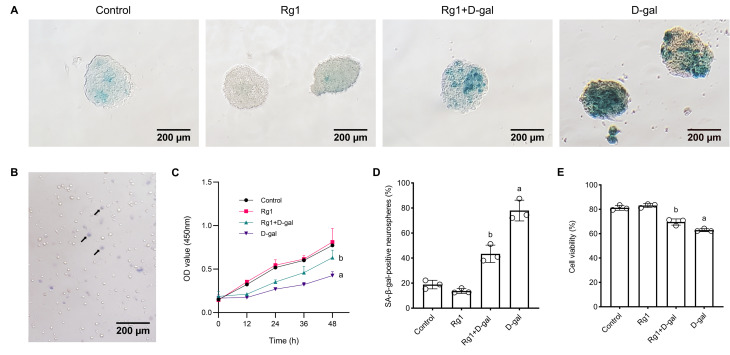
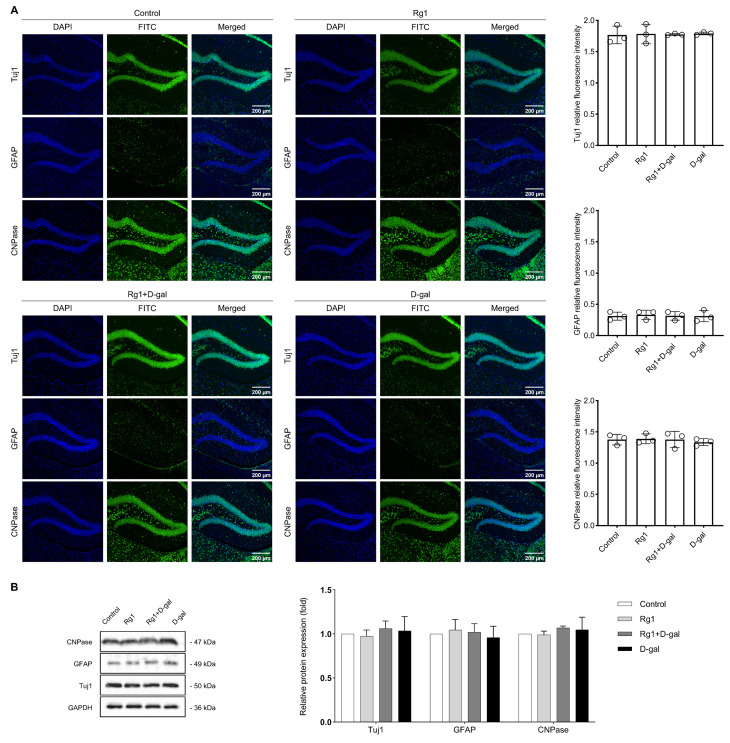
D-gal triggered aging-related pathological alterations in mouse brains, elevated acetylcholinesterase levels, upregulated senescence genes, and inhibited NSC proliferation (p < 0.05). However, Rg1 treatment mitigated D-gal-induced effects, delayed brain aging, and improved NSC function. In vitro, Rg1 significantly increased cell viability, promoted NSC proliferation and differentiation, reduced senescent neurons, and downregulated p53 and p21 genes (p < 0.05).
Rg1 demonstrates anti-aging properties in D-gal-induced mouse brain aging, promoting the proliferation and differentiation of NSCs, and downregulating the p53-p21 signaling pathway.
神经干细胞(NSCs)会随着衰老而受损,导致神经退行性变。人参皂苷Rg1(Rg1)是人参中的一种化合物,以其抗衰老作用而闻名;然而,其在衰老神经干细胞进展中的作用仍不清楚。因此,本研究探讨了Rg1对衰老神经干细胞生长和成熟的影响,并阐明了其潜在的分子机制。
最初,通过注射D-半乳糖(D-gal)成功建立了脑衰老小鼠模型。小鼠在接受D-gal的同时接受Rg1治疗。分离脑组织和神经干细胞,分析其病理变化、基因表达和细胞功能。在体外,实验使用用Rg1处理的衰老神经干细胞来评估细胞活力、增殖、分化和衰老标志物。
D-gal引发了小鼠大脑中与衰老相关的病理改变,提高了乙酰胆碱酯酶水平,上调了衰老基因,并抑制了神经干细胞增殖(p<0.05)。然而,Rg1治疗减轻了D-gal诱导的影响,延缓了脑衰老,并改善了神经干细胞功能。在体外,Rg1显著提高了细胞活力,促进了神经干细胞的增殖和分化,减少了衰老神经元,并下调了p53和p21基因(p<0.05)。
Rg1在D-gal诱导的小鼠脑衰老中表现出抗衰老特性,促进神经干细胞的增殖和分化,并下调p53-p21信号通路。