Yan Siming, Zhu Xueli, Huo Zhongcui, Wang Zhiying, Cui Huifen
Blood Purification Center, First Affiliated Hospital of Huzhou Normal College, 313000 Huzhou, Zhejiang, China.
Actas Esp Psiquiatr. 2025 Jan;53(1):154-164. doi: 10.62641/aep.v53i1.1628.
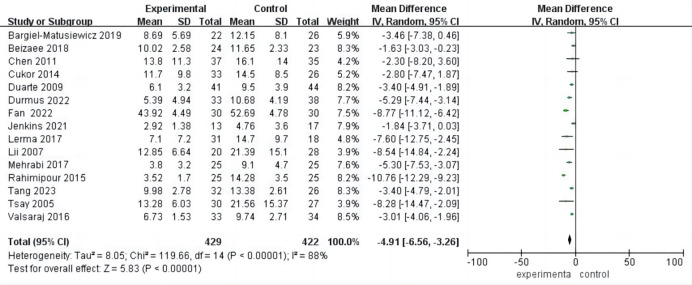
With the advancement of blood purification technology, there is increasing attention to the mental health of hemodialysis patients, particularly concerning depression. This study aims to determine the effect of psychological interventions on anxiety and depression in hemodialysis patients through a meta-analysis.
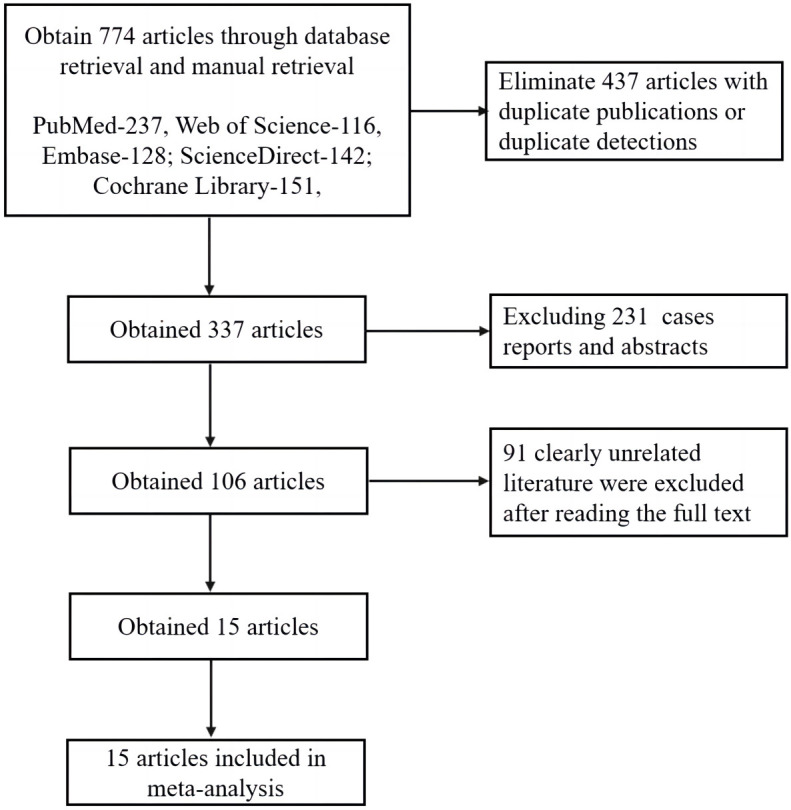
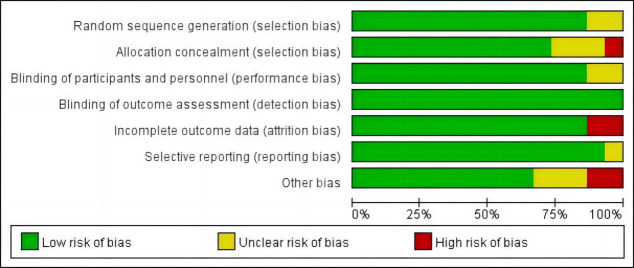
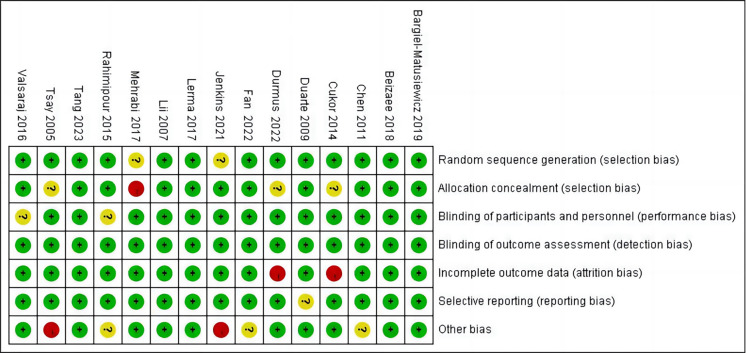
A computerized search was conducted to identify randomized controlled trial (RCT) studies published in PubMed, Embase, Web of Science, ScienceDirect, and Cochrane Library databases from their inception to October 2023, focusing on the effects of psychological interventions on improving depression in hemodialysis patients. Data extraction, quality evaluation, and cross-checking were performed independently by two researchers. The methodological quality of the included studies was assessed according to the criteria recommended by the Cochrane Handbook for Systematic Reviews and the meta-analysis was performed using RevMan 5.4 software (The Nordic Cochrane Centre, Copenhagen, Denmark). The effect of psychological interventions on anxiety and depression in hemodialysis patients was determined by combining effect sizes and I2 statistics.
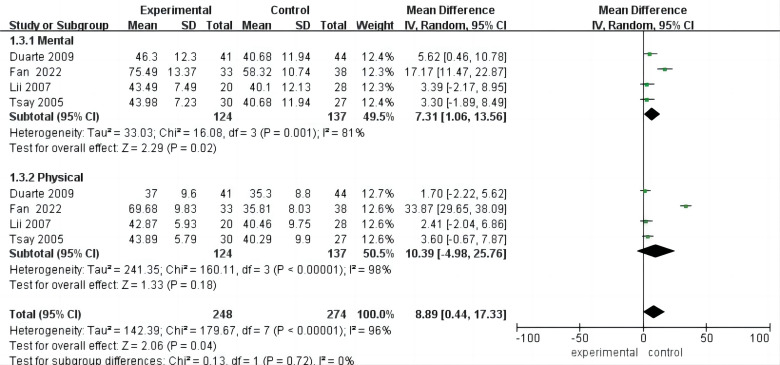
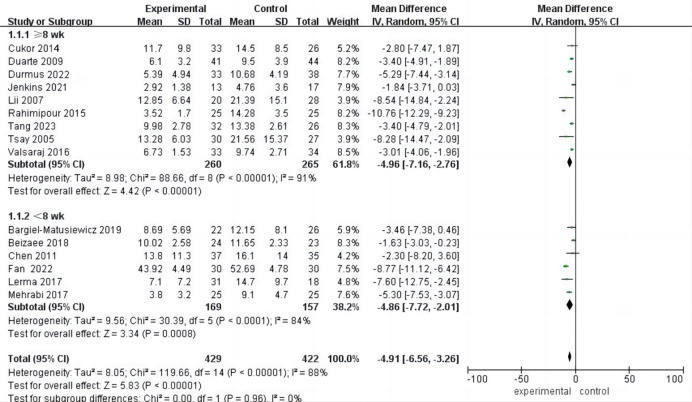
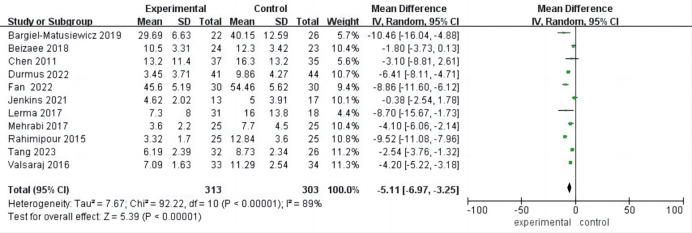
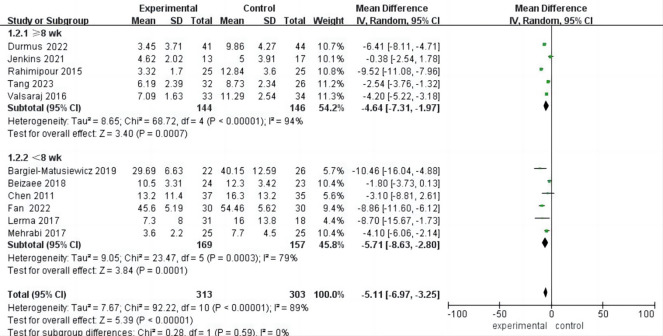
Fifteen studies were included, encompassing a total of 929 hemodialysis patients: 468 in the intervention group and 461 in the control group. The results indicated that psychological interventions could improve depressive moods [mean difference (MD) = -4.91, 95% confidence intervals (CI) (-6.56, -3.26), p < 0.001] and anxiety status [MD = -5.11, 95% CI (-6.97, -3.25), p < 0.001]. A subgroup analysis based on the intervention duration (more or less than 8 weeks) revealed that patients experienced significant improvements in depression and anxiety regardless of the intervention length. Additionally, subgroup analyses focusing on quality of life demonstrated that psychological interventions significantly improved the psychological aspects of patients' quality of life [MD = 7.31, 95% CI (1.06, 13.56), p = 0.001]. Sensitivity analysis, which excluded sources of heterogeneity, indicated that psychological interventions significantly enhanced both the psychological [odds ratios (OR) = 4.14, 95% CI (1.08, 7.20), p = 0.008] and physical [MD = 2.52, 95% CI (0.10, 4.95), p = 0.04] aspects of patients' quality of life.
Psychological interventions can significantly alleviate depression and anxiety in hemodialysis patients and improve their quality of life. Psychotherapy holds promise as an effective method for improving depression in dialysis patients.
随着血液净化技术的进步,血液透析患者的心理健康,尤其是抑郁症,受到越来越多的关注。本研究旨在通过荟萃分析确定心理干预对血液透析患者焦虑和抑郁的影响。
进行计算机检索,以识别从创刊至2023年10月在PubMed、Embase、Web of Science、ScienceDirect和Cochrane图书馆数据库中发表的随机对照试验(RCT)研究,重点关注心理干预对改善血液透析患者抑郁的影响。由两名研究人员独立进行数据提取、质量评估和交叉核对。根据Cochrane系统评价手册推荐的标准评估纳入研究的方法学质量,并使用RevMan 5.4软件(丹麦哥本哈根北欧Cochrane中心)进行荟萃分析。通过合并效应量和I²统计量确定心理干预对血液透析患者焦虑和抑郁的影响。
纳入15项研究,共929例血液透析患者:干预组468例,对照组461例。结果表明,心理干预可改善抑郁情绪[平均差(MD)=-4.91,95%置信区间(CI)(-6.56,-3.26),p<0.001]和焦虑状态[MD=-5.11,95%CI(-6.97,-3.25),p<0.001]。基于干预持续时间(8周以上或以下)的亚组分析显示,无论干预时间长短,患者的抑郁和焦虑均有显著改善。此外,关注生活质量的亚组分析表明,心理干预显著改善了患者生活质量的心理方面[MD=7.31,95%CI(1.06,13.56),p=0.001]。排除异质性来源的敏感性分析表明,心理干预显著提高了患者生活质量的心理方面[优势比(OR)=4.14,95%CI(1.08,7.20),p=0.008]和身体方面[MD=2.52,95%CI(0.10,4.95),p=0.04]。
心理干预可显著减轻血液透析患者的抑郁和焦虑,提高其生活质量。心理治疗有望成为改善透析患者抑郁的有效方法。