Li Shu, Baijnath-Rodino Janine A, York Robert A, Quinn-Davidson Lenya N, Banerjee Tirtha
Department of Civil and Environmental Engineering, University of California, Irvine, Irvine, CA USA.
Department of Environmental Science, Policy, and Management, University of California, Berkeley, Berkeley, CA USA.
Fire Ecol. 2025;21(1):3. doi: 10.1186/s42408-024-00342-3. Epub 2025 Jan 9.
Prescribed fires play a critical role in reducing the intensity and severity of future wildfires by systematically and widely consuming accumulated vegetation fuel. While the current probability of prescribed fire escape in the United States stands very low, their consequential impact, particularly the large wildfires they cause, raises substantial concerns. The most direct way of understanding this trade-off between wildfire risk reduction and prescribed fire escapes is to explore patterns in the historical prescribed fire records. This study investigates the spatiotemporal patterns of escaped prescribed fires in California from 1991 to 2020, offering insights for resource managers in developing effective forest management and fuel treatment strategies.
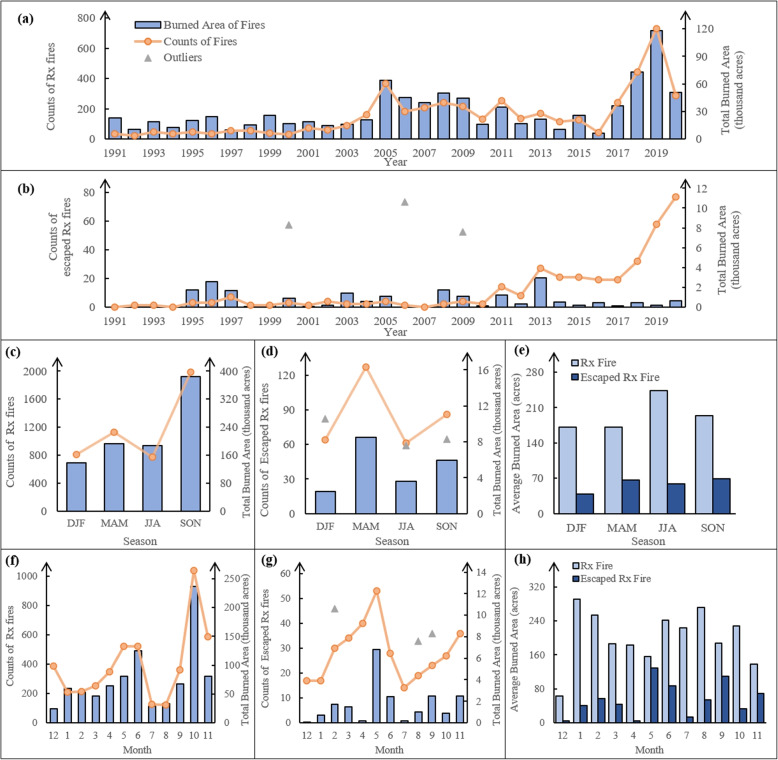
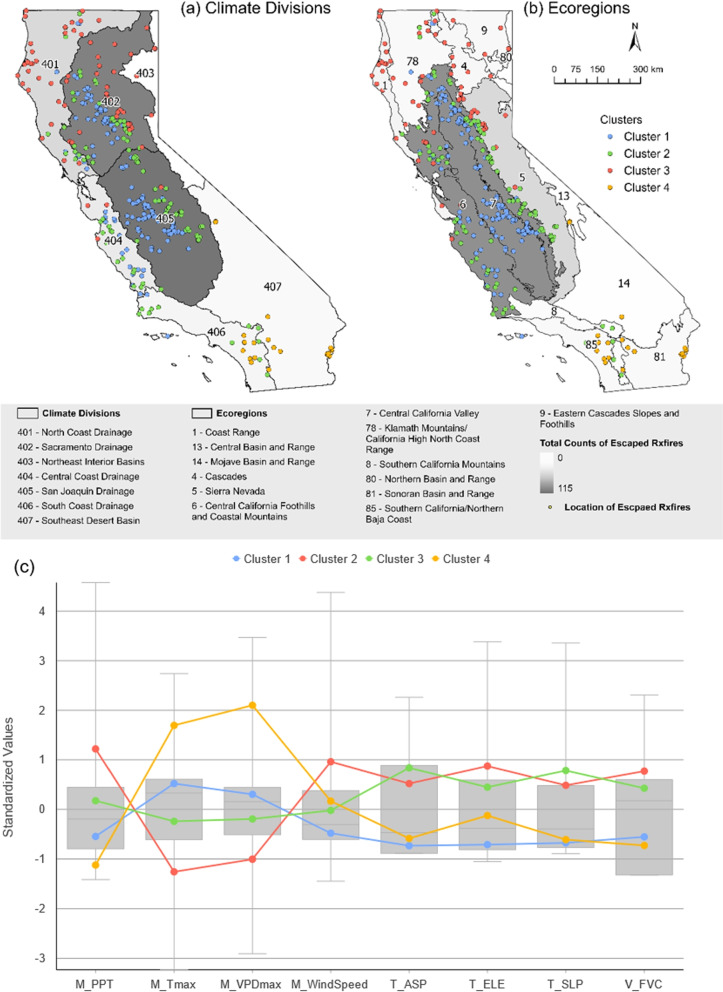
The results reveal that the months close to the beginning and end of the wildfire season, namely May, June, September, and November, have the highest frequency of escaped fires. Under similar environmental conditions, areas with more records of prescribed fire implementation tend to experience fewer escapes. The findings revealed the vegetation types most susceptible to escaped prescribed fires. Areas with tree cover ranging from 20 to 60% exhibited the highest incidence of escapes compared to shrubs and grasslands. Among all the environmental conditions analyzed, wind speed stands out as the predominant factor that affects the risk of prescribed fire escaping.
These findings mark an initial step in identifying high-risk areas and periods for prescribed fire escapes. Understanding these patterns and the challenges of quantifying escape rates can inform more effective landscape management practices.
The online version contains supplementary material available at 10.1186/s42408-024-00342-3.
计划性火烧在通过系统且广泛地消耗积累的植被燃料来降低未来野火的强度和严重程度方面发挥着关键作用。虽然目前在美国计划性火烧失控的概率非常低,但其产生的后果影响,尤其是它们引发的大型野火,引发了诸多重大担忧。理解野火风险降低与计划性火烧失控之间这种权衡的最直接方法是探究历史计划性火烧记录中的模式。本研究调查了1991年至2020年加利福尼亚州计划性火烧失控的时空模式,为资源管理者制定有效的森林管理和燃料处理策略提供见解。
结果显示,接近野火季节开始和结束的月份,即五月、六月、九月和十一月,计划性火烧失控的频率最高。在相似的环境条件下,计划性火烧实施记录较多的地区计划性火烧失控的情况往往较少。研究结果揭示了最容易发生计划性火烧失控的植被类型。与灌木和草地相比,树木覆盖率在20%至60%之间的地区计划性火烧失控的发生率最高。在所有分析的环境条件中,风速是影响计划性火烧失控风险的主要因素。
这些发现标志着在识别计划性火烧失控的高风险区域和时期方面迈出了第一步。了解这些模式以及量化失控率的挑战可为更有效的景观管理实践提供参考。
在线版本包含可在10.1186/s42408-024-00342-3获取的补充材料。