Li Heliang, Liang Xinyan, Ma Jiafan, Liu Qiang, Lin Ying, Tang Junpeng, Ren Zefang, Liang Zhuozhi
Guangdong Provincial Key Laboratory of Malignant Tumor Epigenetics and Gene Regulation, Medical Research Center, Sun Yat-Sen Memorial Hospital, Sun Yat-Sen University, Guangzhou, Guangdong, People's Republic of China.
Breast Tumor Center, Sun Yat-Sen Memorial Hospital, Sun Yat-Sen University, Guangzhou, Guangdong, People's Republic of China.
J Inflamm Res. 2025 Jan 8;18:405-419. doi: 10.2147/JIR.S496099. eCollection 2025.
Previous studies have reported that infection-induced fever is associated with improved breast cancer prognosis, potentially through the modulation of cytokines. However, the key cytokines and the underlying mechanisms through which fever exerts its anti-tumor effects remain unclear.
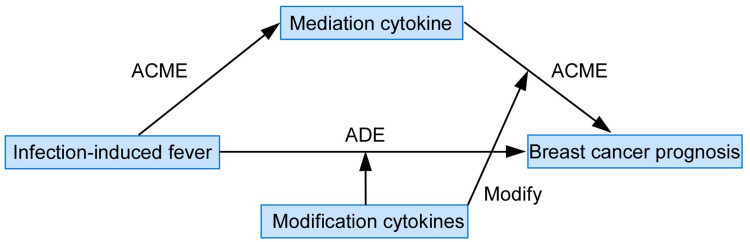
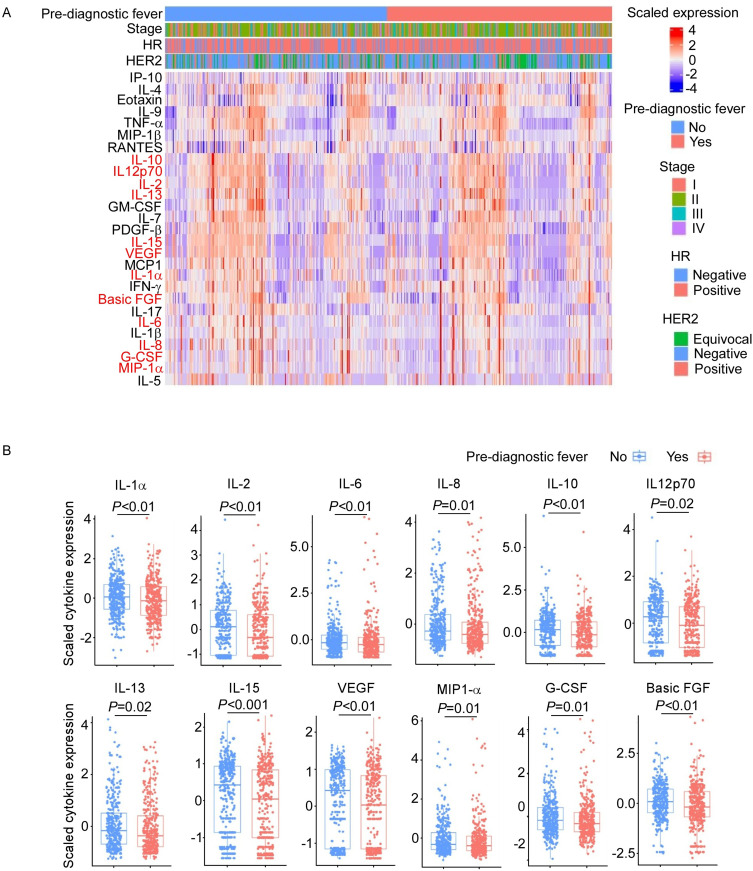
A total of 794 breast cancer patients were recruited between 2008 and 2017, with follow-up extending until October 31st, 2023. Infection-induced fever was assessed using questionnaires, while a multiplex assay evaluated a panel of 27 cytokines. The mediation effects of various cytokines were analyzed through model-based causal mediation analysis. Additionally, we explored modifications to these mediation effect by examining interactions among the cytokines themselves as well as their interactions with infection-induced fever. Bioinformatic analyses were conducted to elucidate the biological pathways mediating infection-induced fever.
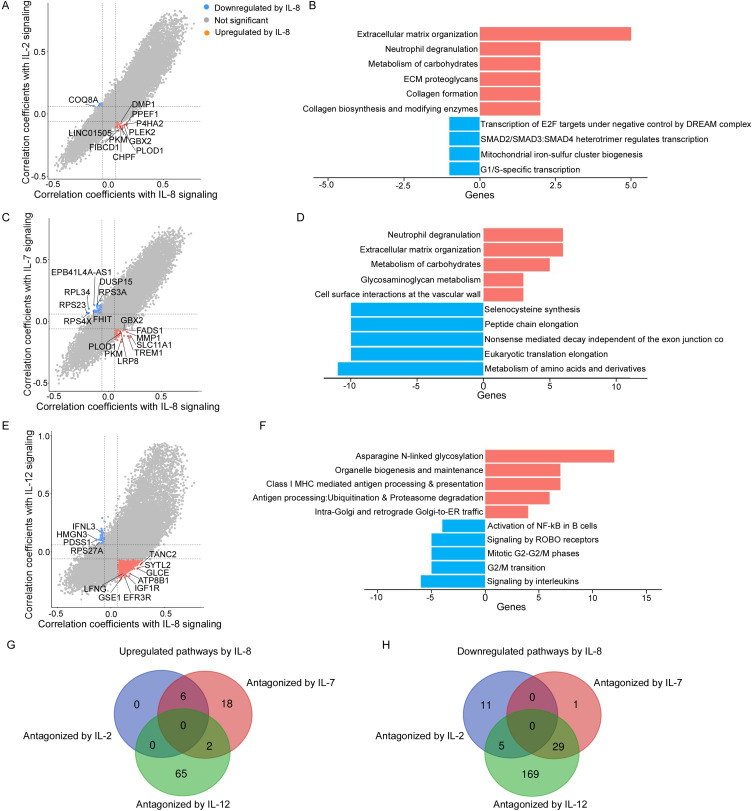
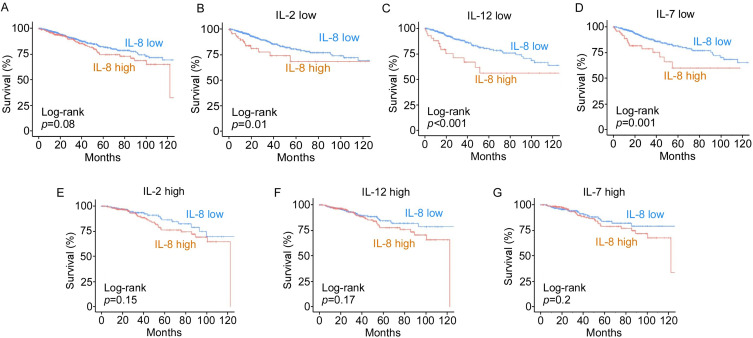
The relationship between infection-induced fever and improved breast cancer prognosis was mediated by a decrease in interleukin-8 (IL-8) levels. Furthermore, our findings revealed that the downregulation of IL-8, which mediates the beneficial effects of fever, was antagonized by IL-2, IL12p70 and IL-7. By intersecting the biological pathways influenced by IL-8, alongside those affected by IL-2, IL12p70, or IL-7, we found that these latter cytokines antagonized the mediation effects of IL-8 via regulating critical pathways such as neutrophil degranulation, extracellular matrix organization and asparagine N-linked glycosylation.
Infection-induced fever may improve breast cancer prognosis through IL-8 downregulation and the mediation mechanisms may be involved in neutrophil degranulation, extracellular matrix organization and asparagine N-linked glycosylation. Such findings not only provide valuable insights into effectively managing febrile responses for breast cancer patients, but also underscore the therapeutic potential of cytokines in breast cancer patients.
既往研究报道,感染性发热可能通过细胞因子调节,与乳腺癌预后改善相关。然而,发热发挥抗肿瘤作用的关键细胞因子及潜在机制仍不清楚。
2008年至2017年间共招募了794例乳腺癌患者,随访至2023年10月31日。通过问卷调查评估感染性发热情况,采用多重检测法评估一组27种细胞因子。通过基于模型的因果中介分析来分析各种细胞因子的中介作用。此外,我们通过检查细胞因子自身之间的相互作用以及它们与感染性发热之间的相互作用,来探索对这些中介作用的修饰。进行生物信息学分析以阐明介导感染性发热的生物学途径。
感染性发热与乳腺癌预后改善之间的关系是由白细胞介素-8(IL-8)水平降低介导的。此外,我们的研究结果显示,介导发热有益作用的IL-8下调受到IL-2、IL12p70和IL-7的拮抗。通过交叉分析受IL-8影响的生物学途径以及受IL-2、IL12p70或IL-7影响的途径,我们发现后述这些细胞因子通过调节中性粒细胞脱颗粒、细胞外基质组织和天冬酰胺N-连接糖基化等关键途径,拮抗了IL-8的中介作用。
感染性发热可能通过下调IL-8改善乳腺癌预后,其介导机制可能涉及中性粒细胞脱颗粒、细胞外基质组织和天冬酰胺N-连接糖基化。这些发现不仅为有效处理乳腺癌患者的发热反应提供了有价值的见解,也凸显了细胞因子在乳腺癌患者中的治疗潜力。