Chang Cheng, Jia Ruiying, Fang Bin, Miao Yaoyao, Zhang Lili
General Surgery Department, Qingdao Hospital, University of Health and Rehabilitation Sciences (Qingdao Municipal Hospital), Qingdao, 266011, China.
Surgical Center, Qingdao Hospital, University of Health and Rehabilitation Sciences (Qingdao Municipal Hospital), Qingdao, 266011, China.
Open Med (Wars). 2025 Jan 8;20(1):20241079. doi: 10.1515/med-2024-1079. eCollection 2025.
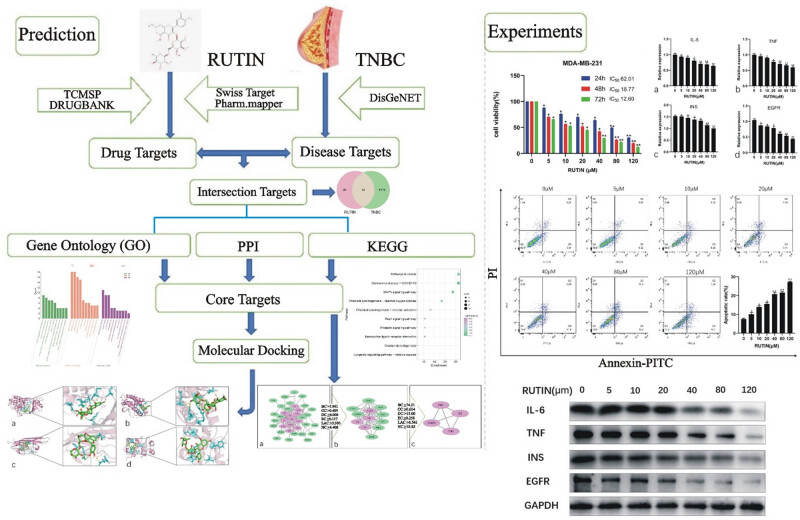
This study aims to assess the potential mechanism of rutin to treat triple-negative breast cancer (TNBC) based on network pharmacology followed by experiments.
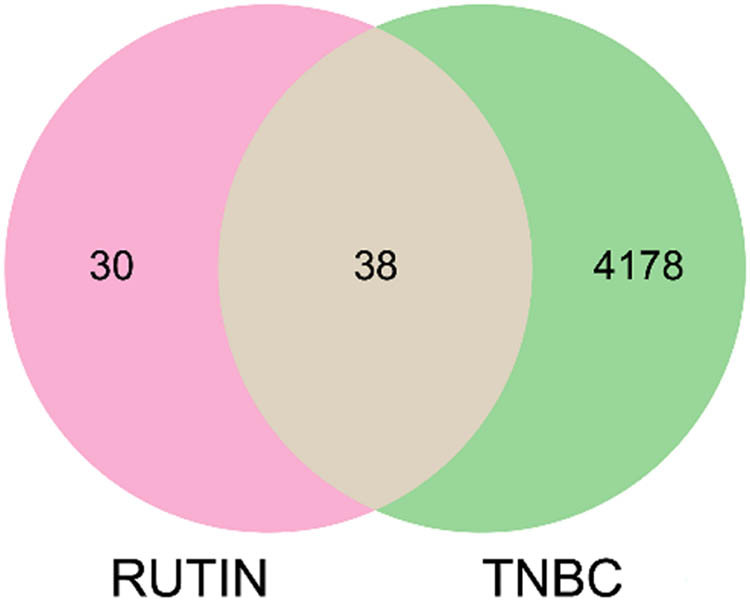
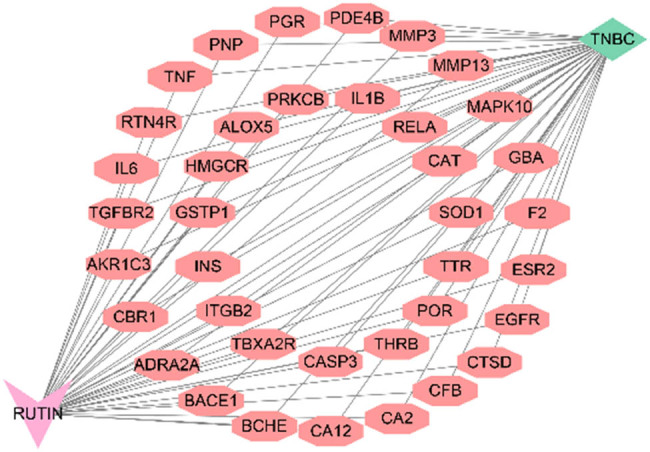
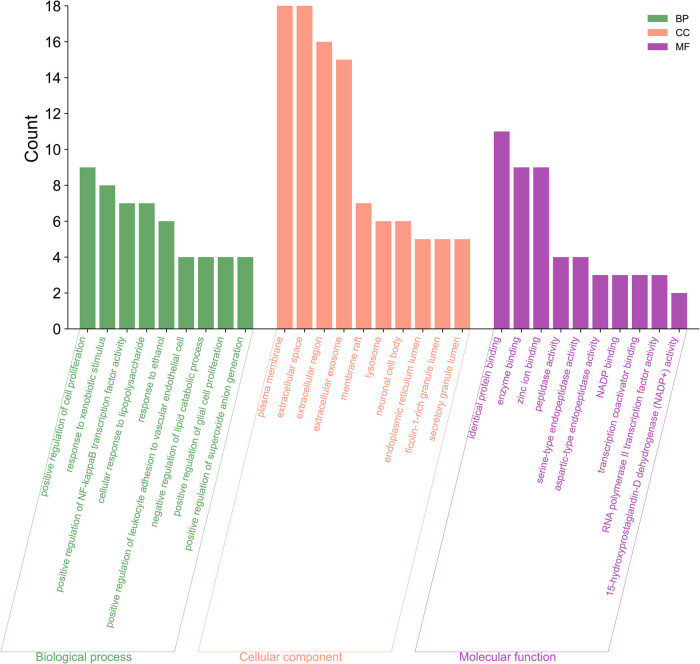
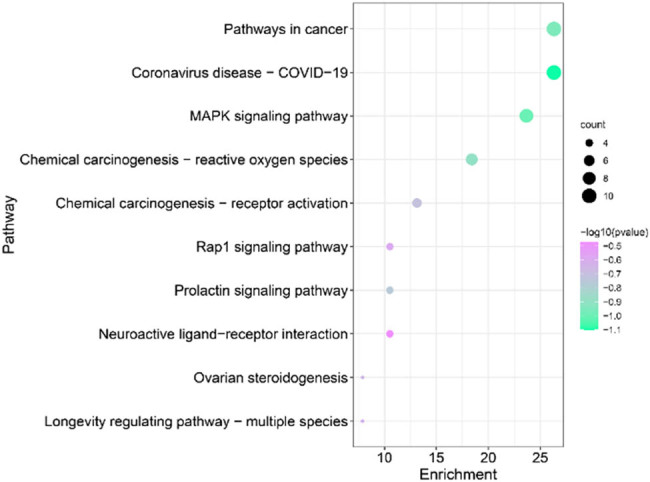
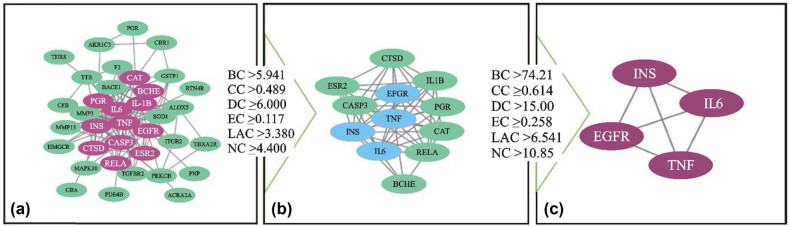
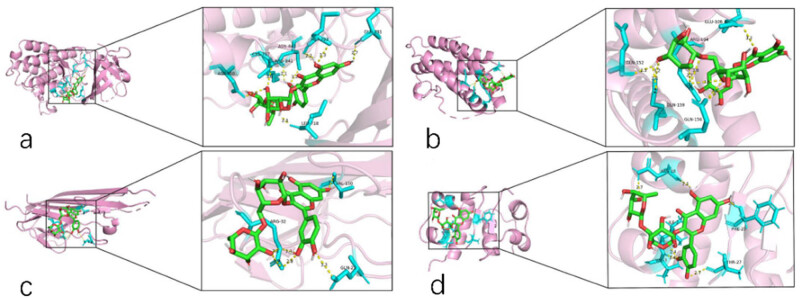
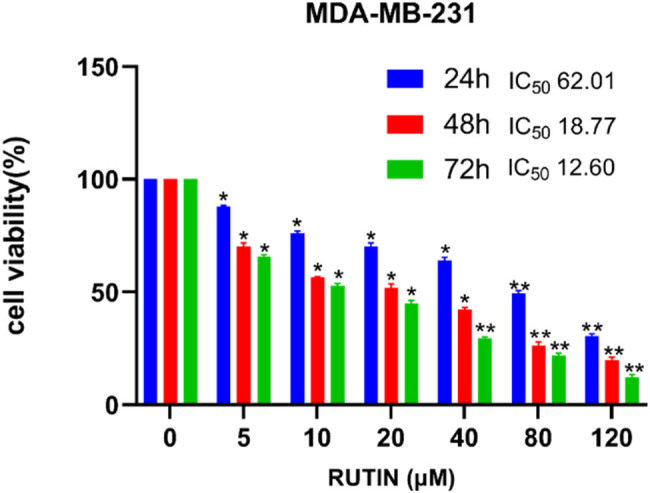
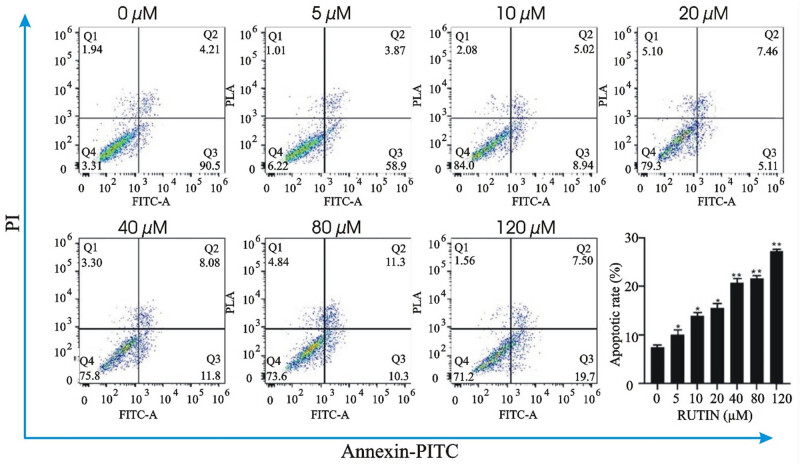
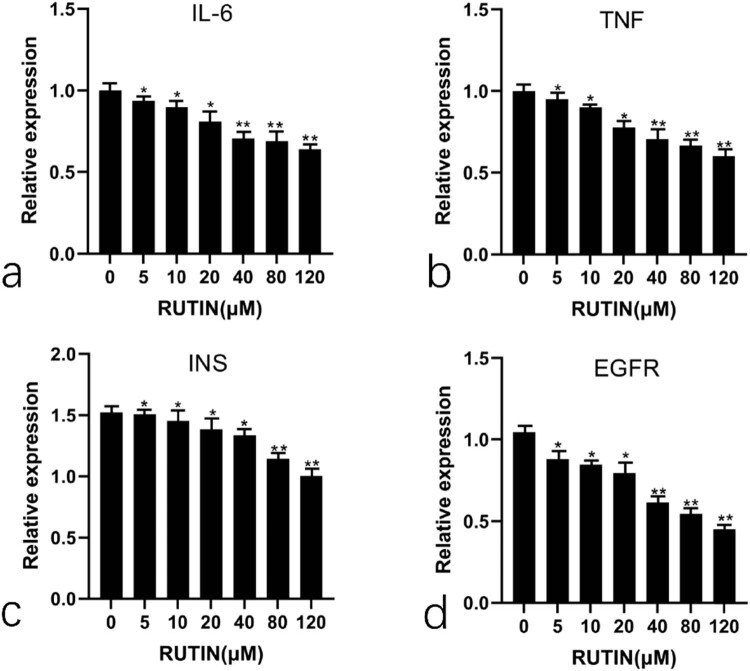
The potential rutin targets were predicted, and the DisGeNET database was used to obtain the disease targets. The intersection targets were identified with Venny 2.1 software, with the String database subsequently used as input to produce the "drug-target-disease" visual network employing Cytoscape 3.7.2. Gene ontology. Kyoto Encyclopaedia of Genes and Genomes analyses were performed for intersection targets, while AutoDock Vina was used for molecular docking and visualization. Cell viability was assessed using the Colorimetric CCK-8 test, and apoptosis was analyzed using PI/Annexin V. The predicted core targets were confirmed by qPCR and western blotting assays.
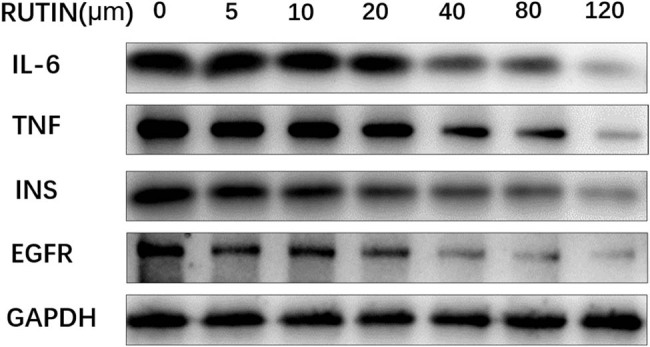
EGFR, IL6, TNF, and INS were found as the primary targets. The molecular docking analysis revealed the rutin interaction with the core targets. The results confirmed that rutin inhibited the growth of the MDA-MB-231 cell line. Rutin also induced cell death and decreased the expressions of IL6, TNF, INS, and EGFR.
Rutin's multi-target effects and molecular mechanism for treating TNBC were confirmed through preliminary results. The results provide a theoretical base for rutin's possible function in breast cancer treatment.
本研究旨在基于网络药理学并结合实验评估芦丁治疗三阴性乳腺癌(TNBC)的潜在机制。
预测芦丁的潜在靶点,并使用DisGeNET数据库获取疾病靶点。用Venny 2.1软件确定交集靶点,随后将String数据库用作输入,使用Cytoscape 3.7.2生成“药物-靶点-疾病”可视化网络。对交集靶点进行基因本体论、京都基因与基因组百科全书分析,同时使用AutoDock Vina进行分子对接和可视化。使用比色CCK-8试验评估细胞活力,使用PI/膜联蛋白V分析细胞凋亡。通过qPCR和蛋白质免疫印迹分析验证预测的核心靶点。
发现表皮生长因子受体(EGFR)、白细胞介素6(IL6)、肿瘤坏死因子(TNF)和胰岛素(INS)为主要靶点。分子对接分析揭示了芦丁与核心靶点的相互作用。结果证实芦丁抑制MDA-MB-231细胞系的生长。芦丁还诱导细胞死亡,并降低IL6、TNF、INS和EGFR的表达。
初步结果证实了芦丁治疗TNBC的多靶点效应和分子机制。这些结果为芦丁在乳腺癌治疗中的可能作用提供了理论依据。