Al Ali Hadeel S, Rodrigo Glenn C, Lambert David G
Department of Cardiovascular Sciences, Clinical Sciences Wing, Glenfield Hospital, University of Leicester, Leicester, United Kingdom.
Department of Physiology, Al-Zahraa College of Medicine, University of Basrah, Basrah, Iraq.
PLoS One. 2025 Jan 16;20(1):e0313119. doi: 10.1371/journal.pone.0313119. eCollection 2025.
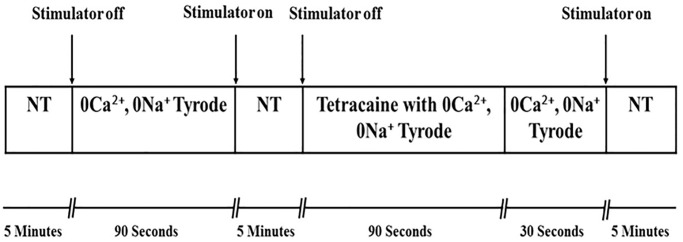
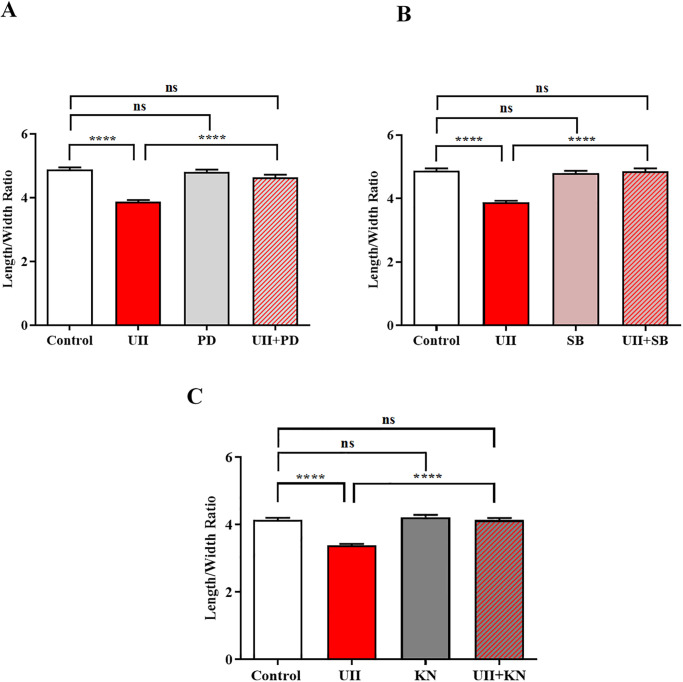
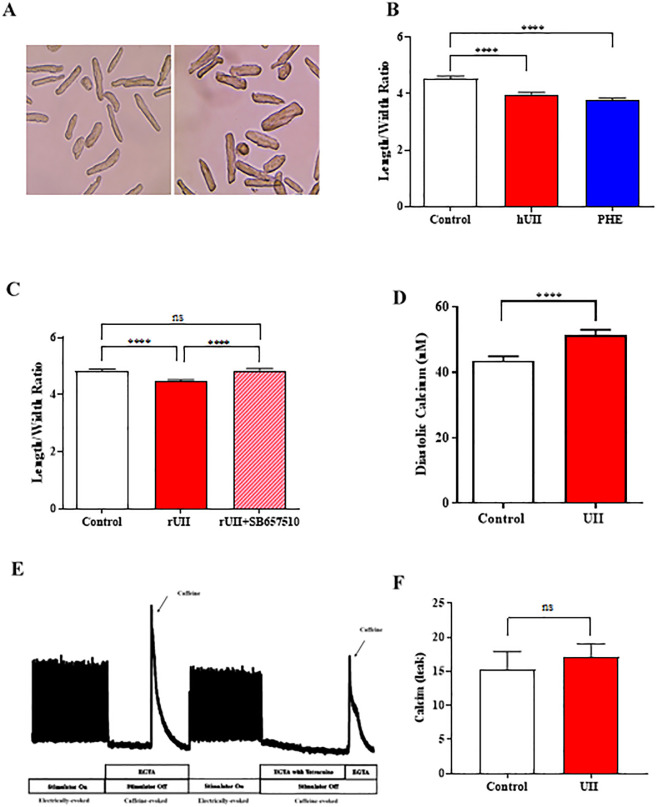
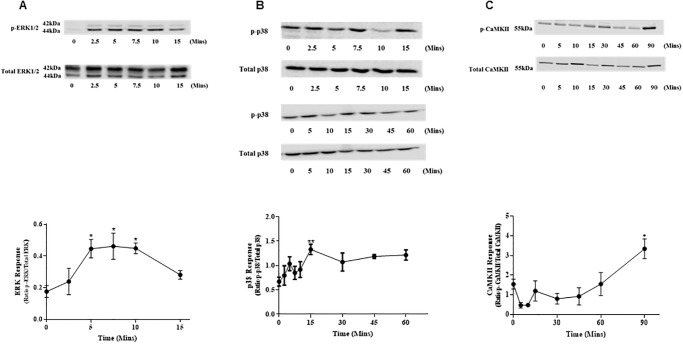
Sustained pathologic myocardial hypertrophy can result in heart failure(HF); a significant health issue affecting a large section of the population worldwide. In HF there is a marked elevation in circulating levels of the peptide urotensin II(UII) but it is unclear whether this is a result of hypertrophy or whether the high levels contribute to the development of hypertrophy. The aim of this study is to investigate a role of UII and its receptor UT in the development of cardiac hypertrophy and the signalling molecules involved. Ventricular myocytes isolated from adult rat hearts were treated with 200nM UII for 48hours and hypertrophy was quantified from measurements of length/width (L/W) ratio. UII resulted in a change in L/W ratio from 4.53±0.10 to 3.99±0.06; (p<0.0001) after 48hours. The response is reversed by the UT-antagonist SB657510 (1μM). UT receptor activation by UII resulted in the activation of ERK1/2, p38 and CaMKII signalling pathways measured by Western blotting; these are involved in the induction of hypertrophy. JNK was not involved. Moreover, ERK1/2, P38 and CaMKII inhibitors completely blocked UII-induced hypertrophy. Sarcoplasmic reticulum (SR) Ca2+-leak was investigated in isolated myocytes. There was no significant increase in SR Ca2+-leak. Our results suggest that activation of MAPK and CaMKII signalling pathways are involved in the hypertrophic response to UII. Collectively our data suggest that increased circulating UII may contribute to the development of left ventricular hypertrophy and pharmacological inhibition of the UII/UT receptor system may prove beneficial in reducing adverse remodeling and alleviating contractile dysfunction in heart disease.
持续性病理性心肌肥大可导致心力衰竭(HF),这是一个影响全球很大一部分人口的重大健康问题。在HF中,肽类尿钠肽II(UII)的循环水平显著升高,但尚不清楚这是肥大的结果还是高水平促成了肥大的发展。本研究的目的是探讨UII及其受体UT在心脏肥大发展中的作用以及相关的信号分子。从成年大鼠心脏分离的心室肌细胞用200nM UII处理48小时,并通过测量长/宽(L/W)比值来量化肥大情况。48小时后,UII导致L/W比值从4.53±0.10变为3.99±0.06;(p<0.0001)。UT拮抗剂SB657510(1μM)可逆转该反应。通过蛋白质印迹法测定,UII激活UT受体会导致ERK1/2、p38和CaMKII信号通路的激活;这些信号通路参与了肥大的诱导。JNK未参与其中。此外,ERK1/2、P38和CaMKII抑制剂完全阻断了UII诱导的肥大。在分离的心肌细胞中研究了肌浆网(SR)Ca2+泄漏情况。SR Ca2+泄漏没有显著增加。我们的结果表明,MAPK和CaMKII信号通路的激活参与了对UII的肥大反应。总体而言,我们的数据表明循环UII升高可能促成左心室肥大的发展,对UII/UT受体系统的药物抑制可能有助于减少不良重塑并缓解心脏病中的收缩功能障碍。