Njegic Alexandra, Wilson Claire, Cartwright Elizabeth J
Division of Cardiovascular Sciences, The University of Manchester, Manchester, United Kingdom.
Centre for Tumour Biology, Barts Cancer Institute, Queen Mary University of London, London, United Kingdom.
Front Physiol. 2020 Sep 4;11:1068. doi: 10.3389/fphys.2020.01068. eCollection 2020.
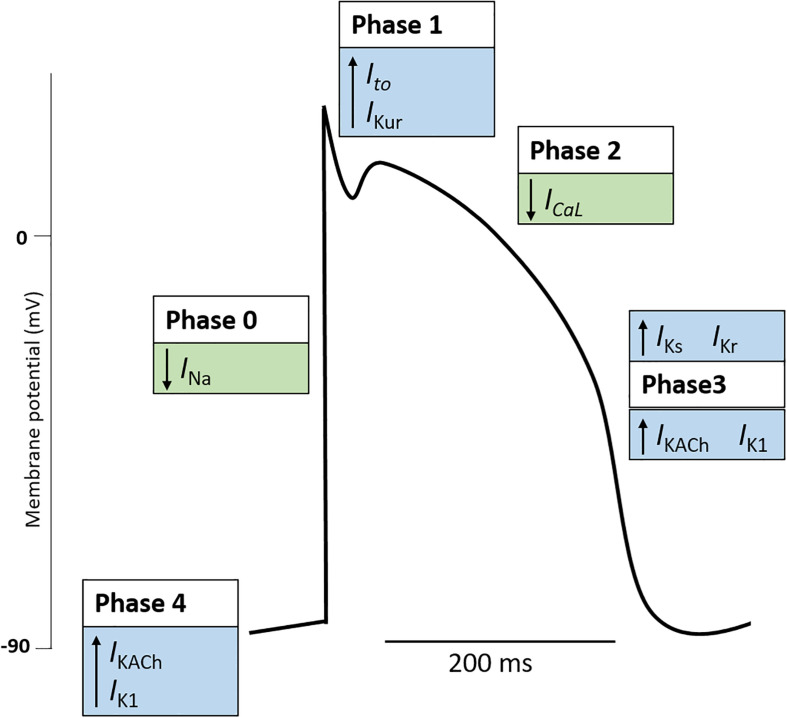
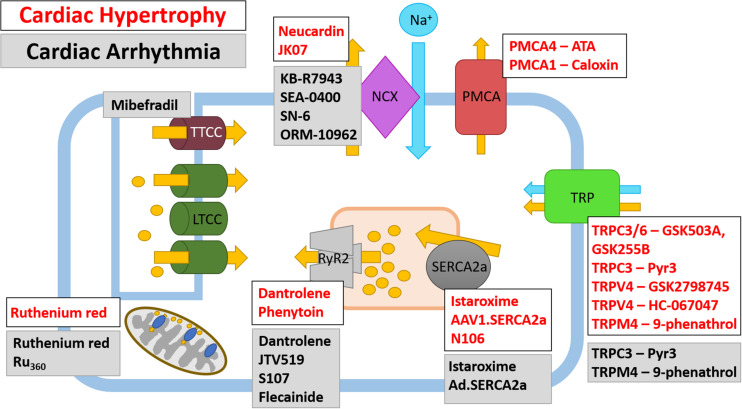
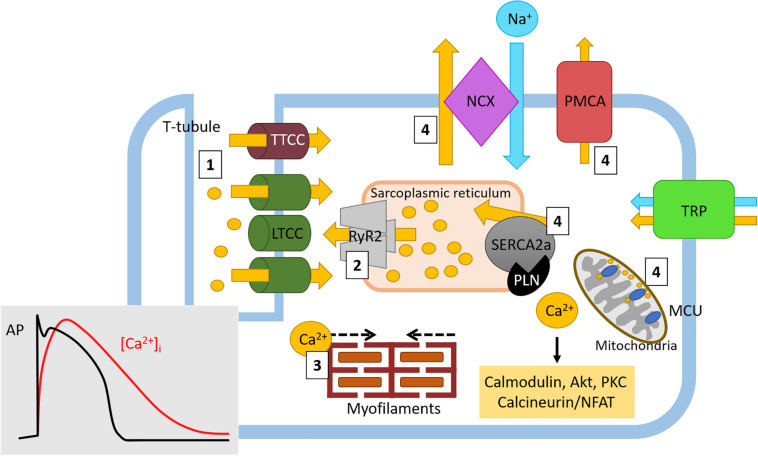
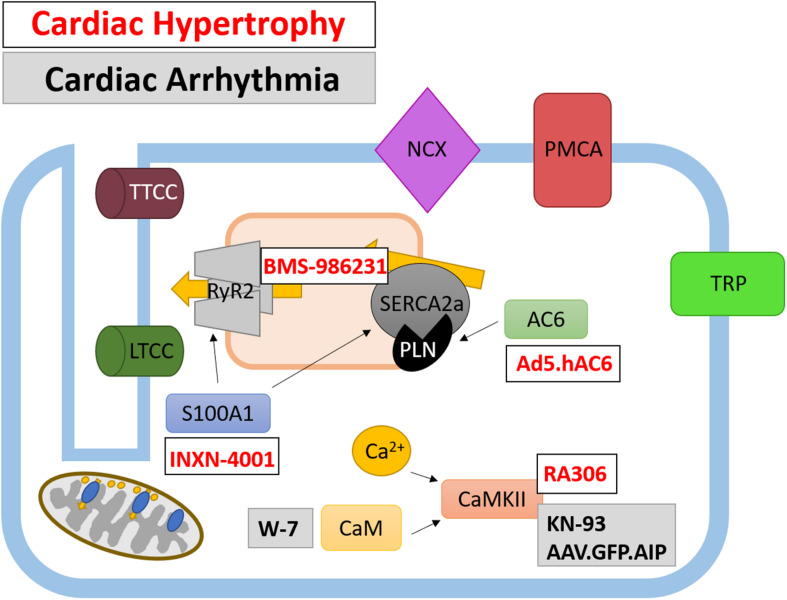
Diseases of the heart, such as heart failure and cardiac arrhythmias, are a growing socio-economic burden. Calcium (Ca) dysregulation is key hallmark of the failing myocardium and has long been touted as a potential therapeutic target in the treatment of a variety of cardiovascular diseases (CVD). In the heart, Ca is essential for maintaining normal cardiac function through the generation of the cardiac action potential and its involvement in excitation contraction coupling. As such, the proteins which regulate Ca cycling and signaling play a vital role in maintaining Ca homeostasis. Changes to the expression levels and function of Ca-channels, pumps and associated intracellular handling proteins contribute to altered Ca homeostasis in CVD. The remodeling of Ca-handling proteins therefore results in impaired Ca cycling, Ca leak from the sarcoplasmic reticulum and reduced Ca clearance, all of which contributes to increased intracellular Ca. Currently, approved treatments for targeting Ca handling dysfunction in CVD are focused on Ca channel blockers. However, whilst Ca channel blockers have been successful in the treatment of some arrhythmic disorders, they are not universally prescribed to heart failure patients owing to their ability to depress cardiac function. Despite the progress in CVD treatments, there remains a clear need for novel therapeutic approaches which are able to reverse pathophysiology associated with heart failure and arrhythmias. Given that heart failure and cardiac arrhythmias are closely associated with altered Ca homeostasis, this review will address the molecular changes to proteins associated with both Ca-handling and -signaling; their potential as novel therapeutic targets will be discussed in the context of pre-clinical and, where available, clinical data.
心脏疾病,如心力衰竭和心律失常,正成为日益沉重的社会经济负担。钙(Ca)调节异常是衰竭心肌的关键标志,长期以来一直被视为治疗多种心血管疾病(CVD)的潜在治疗靶点。在心脏中,钙对于通过产生心脏动作电位及其参与兴奋收缩偶联来维持正常心脏功能至关重要。因此,调节钙循环和信号传导的蛋白质在维持钙稳态中起着至关重要的作用。钙通道、泵及相关细胞内处理蛋白的表达水平和功能变化会导致心血管疾病中钙稳态的改变。因此,钙处理蛋白的重塑会导致钙循环受损、肌浆网钙泄漏和钙清除减少,所有这些都会导致细胞内钙增加。目前,用于治疗心血管疾病中钙处理功能障碍的获批疗法主要集中在钙通道阻滞剂。然而,尽管钙通道阻滞剂在治疗某些心律失常疾病方面取得了成功,但由于它们有降低心脏功能的能力,心力衰竭患者并非普遍使用。尽管心血管疾病治疗取得了进展,但显然仍需要新的治疗方法来逆转与心力衰竭和心律失常相关的病理生理过程。鉴于心力衰竭和心律失常与钙稳态改变密切相关,本综述将探讨与钙处理和信号传导相关蛋白质的分子变化;将在临床前以及现有临床数据的背景下讨论它们作为新型治疗靶点的潜力。