Nair Vishnu, Demitri Christian, Thankam Finosh G
Department of Molecular, Cell, & Developmental Biology, University of California, Los Angeles, CA, 90095, USA.
Department of Experimental Medicine, University of Salento, Lecce, 73100, Italy.
Mol Biol Rep. 2025 Jan 16;52(1):129. doi: 10.1007/s11033-025-10236-5.
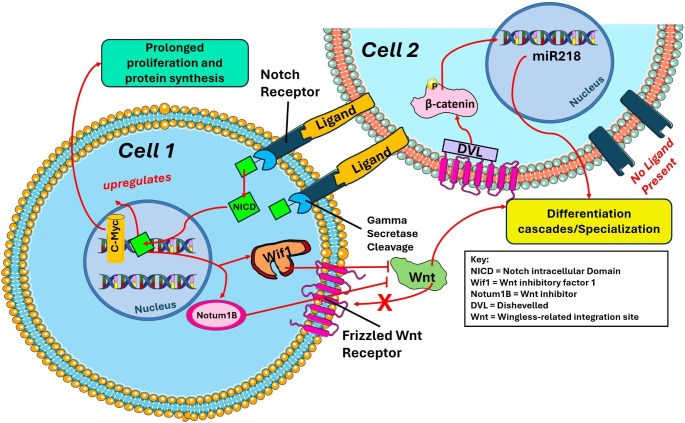
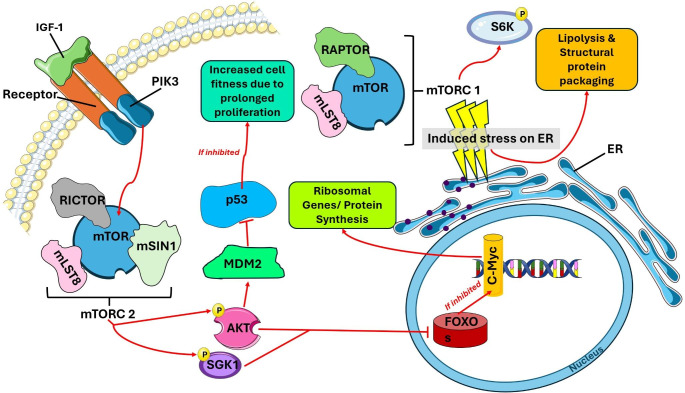
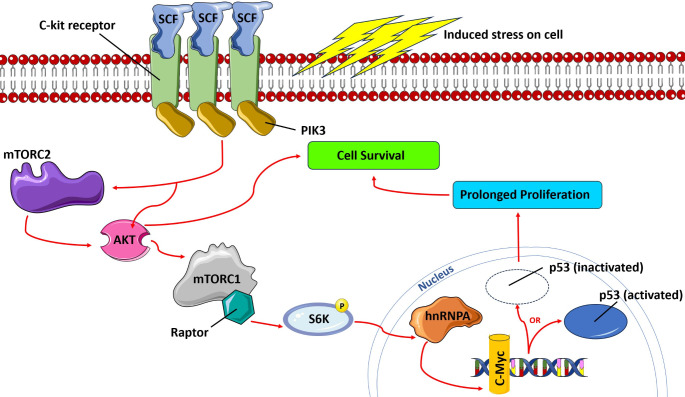
Cell communication and competition pathways are malleable to Myocardial Infarction (MI). Key signals, transcriptive regulators, and metabolites associated with apoptotic responses such as Myc, mTOR, and p53 are important players in the myocardium. The individual state of cardiomyocytes, fibroblasts, and macrophages in the heart tissue are adaptable in times of stress. The overlapping communication pathways of Wnt/β-catenin, Notch, and c-Kit exhibit the involvement of important factors in cell competition in the myocardium. Depending on the effects of these pathways on genetic expression and signal amplification, the proliferative capacities of the previously stated cells that make up the myocardium, amplify or diminish. This creates a distinct classification of "fit" and "unfit" cells. Beyond straightforward traits, the intricate metabolite interactions between neighboring cells unveil a complex battle. Strategic manipulation of these pathways holds translational promise for rapid cardiac recovery post-trauma.
细胞通讯和竞争途径可因心肌梗死(MI)而发生改变。与凋亡反应相关的关键信号、转录调节因子和代谢产物,如Myc、mTOR和p53,是心肌中的重要参与者。心脏组织中心肌细胞、成纤维细胞和巨噬细胞的个体状态在应激时具有适应性。Wnt/β-连环蛋白、Notch和c-Kit的重叠通讯途径显示出重要因子参与心肌细胞竞争。根据这些途径对基因表达和信号放大的影响,构成心肌的上述细胞的增殖能力会增强或减弱。这就产生了“适合”和“不适合”细胞的明显分类。除了直接的特征外,相邻细胞之间复杂的代谢物相互作用揭示了一场复杂的斗争。对这些途径进行策略性操控有望实现创伤后心脏的快速恢复。