Suppr超能文献

RhoE 精细调节心肌梗死中的炎症反应。

RhoE Fine-Tunes Inflammatory Response in Myocardial Infarction.

机构信息

Center for Translational Cancer Research, Texas A&M University Institute of Biosciences and Technology, Houston (Y.D., W.L., T.Y., X.L., W.L., K.C.A., J.C.).

Department of Cardiac Surgery, State Key Laboratory of Cardiovascular Disease, Fuwai Hospital, National Center for Cardiovascular Diseases, Chinese Academy of Medical Sciences and Peking Union Medical College, Beijing, China (J.S., X.W., S.L.).

出版信息

Circulation. 2019 Feb 26;139(9):1185-1198. doi: 10.1161/CIRCULATIONAHA.118.033700.

Abstract

BACKGROUND

Inflammatory response after myocardial infarction (MI) is essential for cardiac healing, whereas excessive and prolonged inflammation extends the infarction and promotes adverse cardiac remodeling. Understanding the mechanistic insight of these tightly controlled inflammatory processes has a significant impact on post-MI recovery and therapy. Here, we uncover the critical role of small GTPase RhoE in post-MI recovery and its clinical implication.

METHODS

Three genetic mouse lines are used: global RhoE knockout, cardiomyocyte-specific RhoE heterozygous, and cardiomyocyte-specific RhoE overexpression mice. A set of molecular signaling experiments, including bimolecular fluorescence complementation, immunoprecipitation, electrophoretic mobility shift assay, and mRNA microarray analysis, were conducted. Permanent ligation of the left anterior descending artery was performed, followed by the assessments of cardiac function, inflammation, and survival in the first week after MI. Finally, we examined the correlation of the expression levels of RhoE in MI patient heart and patient prognosis.

RESULTS

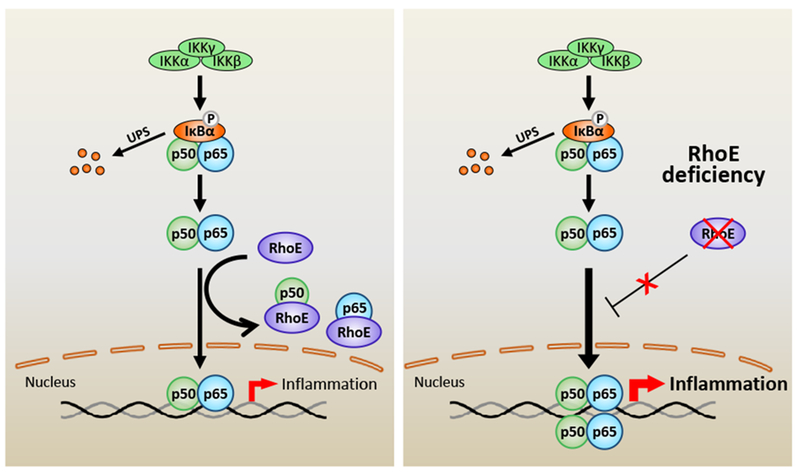
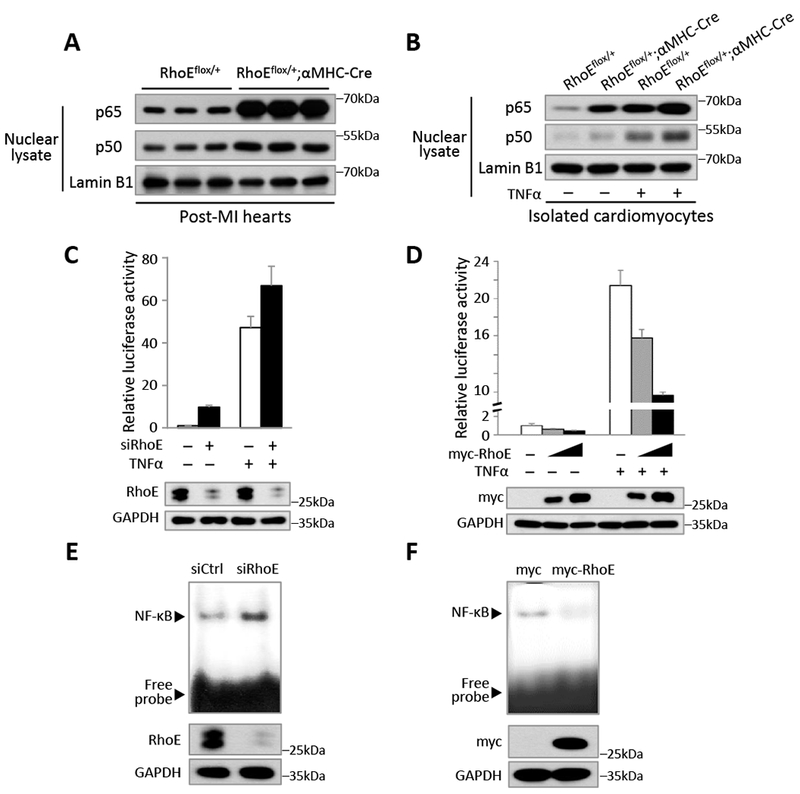
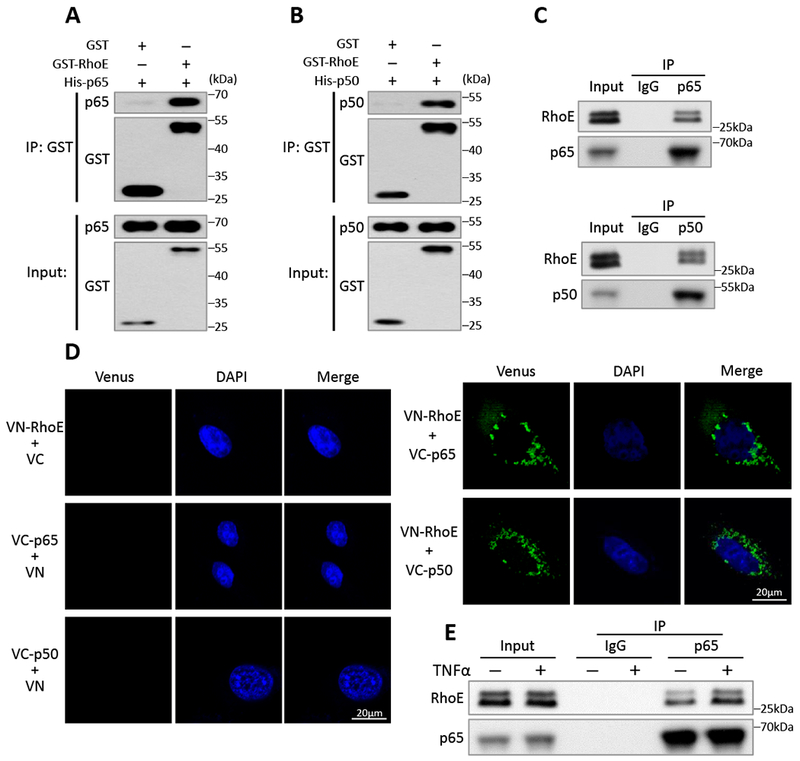
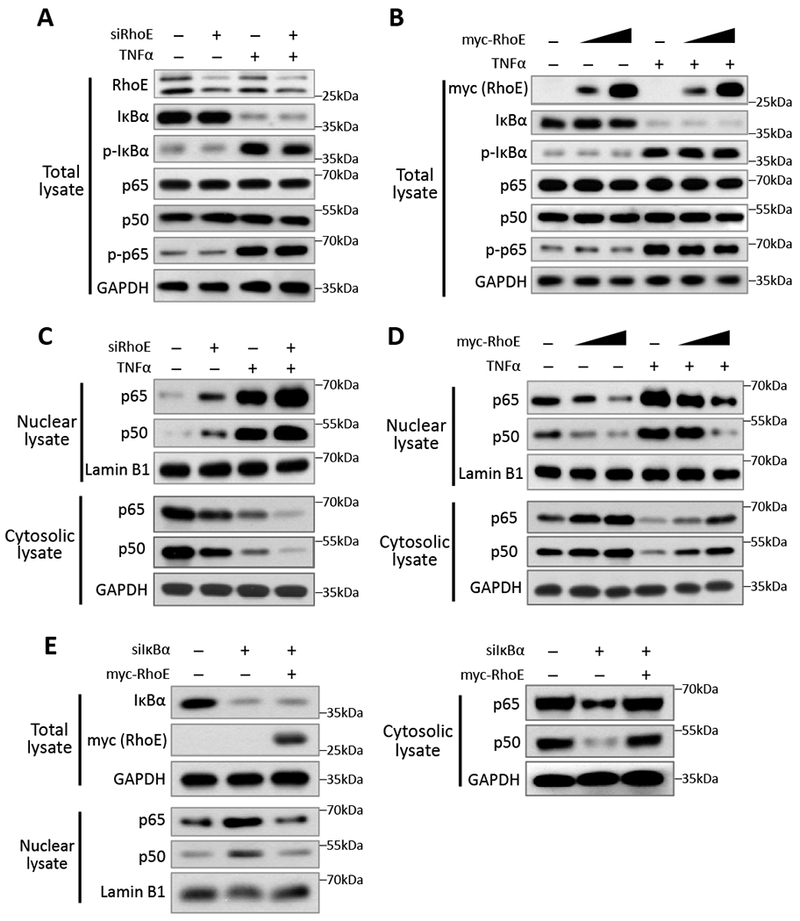
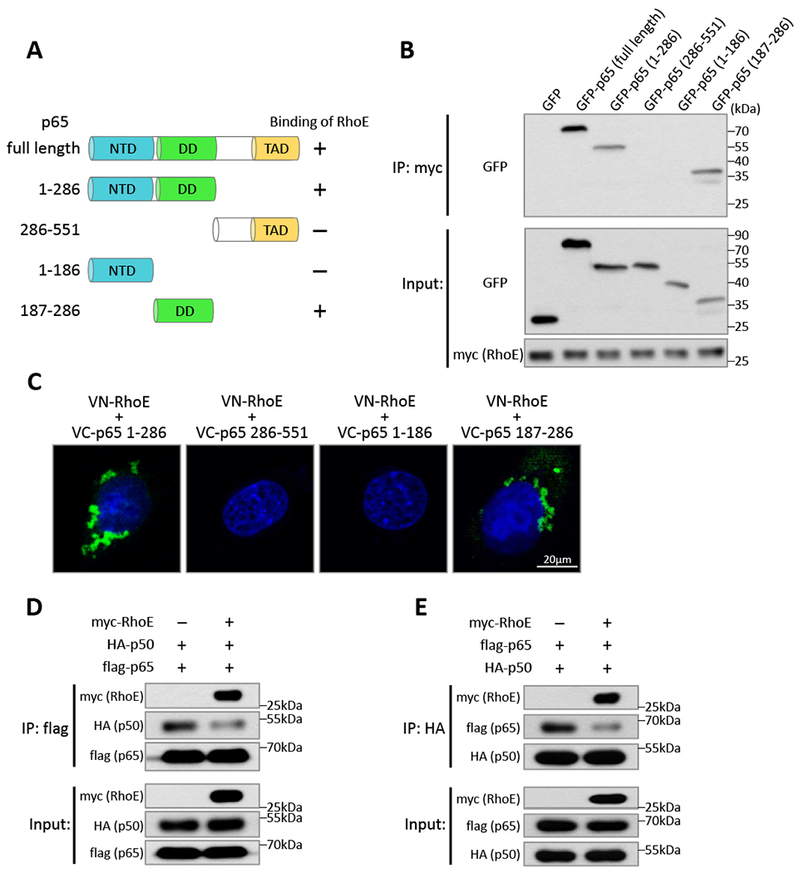
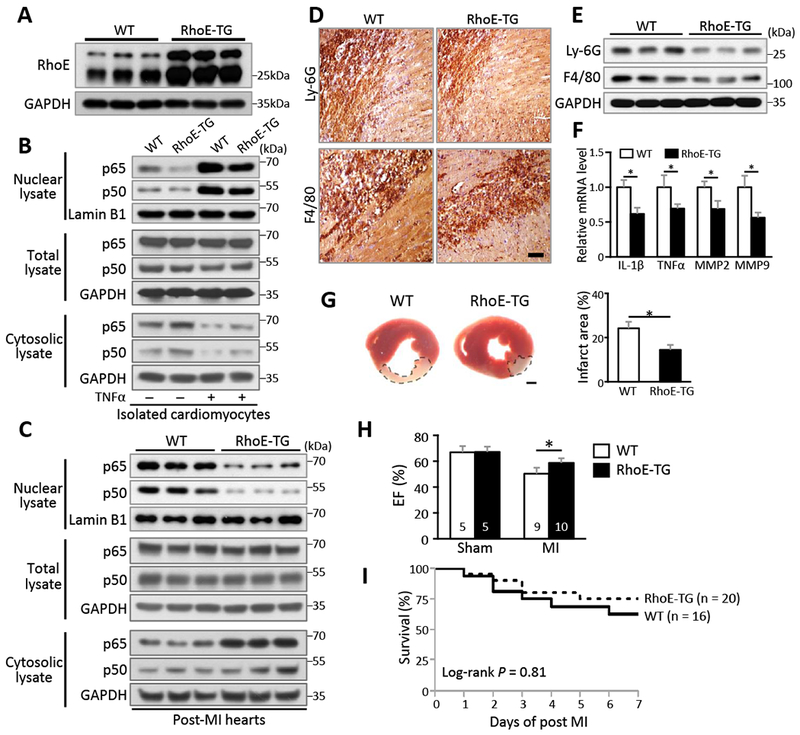
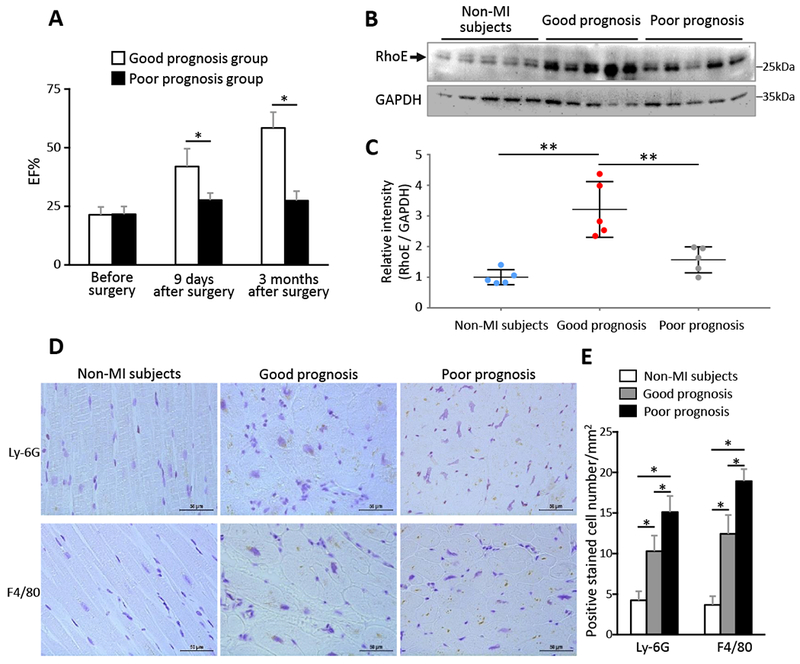
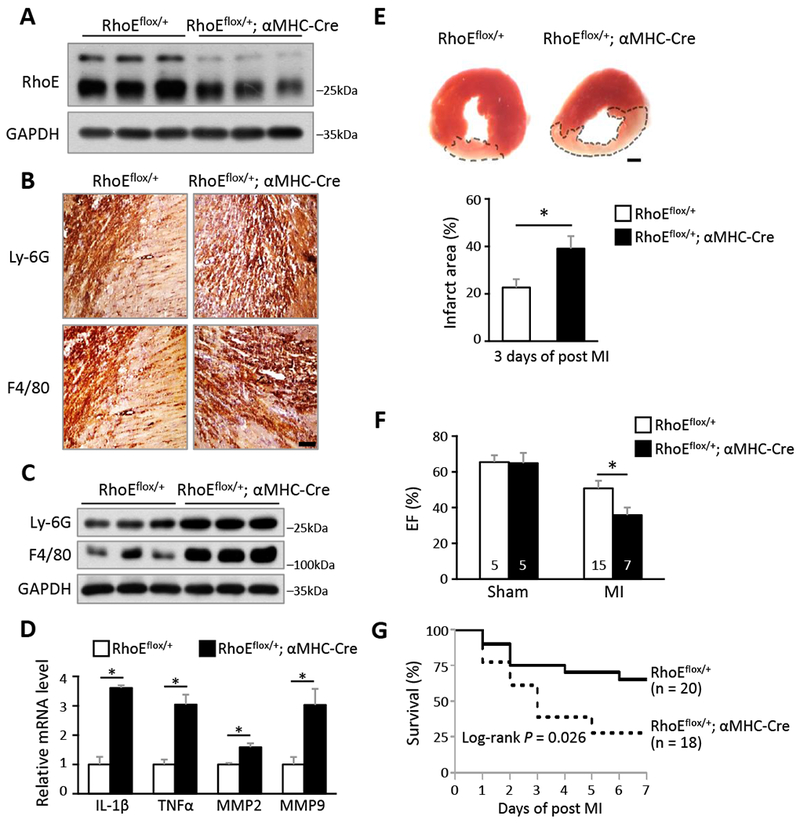
RhoE deficiency turns on a group of proinflammatory gene expressions in mouse heart. Mice with cardiomyocyte-specific haploinsufficiency exhibit excessive inflammatory response with deleterious cardiac function after MI. A profound increase in nuclear factor-κB activity is detected in the mutant heart and the isolated cardiomyocytes. We further find that the expression of RhoE is upregulated in response to MI. Mechanistically, RhoE interacts with p65 and p50 individually in cytosol and blocks their nuclear translocation. RhoE also occupies the dimerization domain of p65 and subsequently disrupts the heterodimerization between p65 and p50. Cardiac RhoE overexpression inhibits nuclear factor-κB activity, restrains post-MI inflammation, and improves cardiac function and survival. Consistently, we find that the expression level of RhoE is elevated in the heart of patients with MI and that the patients with a higher expression level of RhoE exhibit a better prognosis in cardiac function recovery.

CONCLUSIONS

The study uncovers RhoE as a new fine-tuning factor modulating MI-induced inflammation and promoting injured heart recovery. RhoE may serve as a new potential biomarker for the assessment of MI patient prognosis. Manipulation of RhoE could be as a potential therapeutic approach for MI and other inflammatory diseases.

摘要

背景

心肌梗死后的炎症反应对心脏愈合至关重要,而过度和持续的炎症会扩大梗死面积并促进不良的心脏重构。了解这些严格控制的炎症过程的机制见解,对心肌梗死后的恢复和治疗有重要影响。在这里,我们揭示了小 GTPase RhoE 在心肌梗死后恢复中的关键作用及其临床意义。

方法

使用三种遗传小鼠品系:全局 RhoE 敲除、心肌细胞特异性 RhoE 杂合子和心肌细胞特异性 RhoE 过表达小鼠。进行了一系列分子信号实验,包括双分子荧光互补、免疫沉淀、电泳迁移率变动分析和 mRNA 微阵列分析。通过左前降支永久性结扎,评估心肌梗死后第 1 周的心脏功能、炎症和存活情况。最后,我们检测了 RhoE 在心肌梗死患者心脏中的表达水平与患者预后的相关性。

结果

RhoE 缺失会使小鼠心脏中的一组促炎基因表达上调。心肌细胞特异性半合子缺陷小鼠在心肌梗死后表现出过度的炎症反应和有害的心脏功能。在突变心脏和分离的心肌细胞中,检测到核因子-κB 活性显著增加。我们进一步发现,RhoE 的表达在心肌梗死后上调。机制上,RhoE 在细胞质中分别与 p65 和 p50 相互作用,并阻止它们的核转位。RhoE 还占据 p65 的二聚化结构域,从而破坏 p65 和 p50 之间的异二聚化。心脏 RhoE 过表达抑制核因子-κB 活性,抑制心肌梗死后炎症,改善心脏功能和存活。一致地,我们发现 RhoE 在心肌梗死患者的心脏中表达上调,并且 RhoE 表达水平较高的患者在心脏功能恢复方面预后更好。

结论

该研究揭示了 RhoE 作为一种新的微调因子,调节心肌梗死后的炎症反应,促进受损心脏恢复。RhoE 可作为评估心肌梗死患者预后的新的潜在生物标志物。RhoE 的调控可能成为心肌梗死和其他炎症性疾病的潜在治疗方法。
相似文献

1
RhoE Fine-Tunes Inflammatory Response in Myocardial Infarction.
Circulation. 2019 Feb 26;139(9):1185-1198. doi: 10.1161/CIRCULATIONAHA.118.033700.
3
Cardiomyocyte A Disintegrin And Metalloproteinase 17 (ADAM17) Is Essential in Post-Myocardial Infarction Repair by Regulating Angiogenesis.
Circ Heart Fail. 2015 Sep;8(5):970-9. doi: 10.1161/CIRCHEARTFAILURE.114.002029. Epub 2015 Jul 1.
7
Blockade of NKG2D/NKG2D ligand interaction attenuated cardiac remodelling after myocardial infarction.
Cardiovasc Res. 2019 Mar 15;115(4):765-775. doi: 10.1093/cvr/cvy254.
8
Inhibition of Dectin-1 in mice ameliorates cardiac remodeling by suppressing NF-κB/NLRP3 signaling after myocardial infarction.
Int Immunopharmacol. 2020 Mar;80:106116. doi: 10.1016/j.intimp.2019.106116. Epub 2020 Jan 21.
9
Regenerative cross talk between cardiac cells and macrophages.
Am J Physiol Heart Circ Physiol. 2021 Jun 1;320(6):H2211-H2221. doi: 10.1152/ajpheart.00056.2021. Epub 2021 Mar 26.
10
Adipolin/C1q/Tnf-related protein 12 prevents adverse cardiac remodeling after myocardial infarction.
PLoS One. 2020 Dec 4;15(12):e0243483. doi: 10.1371/journal.pone.0243483. eCollection 2020.

引用本文的文献

1
Diabetes Advances Cardiomyocyte Senescence Through Interfering Rnd3 Expression and Function.
Aging Cell. 2025 Jun;24(6):e70031. doi: 10.1111/acel.70031. Epub 2025 Mar 2.
3
Mechanisms of hydrogel-based microRNA delivery systems and its application strategies in targeting inflammatory diseases.
J Tissue Eng. 2024 Jul 31;15:20417314241265897. doi: 10.1177/20417314241265897. eCollection 2024 Jan-Dec.
5
Hydrogel-based cardiac repair and regeneration function in the treatment of myocardial infarction.
Mater Today Bio. 2024 Feb 13;25:100978. doi: 10.1016/j.mtbio.2024.100978. eCollection 2024 Apr.
6
RND3 Potentiates Proinflammatory Activation through NOTCH Signaling in Activated Macrophages.
J Immunol Res. 2024 Feb 2;2024:2264799. doi: 10.1155/2024/2264799. eCollection 2024.
8
Tat-NTS peptide protects neurons against cerebral ischemia-reperfusion injury via ANXA1 SUMOylation in microglia.
Theranostics. 2023 Oct 16;13(15):5561-5583. doi: 10.7150/thno.85390. eCollection 2023.
10
Application of locally responsive design of biomaterials based on microenvironmental changes in myocardial infarction.
iScience. 2023 Aug 18;26(9):107662. doi: 10.1016/j.isci.2023.107662. eCollection 2023 Sep 15.

本文引用的文献

1
Acute Myocardial Infarction.
N Engl J Med. 2017 May 25;376(21):2053-2064. doi: 10.1056/NEJMra1606915.
2
30 Years of NF-κB: A Blossoming of Relevance to Human Pathobiology.
Cell. 2017 Jan 12;168(1-2):37-57. doi: 10.1016/j.cell.2016.12.012.
3
Inflammatory processes in cardiovascular disease: a route to targeted therapies.
Nat Rev Cardiol. 2017 Mar;14(3):133-144. doi: 10.1038/nrcardio.2016.185. Epub 2016 Dec 1.
4
RND3 promotes Snail 1 protein degradation and inhibits glioblastoma cell migration and invasion.
Oncotarget. 2016 Dec 13;7(50):82411-82423. doi: 10.18632/oncotarget.12396.
5
The Biological Basis for Cardiac Repair After Myocardial Infarction: From Inflammation to Fibrosis.
Circ Res. 2016 Jun 24;119(1):91-112. doi: 10.1161/CIRCRESAHA.116.303577.
6
Improvement of Left Ventricular Remodelling by Inhibition of NF-κB in a Rat Model of Myocardial Infarction.
Heart Lung Circ. 2016 Oct;25(10):1007-12. doi: 10.1016/j.hlc.2015.11.005. Epub 2015 Nov 28.
8
Pathophysiological Functions of Rnd3/RhoE.
Compr Physiol. 2015 Dec 15;6(1):169-86. doi: 10.1002/cphy.c150018.
9
Rho GTPase signalling in cell migration.
Curr Opin Cell Biol. 2015 Oct;36:103-12. doi: 10.1016/j.ceb.2015.08.005. Epub 2015 Sep 10.
10
Inflammation as a therapeutic target in myocardial infarction: learning from past failures to meet future challenges.
Transl Res. 2016 Jan;167(1):152-66. doi: 10.1016/j.trsl.2015.07.002. Epub 2015 Jul 17.

文献AI研究员

20分钟写一篇综述,助力文献阅读效率提升50倍。

立即体验

用中文搜PubMed

大模型驱动的PubMed中文搜索引擎

马上搜索

文档翻译

学术文献翻译模型,支持多种主流文档格式。

立即体验