Liu Yan, Song Chaoyi, Cui Qingwen, Sun Hongluan, Jiang Chanjuan, Guo Ruofei, He Ruoting, Li Zhen, Luan Ji, Wang Hailong
State Key Laboratory of Microbial Technology, Institute of Microbial Technology, Helmholtz International Lab for Anti-infectives, Shandong University-Helmholtz Institute of Biotechnology, Shandong University, Qingdao, Shandong, China.
Nat Commun. 2025 Jan 17;16(1):774. doi: 10.1038/s41467-025-55973-0.
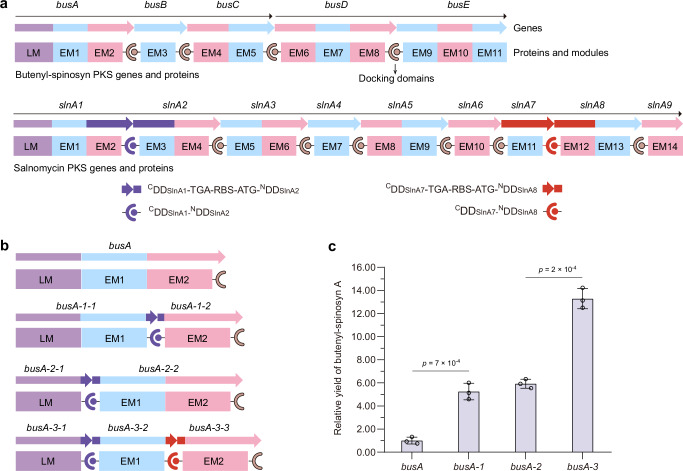
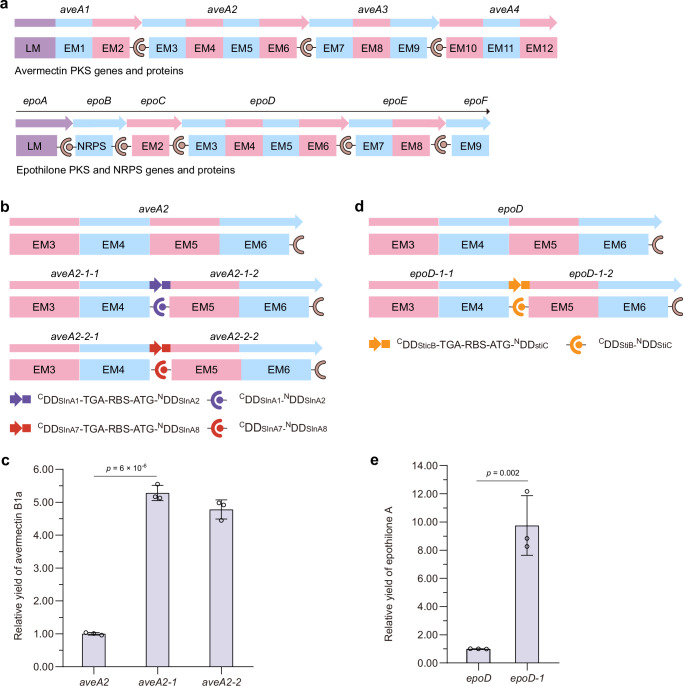
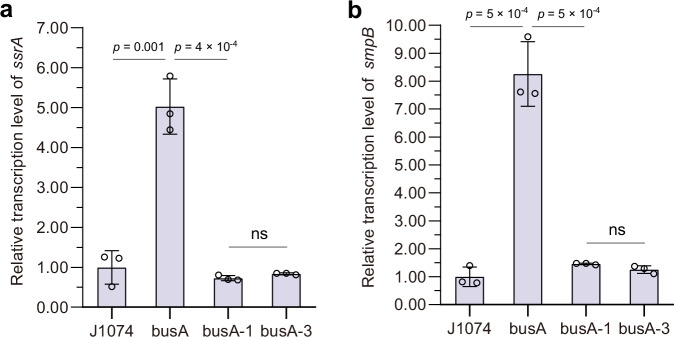
Modular polyketide synthases (mPKSs) are multidomain enzymes in bacteria that synthesize a variety of pharmaceutically important compounds. mPKS genes are usually longer than 10 kb and organized in operons. To understand the transcriptional and translational characteristics of these large genes, here we split the 13-kb busA gene, encoding a 456-kDa three-module PKS for butenyl-spinosyn biosynthesis, into three smaller separately translated genes encoding one PKS module in an operon. Expression of the native and split busA genes in Streptomyces albus reveals that the majority ( >93%) of PKS mRNAs are truncated, resulting in a greater abundance of and a higher synthesis rate for the proteins encoded by genes closer to the operon promoter. Splitting the large busA gene rescues translation of truncated mRNAs into functional PKS subunits, and increases the biosynthetic efficiency of butenyl-spinosyn PKS by 13-fold. The truncated mRNA translation rescue strategy will facilitate engineering of multi-domain proteins to enhance their functions.
模块化聚酮合酶(mPKSs)是细菌中的多结构域酶,可合成多种具有重要药学意义的化合物。mPKS基因通常长于10 kb,并以操纵子形式组织。为了解这些大基因的转录和翻译特征,我们在此将编码用于丁烯基多杀菌素生物合成的456 kDa三模块聚酮合酶的13 kb busA基因,拆分为三个较小的在操纵子中单独翻译的基因,每个基因编码一个聚酮合酶模块。在白色链霉菌中对天然和拆分的busA基因进行表达分析,结果表明大多数(>93%)聚酮合酶mRNA被截断,导致更靠近操纵子启动子的基因所编码的蛋白质丰度更高且合成速率更快。拆分大的busA基因可将截断的mRNA翻译拯救为功能性聚酮合酶亚基,并使丁烯基多杀菌素聚酮合酶的生物合成效率提高13倍。截断的mRNA翻译拯救策略将有助于多结构域蛋白的工程改造以增强其功能。