Salem Suzan, Saad Islam, Elmoazen Ramy, Khalifa Ghada Amin
Department of Oral and Maxillofacial Surgery, Alexandria University Hospitals, Alexandria University, Alexandria, Egypt.
Department of Oral and Maxillofacial Surgery, Faculty of Dentistry, Alexandria University, Alexandria, Egypt.
BMC Oral Health. 2025 Jan 17;25(1):90. doi: 10.1186/s12903-024-05147-z.
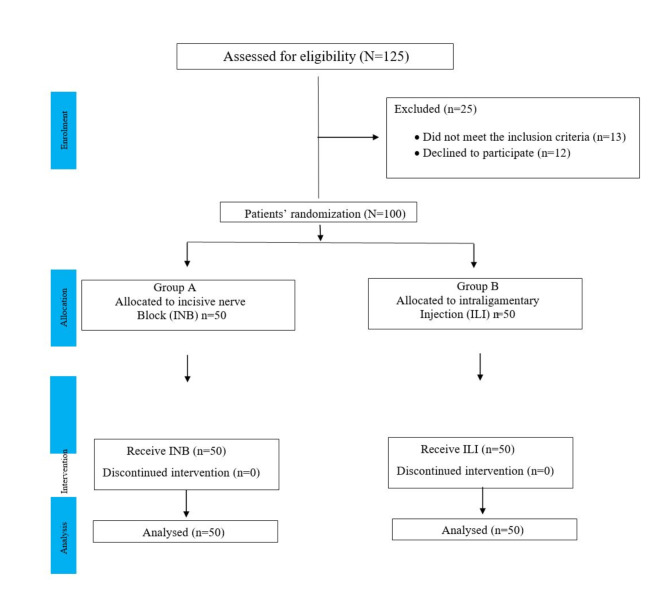
In dentistry, local anesthetic is frequently used to manage pain throughout several phases of dental treatments, including tooth extraction. The study aimed to compare the effectiveness of two techniques for controlling pain during mandibular exodontia (tooth extraction), specifically focusing on the pain experienced during injection and extraction of mandibular anterior and premolars teeth. The two techniques being compared are the intraligamentary injection technique (ILI) and the incisive nerve block technique (INB).
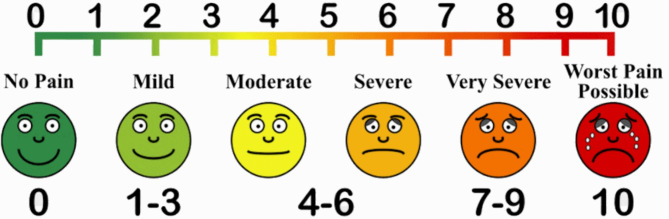
In this study, 100 mandibular anterior and premolars and teeth that were indicated for extraction were included. The effectiveness of the two local anaesthesia techniques, intraligamentary injection technique (ILI) and incisive nerve block (INB), were compared using Modified Dental Anxiety Scale for Dental Extraction Procedure (MDAS-DEP) and visual analogue scale (VAS) during the injection and extraction stages of the procedure.
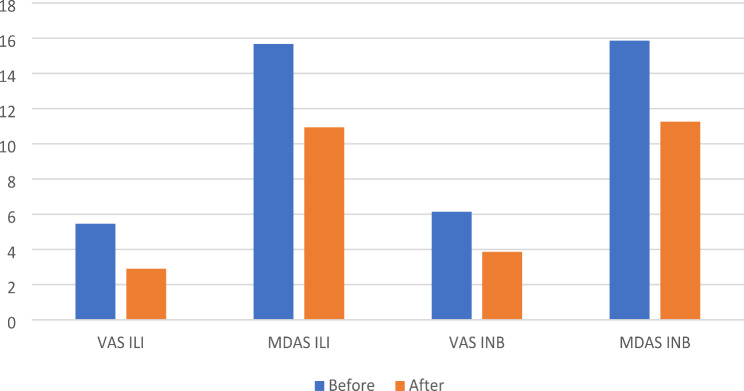
A total of 100 participants (42 females, 58 males) with a mean age of 50.97 ± 11.59 years took part in the study. The mean VAS score in the INB group was 6.14 after injection and 3.86 after extraction, while in the ILI group, it was 5.46 and 2.90, respectively. There was a statistically significant difference between the two groups both after injection (p = 0.001) and extraction (p < 0.001), as well as within each group (Control: p < 0.001; Study: p < 0.001). For MDAS-DEP, the INB group had mean scores of 15.86 and 11.26 after injection and extraction, respectively, while the ILI group had scores of 15.68 and 10.94, showing a significant difference within each group after both injection (p < 0.001) and extraction (p = 0.001). However, no significant difference was found when comparing MDAS-DEP scores between the two groups from injection to extraction (p = 0.802).
The intraligamentary injection technique (ILI) appears less painful during injection and provides profound pain relief during extraction. The results suggest that ILI can be used as a sole anaesthetic technique during extraction of lower anterior and premolar teeth.
This trial was retrospectively registered on 27/01/2023 with the identifier ISRCTN83272316 in Isrctn.com.
在牙科领域,局部麻醉剂常用于牙科治疗的多个阶段以控制疼痛,包括拔牙。本研究旨在比较两种在下颌牙拔除术(拔牙)中控制疼痛的技术的有效性,特别关注下颌前牙和前磨牙注射及拔牙过程中所经历的疼痛。所比较的两种技术为牙周膜内注射技术(ILI)和切牙神经阻滞技术(INB)。
本研究纳入了100颗需拔除的下颌前牙和前磨牙。在手术的注射和拔牙阶段,使用改良拔牙程序牙科焦虑量表(MDAS - DEP)和视觉模拟量表(VAS)比较两种局部麻醉技术——牙周膜内注射技术(ILI)和切牙神经阻滞(INB)的有效性。
共有100名参与者(42名女性,58名男性)参与研究,平均年龄为50.97±11.59岁。INB组注射后的平均VAS评分为6.14,拔牙后为3.86;而ILI组注射后为5.46,拔牙后为2.90。两组在注射后(p = 0.001)和拔牙后(p < 0.001)以及每组内部(对照组:p < 0.001;研究组:p < 0.001)均存在统计学显著差异。对于MDAS - DEP,INB组注射后和拔牙后的平均得分分别为15.86和11.26,而ILI组得分分别为15.68和10.94,两组在注射后(p < 0.001)和拔牙后(p = 0.001)均显示出显著差异。然而,从注射到拔牙比较两组的MDAS - DEP得分时未发现显著差异(p = 0.802)。
牙周膜内注射技术(ILI)在注射时似乎疼痛较轻,且在拔牙过程中能提供深度的疼痛缓解。结果表明ILI可作为拔除下颌前牙和前磨牙时的单一麻醉技术。
本试验于2023年1月27日在Isrctn.com上进行回顾性注册,标识符为ISRCTN83272316。