Bahr Frauke S, Müller Franziska E, Kasten Martina, Benen Nils, Sieve Irina, Scherr Michaela, Falk Christine S, Hilfiker-Kleiner Denise, Ricke-Hoch Melanie, Ponimaskin Evgeni
Cellular Neurophysiology, Hannover Medical School, Hannover, Germany.
Department of Cardiology and Angiology, Hannover Medical School, Hannover, Germany.
Cell Mol Life Sci. 2025 Jan 21;82(1):51. doi: 10.1007/s00018-024-05570-z.
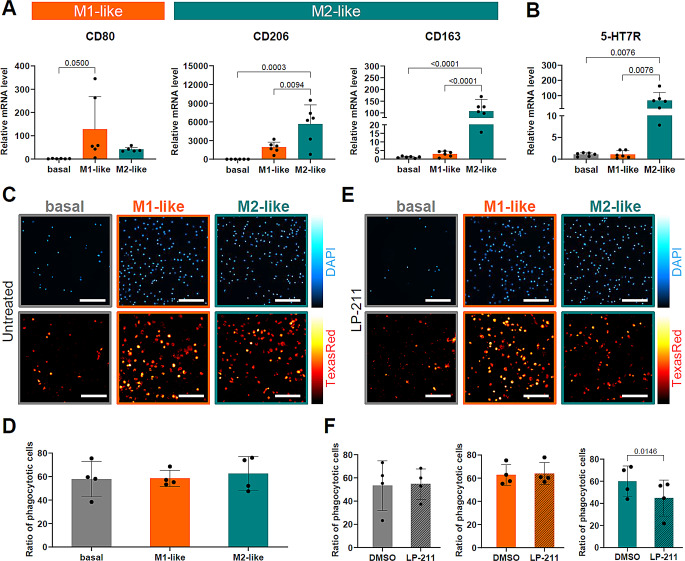
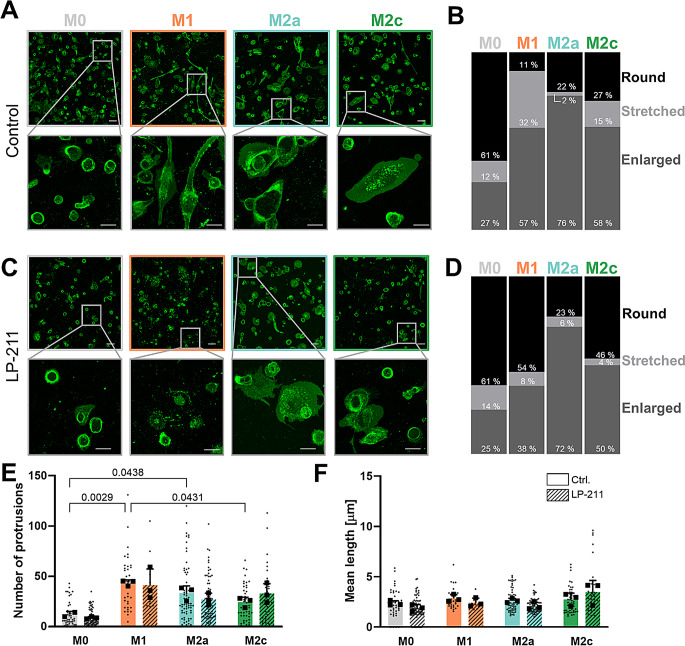
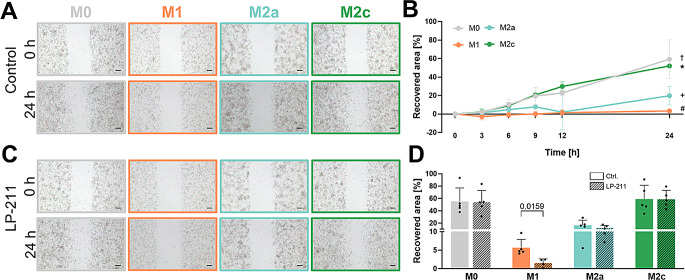
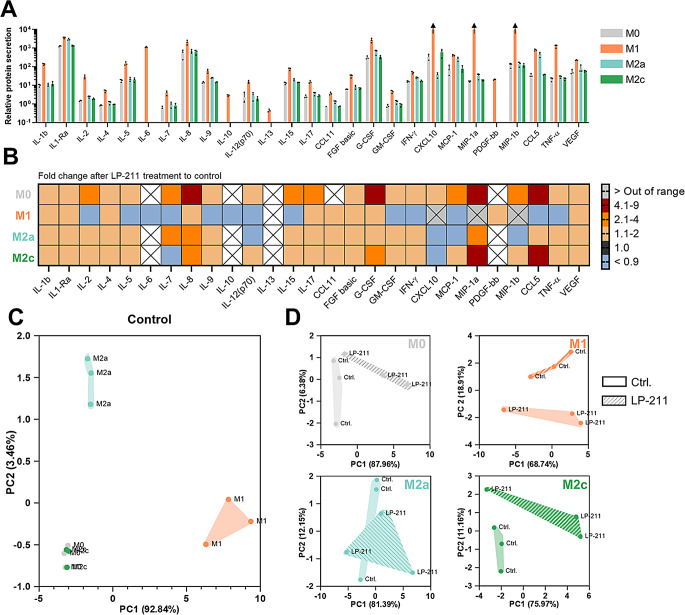
The hormone and neurotransmitter serotonin regulates numerous physiological functions within the central nervous system and in the periphery upon binding to specific receptors. In the periphery, the serotonin receptor 7 (5-HT7R) is expressed on different immune cells including monocytes and macrophages. To investigate the impact of 5-HT7R-mediated signaling on macrophage properties, we used human THP-1 cells and differentiated them into pro-inflammatory M1- and anti-inflammatory M2-like macrophages. Pharmacological 5-HT7R activation with the specific agonist LP-211 especially modulates morphology of M1-like macrophages by increasing the number of rounded cells. Furthermore, 5-HT7R stimulation results in significantly reduced phagocytic and migratory ability of M1-like macrophages. Noteworthy, LP-211 treatment leads to changes in secretory properties of all macrophage types with the highest effects obtained for M0- and M2c-like macrophages. Finally, the importance of 5-HT7R for regulation of phagocytosis was confirmed in human primary CD14 cells. These results indicate that 5-HT7R activation selectively impairs basic functions of macrophages and might thus be a new access point for the modulation of macrophage responses in the future treatment of inflammatory diseases.
激素和神经递质血清素在与特定受体结合后,可调节中枢神经系统和外周的多种生理功能。在外周,血清素受体7(5-HT7R)在包括单核细胞和巨噬细胞在内的不同免疫细胞上表达。为了研究5-HT7R介导的信号传导对巨噬细胞特性的影响,我们使用了人THP-1细胞,并将它们分化为促炎性M1样和抗炎性M2样巨噬细胞。用特异性激动剂LP-211对5-HT7R进行药理学激活,尤其通过增加圆形细胞的数量来调节M1样巨噬细胞的形态。此外,5-HT7R刺激导致M1样巨噬细胞的吞噬和迁移能力显著降低。值得注意的是,LP-211处理导致所有巨噬细胞类型的分泌特性发生变化,对M0样和M2c样巨噬细胞的影响最大。最后,在人原代CD14细胞中证实了5-HT7R对吞噬作用调节的重要性。这些结果表明,5-HT7R激活选择性地损害巨噬细胞的基本功能,因此可能是未来治疗炎症性疾病时调节巨噬细胞反应的一个新切入点。