Hui Steve C N, Andescavage Nickie, Limperopoulos Catherine
Developing Brain Institute, Children's National Hospital, Washington, D.C., USA.
Department of Radiology, The George Washington University School of Medicine and Health Sciences, Washington, D.C., USA.
J Magn Reson Imaging. 2025 Jun;61(6):2404-2424. doi: 10.1002/jmri.29709. Epub 2025 Jan 21.
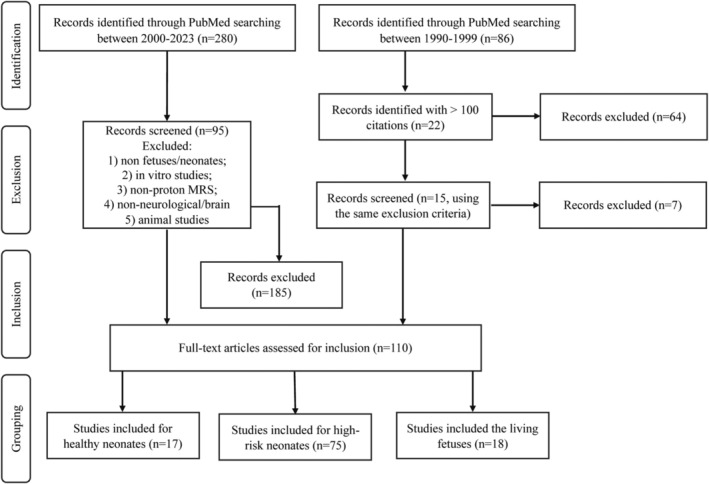
The biochemical composition and structure of the brain are in a rapid change during the exuberant stage of fetal and neonatal development. H-MRS is a noninvasive tool that can evaluate brain metabolites in healthy fetuses and infants as well as those with neurological diseases. This review aims to provide readers with an understanding of 1) the basic principles and technical considerations relevant to H-MRS in the fetal-neonatal brain and 2) the role of H-MRS in early fetal-neonatal development brain research. We performed a PubMed search to identify original studies using H-MRS in neonates and fetuses to establish the clinical applications of H-MRS. The eligible studies for this review included original research with H-MRS applications to the fetal-neonatal brain in healthy and high-risk conditions. We ran our search between 2000 and 2023, then added in several high-impact landmark publications from the 1990s. A total of 366 results appeared. After, we excluded original studies that did not include fetuses or neonates, non-proton MRS and non-neurological studies. Eventually, 110 studies were included in this literature review. Overall, the function of H-MRS in healthy fetal-neonatal brain studies focuses on measuring the change of metabolite concentrations during neurodevelopment and the physical properties of the metabolites such as T/T relaxation times. For high-risk neonates, studies in very low birth weight preterm infants and full-term neonates with hypoxic-ischemic encephalopathy, along with examining the associations between brain biochemistry and cognitive neurodevelopment are most common. Additional high-risk conditions included infants with congenital heart disease or metabolic diseases, as well as fetuses of pregnant women with hypertensive disorders were of specific interest to researchers using H-MRS. EVIDENCE LEVEL: 1 TECHNICAL EFFICACY: Stage 2.
在胎儿和新生儿发育的旺盛阶段,大脑的生化组成和结构处于快速变化之中。氢磁共振波谱(H-MRS)是一种非侵入性工具,可评估健康胎儿和婴儿以及患有神经系统疾病者的脑代谢物。本综述旨在让读者了解:1)与胎儿-新生儿脑H-MRS相关的基本原理和技术考量;2)H-MRS在胎儿-新生儿早期脑发育研究中的作用。我们进行了PubMed检索,以识别在新生儿和胎儿中使用H-MRS的原始研究,从而确立H-MRS的临床应用。本综述的合格研究包括将H-MRS应用于健康和高危状况下胎儿-新生儿脑的原始研究。我们在2000年至2023年期间进行检索,然后补充了20世纪90年代的几篇高影响力的标志性出版物。共出现366条结果。之后,我们排除了不包括胎儿或新生儿的原始研究、非质子磁共振波谱研究和非神经学研究。最终,110项研究被纳入本综述。总体而言,H-MRS在健康胎儿-新生儿脑研究中的功能侧重于测量神经发育过程中代谢物浓度的变化以及代谢物的物理特性,如T/T弛豫时间。对于高危新生儿,极低出生体重早产儿和患有缺氧缺血性脑病的足月儿的研究,以及研究脑生物化学与认知神经发育之间的关联最为常见。其他高危状况包括患有先天性心脏病或代谢疾病的婴儿,以及患有高血压疾病的孕妇的胎儿,这些是使用H-MRS的研究人员特别感兴趣的对象。证据水平:1 技术效能:2级