Wahid Ehtisham, Ocheja Ohiemi Benjamin, Oguntomi Sunday Olakunle, Pan Run, Grattieri Matteo, Guaragnella Nicoletta, Guaragnella Cataldo, Marsili Enrico
DEI - Department of Electrical and Information Engineering, Polytechnic of Bari, Via E. Orabona 4, 70125, Bari, Italy.
Department of Biosciences, Biotechnology and Environment, University of Bari, Via E. Orabona 4, 70125, Bari, Italy.
Sci Rep. 2025 Jan 21;15(1):2678. doi: 10.1038/s41598-025-86702-8.
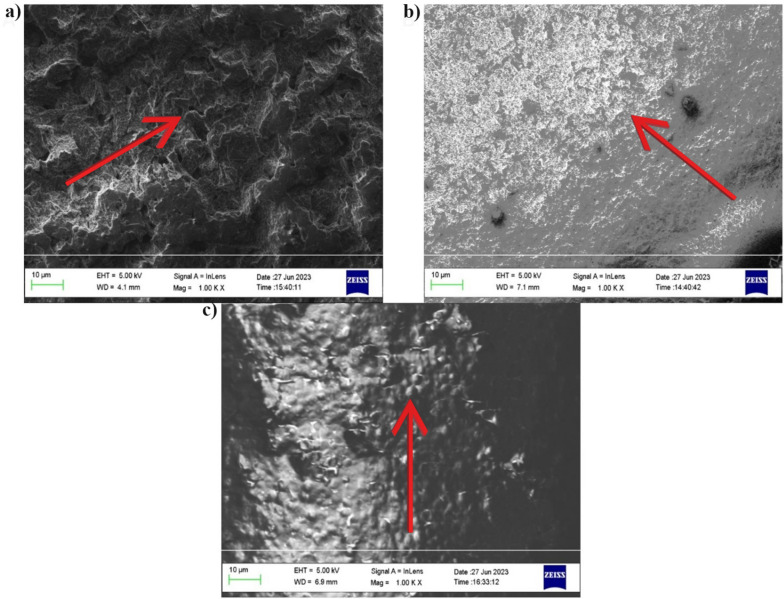
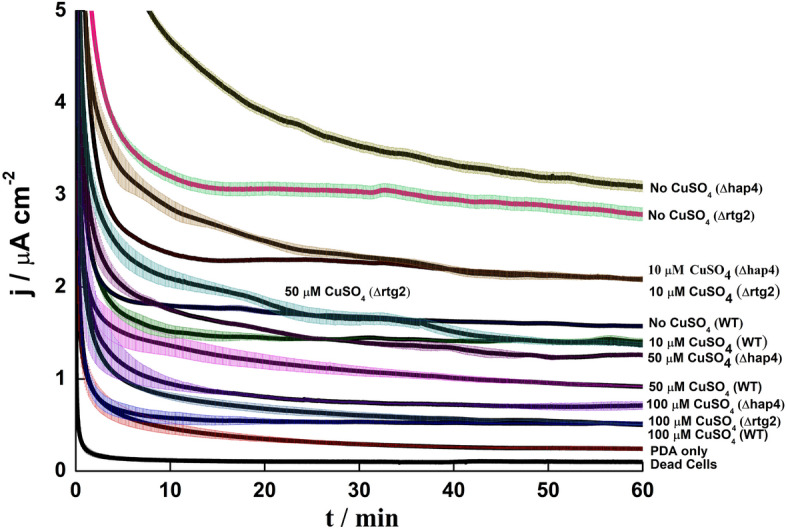
Electrodes functionalised with weak electroactive microorganisms offer a viable alternative to conventional chemical sensors for detecting priority pollutants in bioremediation processes. Biofilm-based biosensors have been proposed for this purpose. However, biofilm formation and maturation require 24-48 h, and the microstructure and coverage of the electrode surface cannot be controlled, leading to poorly reproducible signal and sensitivity. Alternatively, semiconductive biocompatible coatings can be used for viable cell immobilization, achieving reproducible coverage and resulting in a stable biosensor response. In this work, we use a polydopamine (PDA)-based coating to immobilize Saccharomyces cerevisiae yeast viable cells on carbon screen printed electrodes (SPE) for Cu(II) detection, with potassium ferricyanide (K[Fe (CN)]) as a redox mediator. Under these conditions, the current output correlates with Cu (II) concentration, reaching a limit of detection of 2.2 µM, as calculated from the chronoamperometric response. The bioelectrochemical results are supported by standard viability assays, microscopy, and electrochemical impedance spectroscopy. The PDA coatings can be functionalised with different mutant strains, thus expanding the toolbox for biosensor design in bioremediation.
用弱电活性微生物功能化的电极,为生物修复过程中检测优先污染物的传统化学传感器提供了一种可行的替代方案。基于生物膜的生物传感器已被提出用于此目的。然而,生物膜的形成和成熟需要24至48小时,并且电极表面的微观结构和覆盖率无法控制,导致信号和灵敏度的重现性较差。或者,半导体生物相容性涂层可用于活细胞固定,实现可重现的覆盖率,并产生稳定的生物传感器响应。在这项工作中,我们使用基于聚多巴胺(PDA)的涂层,将酿酒酵母活细胞固定在碳丝网印刷电极(SPE)上用于检测Cu(II),以铁氰化钾(K[Fe(CN)])作为氧化还原介质。在这些条件下,电流输出与Cu(II)浓度相关,根据计时电流响应计算,检测限达到2.2µM。生物电化学结果得到标准活力测定、显微镜检查和电化学阻抗谱的支持。PDA涂层可以用不同的突变菌株进行功能化,从而扩展了生物修复中生物传感器设计的工具箱。