Shaw Jacob R, Caprio Nicholas, Truong Nhu, Weldemariam Mehari, Tran Anh, Pilli Nageswara, Pandey Swarnima, Jones Jace W, Kane Maureen A, Pearson Ryan M
Department of Microbiology and Immunology, University of Maryland School of Medicine, 685 W. Baltimore Street, Baltimore, MD, 21201, USA.
Department of Pharmaceutical Sciences, University of Maryland School of Pharmacy, 20 N. Pine Street, Baltimore, MD, 21201, USA.
Nat Commun. 2025 Jan 22;16(1):924. doi: 10.1038/s41467-025-56210-4.
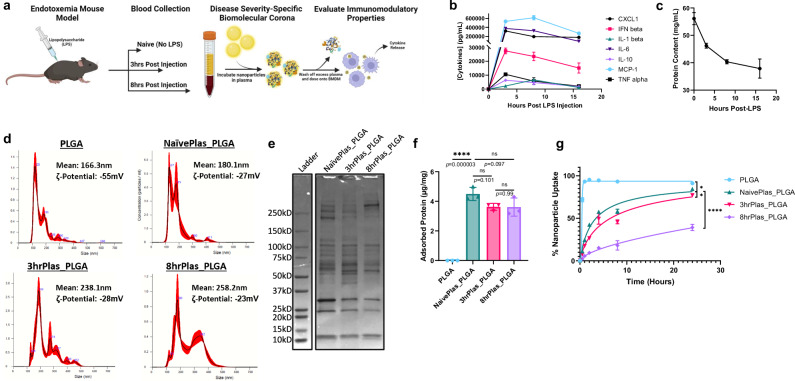
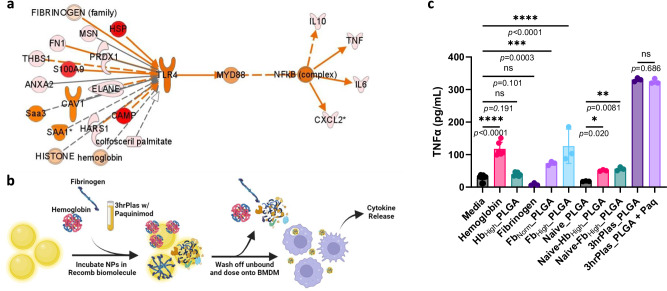
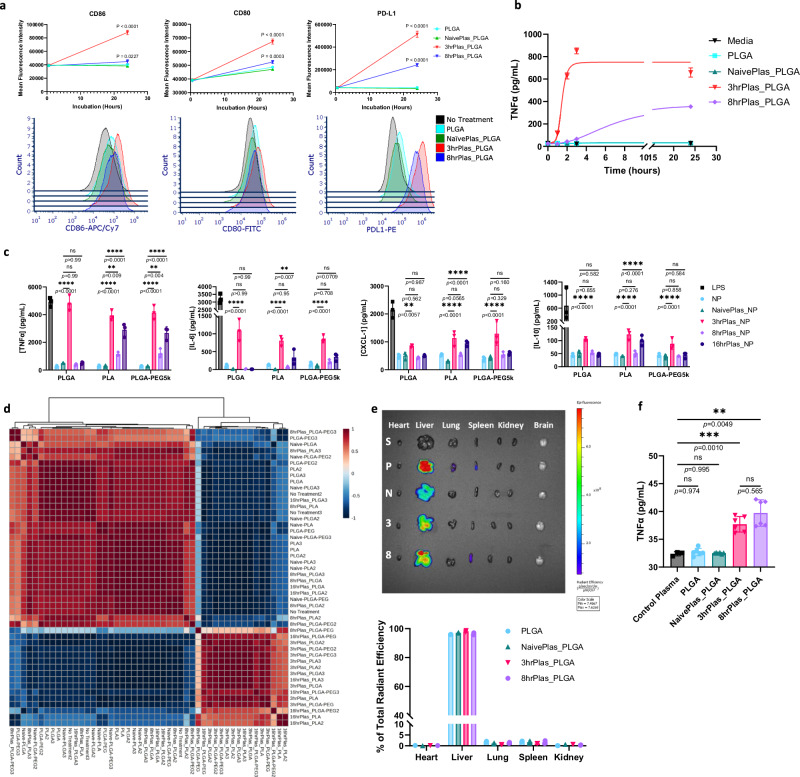
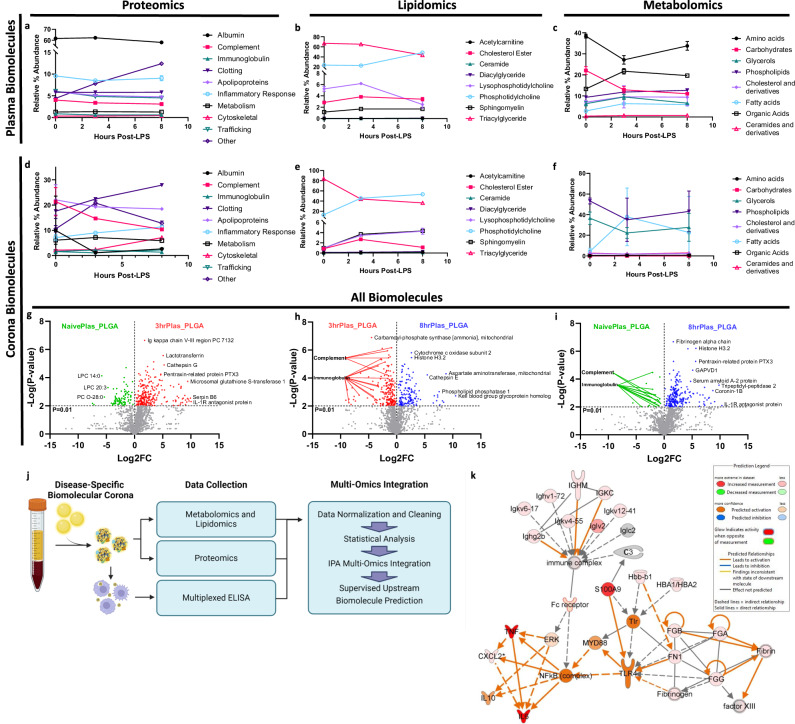
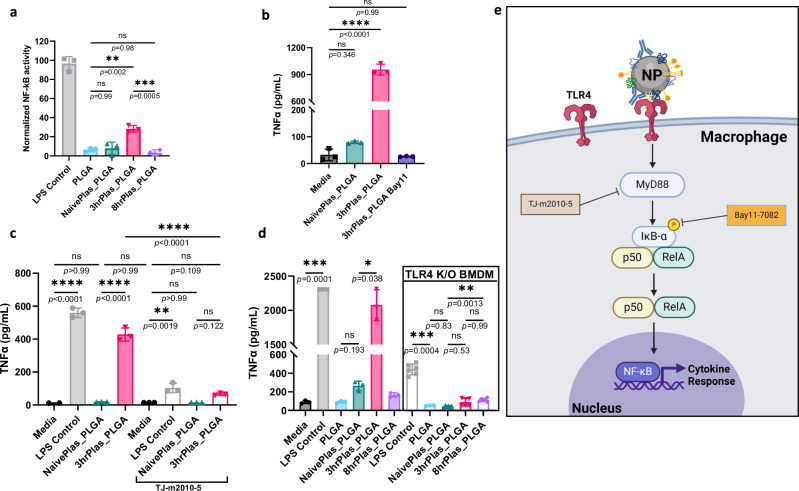
Polymeric nanoparticles (NPs) are promising tools used for immunomodulation and drug delivery in various disease contexts. The interaction between NP surfaces and plasma-resident biomolecules results in the formation of a biomolecular corona, which varies patient-to-patient and as a function of disease state. This study investigates how the progression of acute systemic inflammatory disease influences NP corona compositions and the corresponding effects on innate immune cell interactions, phenotypes, and cytokine responses. NP coronas alter cell associations in a disease-dependent manner, induce differential co-stimulatory and co-inhibitory molecule expression, and influence cytokine release. Integrated multi-omics analysis of proteomics, lipidomics, metabolomics, and cytokine datasets highlight a set of differentially enriched TLR4 ligands that correlate with dynamic NP corona-mediated immune activation. Pharmacological inhibition and genetic knockout studies validate that NP coronas mediate this response through TLR4/MyD88/NF-κB signaling. Our findings illuminate the personalized nature of corona formation under a dynamic inflammatory condition and its impact on NP-mediated immune activation profiles and inflammation, suggesting that disease progression-related alterations in plasma composition can manifest in the corona to cause unintended toxicity and altered therapeutic efficacy.
聚合物纳米颗粒(NPs)是用于各种疾病背景下免疫调节和药物递送的有前景的工具。NP表面与血浆驻留生物分子之间的相互作用导致生物分子冠的形成,其在患者之间以及作为疾病状态的函数而变化。本研究调查急性全身性炎症疾病的进展如何影响NP冠的组成以及对先天免疫细胞相互作用、表型和细胞因子反应的相应影响。NP冠以疾病依赖的方式改变细胞关联,诱导差异共刺激和共抑制分子表达,并影响细胞因子释放。蛋白质组学、脂质组学、代谢组学和细胞因子数据集的综合多组学分析突出了一组与动态NP冠介导的免疫激活相关的差异富集的TLR4配体。药理学抑制和基因敲除研究证实NP冠通过TLR4/MyD88/NF-κB信号传导介导这种反应。我们的研究结果揭示了动态炎症条件下冠形成的个性化性质及其对NP介导的免疫激活谱和炎症的影响,表明血浆成分中与疾病进展相关的改变可在冠中表现出来,导致意外的毒性和改变的治疗效果。