Zhang Dandan, Dai Yuting, Xu Xiaoyan, Ma Fuguo, Wang Mingshan, Qin Weiwei
Department of Anesthesiology, Qingdao Municipal Hospital, Qingdao University, Qingdao, 266071, China.
Department of Anesthesiology, Qingdao Hospital, University of Health and Rehabilitation Sciences (Qingdao Municipal Hospital), Qingdao, 266071, China.
Sci Rep. 2025 Jan 22;15(1):2793. doi: 10.1038/s41598-025-87184-4.
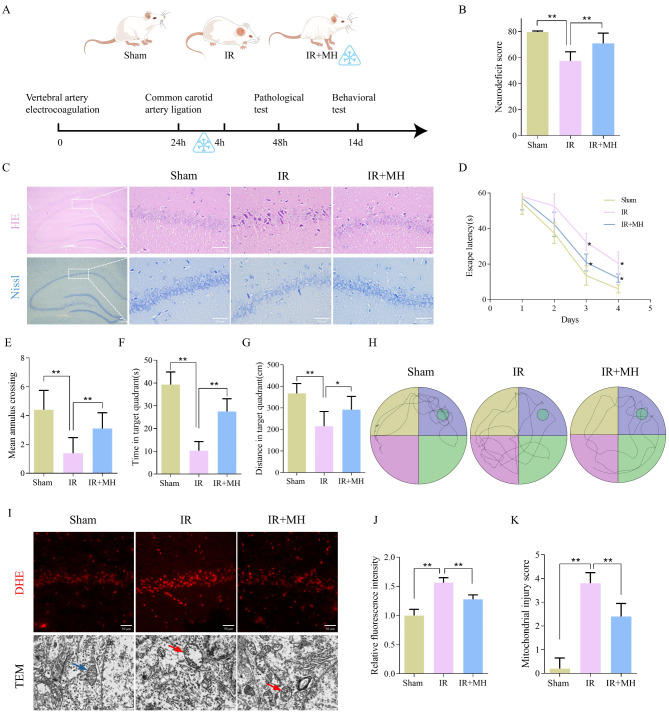
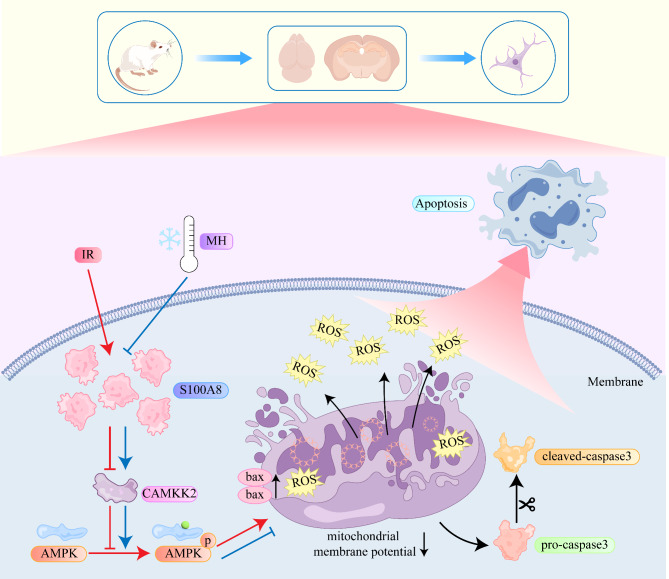
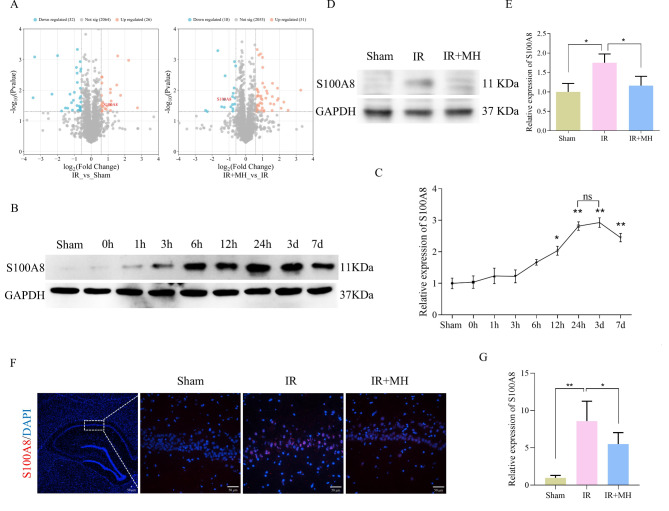
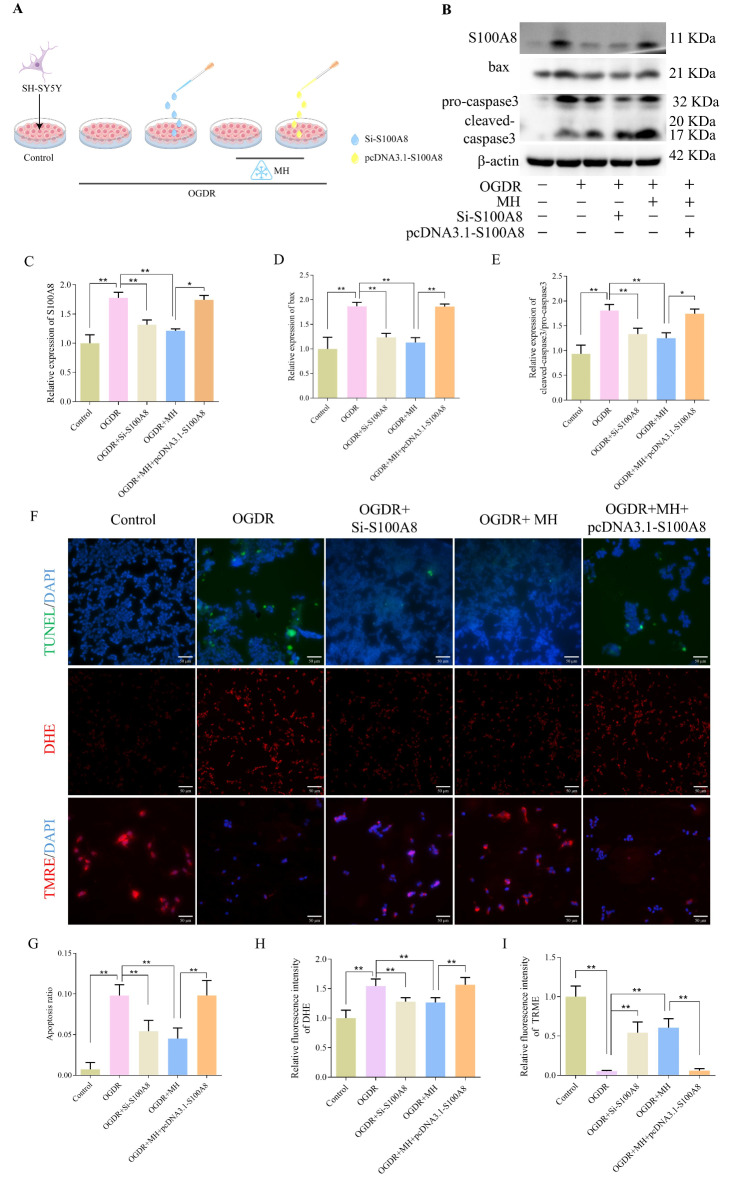
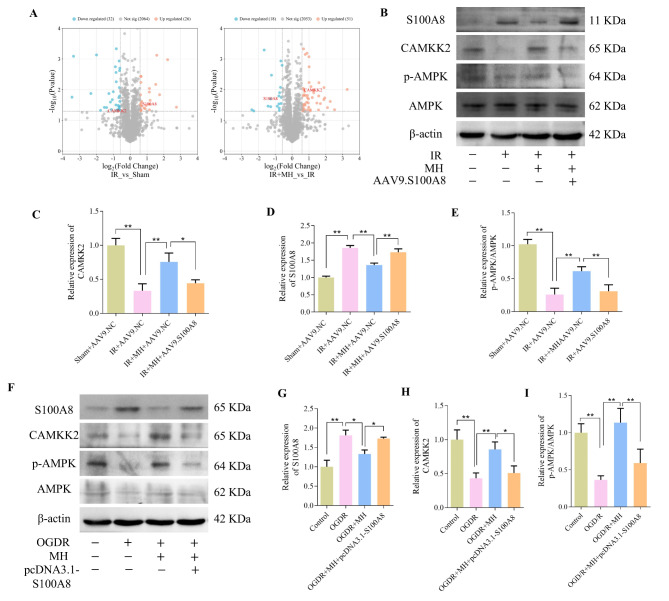
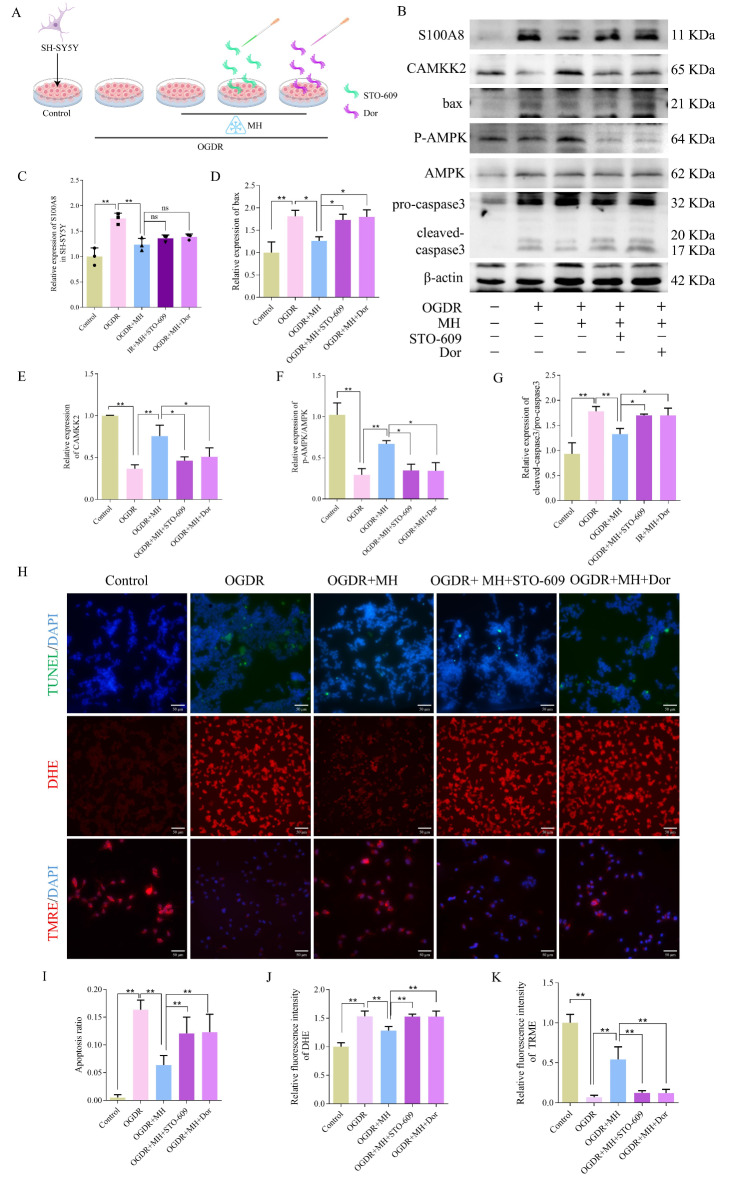
To investigate the neuroprotective mechanism of mild hypothermia (MH) in ameliorating cerebral ischemia reperfusion (IR) injury. The Pulsinelli's four-vessel ligation method was utilized to establish a rat model of global cerebral IR injury. To investigate the role of S100A8 in MH treatment of cerebral IR injury, hippocampus-specific S100A8 loss or gain of function was achieved using an adeno-associated virus system. We examined the effect of S100A8 over-expression or knock-down on the function of the SH-SY5Y cell line subjected to oxygen-glucose deprivation reoxygenation (OGDR) injury under MH treatment and delved into the underlying mechanisms. MH significantly ameliorates IR-induced neurological injury in the brain. Similarly to MH, knock-down of S100A8 significantly reduced neuronal oxidative stress, attenuated mitochondrial damage, inhibited apoptosis, and improved cognitive function in IR rats. Conversely, over-expression of S100A8 attenuated MH's protective effect and aggravated brain IR injury. In vitro, low expression of S100A8 significantly inhibited the decline in mitochondrial membrane potential induced by OGDR, reduced oxidative stress response, and decreased cell apoptosis, acting as a protective agent nearly equivalent to MH in SH-SY5Y cells. However, over-expression of S100A8 significantly inhibited these protective effects of MH. Mechanistically, MH down-regulated S100A8 expression, enhancing mitochondrial function via activation of the CAMKK2/AMPK signaling pathway. Moreover, with MH treatment, the administration of CAMKK2 and AMPK inhibitors STO-609 and Dorsomorphin significantly increased oxidative stress, mitochondrial damage, and cell apoptosis, thereby diminishing MH's neuroprotective effect against cerebral IR injury. Our study identified S100A8 as a master regulator that enables MH to ameliorate neurological injury during the early stage of cerebral IR injury by enhancing mitochondrial function. By targeting the S100A8-initiated CAMKK2/AMPK signaling pathway, we may unlock a novel therapeutic intervention or develop a refined MH therapeutic strategy against cerebral IR injury.
为研究轻度低温(MH)改善脑缺血再灌注(IR)损伤的神经保护机制。采用Pulsinelli四血管结扎法建立大鼠全脑IR损伤模型。为研究S100A8在MH治疗脑IR损伤中的作用,利用腺相关病毒系统实现海马特异性S100A8功能缺失或功能增强。我们检测了在MH治疗下S100A8过表达或敲低对遭受氧糖剥夺复氧(OGDR)损伤的SH-SY5Y细胞系功能的影响,并深入探究其潜在机制。MH显著改善IR诱导的脑内神经损伤。与MH相似,敲低S100A8可显著降低神经元氧化应激、减轻线粒体损伤、抑制细胞凋亡,并改善IR大鼠的认知功能。相反,S100A8过表达减弱了MH的保护作用并加重了脑IR损伤。在体外,S100A8低表达显著抑制OGDR诱导的线粒体膜电位下降,降低氧化应激反应,并减少细胞凋亡,在SH-SY5Y细胞中其保护作用几乎等同于MH。然而,S100A8过表达显著抑制了MH的这些保护作用。机制上,MH下调S100A8表达,通过激活CAMKK2/AMPK信号通路增强线粒体功能。此外,在MH治疗时,给予CAMKK2和AMPK抑制剂STO-609和 Dorsomorphin可显著增加氧化应激、线粒体损伤和细胞凋亡,从而削弱MH对脑IR损伤的神经保护作用。我们的研究确定S100A8是一个主要调节因子,通过增强线粒体功能使MH在脑IR损伤早期改善神经损伤。通过靶向S100A8启动的CAMKK2/AMPK信号通路,我们可能找到一种新的治疗干预方法或开发出一种针对脑IR损伤的优化MH治疗策略。