Hall Rebecca J, Snaith Ann E, Element Sarah J, Moran Robert A, Smith Hannah, Cummins Elizabeth A, Bottery Michael J, Chowdhury Kaniz F, Sareen Dipti, Ahmad Iqbal, Blair Jessica M A, Carter Laura J, McNally Alan
Institute of Microbiology and Infection, College of Medical and Dental Sciences, University of Birmingham, Birmingham, B15 2TT, UK.
Division of Evolution, Infection and Genomics, University of Manchester, Manchester, M13 9PT, UK.
NPJ Antimicrob Resist. 2024 Apr 15;2(1):11. doi: 10.1038/s44259-024-00028-5.
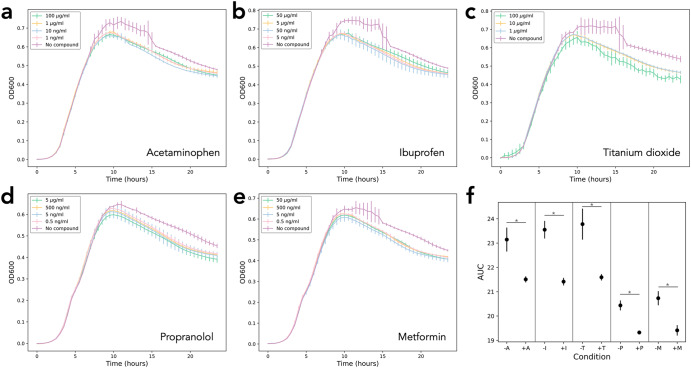
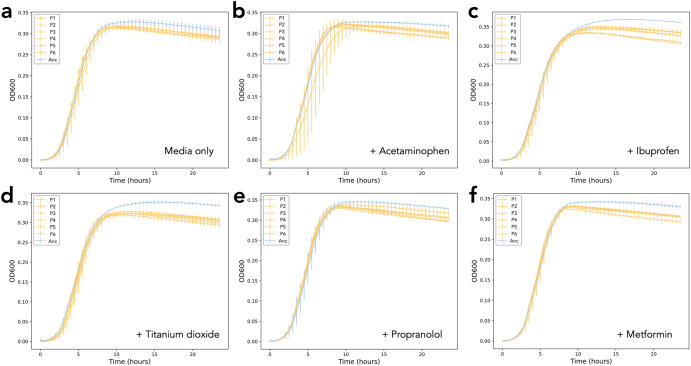
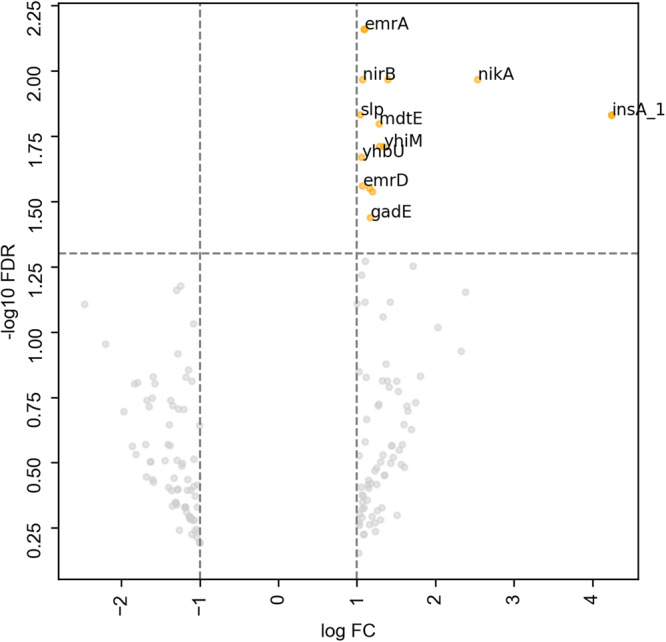
Antimicrobial resistance can arise in the natural environment via prolonged exposure to the effluent released by manufacturing facilities. In addition to antibiotics, pharmaceutical plants also produce non-antibiotic pharmaceuticals, both the active ingredients and other components of the formulations. The effect of these on the surrounding microbial communities is less clear. We aimed to assess whether non-antibiotic pharmaceuticals and other compounds produced by pharmaceutical plants have inherent toxicity, and whether long-term exposure might result in significant genetic changes or select for cross-resistance to antibiotics. To this end, we screened four non-antibiotic pharmaceuticals (acetaminophen, ibuprofen, propranolol, metformin) and titanium dioxide for toxicity against Escherichia coli K-12 MG1655 and conducted a 30 day selection experiment to assess the effect of long-term exposure. All compounds reduced the maximum optical density reached by E. coli at a range of concentrations including one of environmental relevance, with transcriptome analysis identifying upregulated genes related to stress response and multidrug efflux in response ibuprofen treatment. The compounds did not select for significant genetic changes following a 30 day exposure, and no evidence of selection for cross-resistance to antibiotics was observed for population evolved in the presence of ibuprofen in spite of the differential gene expression after exposure to this compound. This work suggests that these compounds, at environmental concentrations, do not select for cross-resistance to antibiotics in E. coli.
抗菌药物耐药性可通过长期接触制造设施排放的废水在自然环境中产生。除抗生素外,制药厂还生产非抗生素药物,包括制剂的活性成分和其他成分。这些物质对周围微生物群落的影响尚不清楚。我们旨在评估制药厂生产的非抗生素药物和其他化合物是否具有内在毒性,以及长期接触是否可能导致显著的基因变化或选择出对抗生素的交叉耐药性。为此,我们筛选了四种非抗生素药物(对乙酰氨基酚、布洛芬、普萘洛尔、二甲双胍)和二氧化钛对大肠杆菌K-12 MG1655的毒性,并进行了为期30天的选择实验以评估长期接触的影响。所有化合物在一系列浓度下,包括与环境相关的浓度,都降低了大肠杆菌达到的最大光密度,转录组分析确定了在布洛芬处理后与应激反应和多药外排相关的上调基因。在接触30天后,这些化合物并未导致显著的基因变化,并且尽管在接触该化合物后基因表达存在差异,但在布洛芬存在下进化的群体中未观察到对抗生素交叉耐药性选择的证据。这项工作表明,在环境浓度下,这些化合物不会在大肠杆菌中选择出对抗生素的交叉耐药性。