Rahman Azizur, Leifels Katrin, Adakporia Kennedy Osakwe
RMIT University.
Workplace Health Saf. 2025 Jun;73(6):266-285. doi: 10.1177/21650799241303529. Epub 2025 Jan 23.
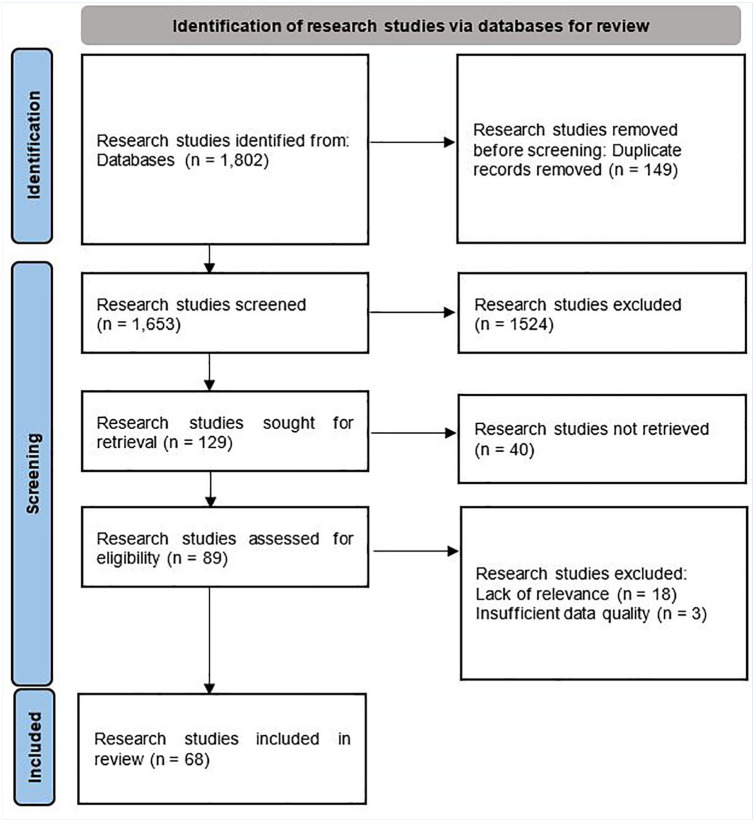
The construction industry, known for its high-risk environment, increasingly acknowledges the psychological risks to workers. Despite well-documented physical hazards, mental health challenges within this workforce have garnered attention. This systematic review provides a scholarly synthesis of literature on psychological risks and their causative factors affecting construction workers, adhering to PRISMA protocols.
An exhaustive literature search was conducted across PubMed, Scopus, PsycINFO, and Google Scholar using relevant keywords. Rigorous screening of selected studies focused on the psychological aspects of construction work, with systematic data extraction and analysis.
From 1992 to 2022, 68 studies met inclusion criteria, identifying key psychological harm factors: job insecurity, long working hours, high demands, poor work-life balance, and workplace bullying. A lack of mental health support and awareness in the sector was noted, with a significant correlation between these factors and increased stress, anxiety, and depression levels among workers.
The review highlights the urgent need for industry recognition of psychological hazards and the relationship between work conditions and mental health issues. It calls for supportive policies, awareness programs, and counseling services, with a suggestion for future longitudinal research on the long-term impacts and intervention efficacy.
This study provides an overview of psychological risks in the construction sector from 1994 to 2022, aiming to identify causative factors for mental health issues. It seeks to pave the way for targeted interventions and policy changes to improve mental health outcomes in the industry.
建筑业以其高风险环境而闻名,越来越认识到对工人的心理风险。尽管有大量关于身体危害的记录,但该行业内的心理健康挑战已受到关注。本系统评价遵循PRISMA协议,对影响建筑工人的心理风险及其致病因素的文献进行了学术综合。
使用相关关键词在PubMed、Scopus、PsycINFO和谷歌学术上进行了详尽的文献检索。对选定研究进行严格筛选,重点关注建筑工作的心理方面,并进行系统的数据提取和分析。
从1992年到2022年,68项研究符合纳入标准,确定了关键的心理伤害因素:工作不安全、工作时间长、要求高、工作与生活平衡差以及职场霸凌。该行业存在心理健康支持和意识不足的问题,这些因素与工人压力、焦虑和抑郁水平的增加之间存在显著相关性。
该评价强调了行业迫切需要认识到心理危害以及工作条件与心理健康问题之间的关系。它呼吁制定支持性政策、开展提高意识项目和提供咨询服务,并建议未来对长期影响和干预效果进行纵向研究。
本研究概述了1994年至2022年建筑行业的心理风险,旨在确定心理健康问题的致病因素。它力求为有针对性的干预措施和政策变革铺平道路,以改善该行业的心理健康状况。