Xu Shuangpeng, Yin Guoli, Yu Xiaojun
College of Pratacultural Science, Gansu Agricultural University, Lanzhou 730070, China.
Microorganisms. 2025 Jun 30;13(7):1535. doi: 10.3390/microorganisms13071535.
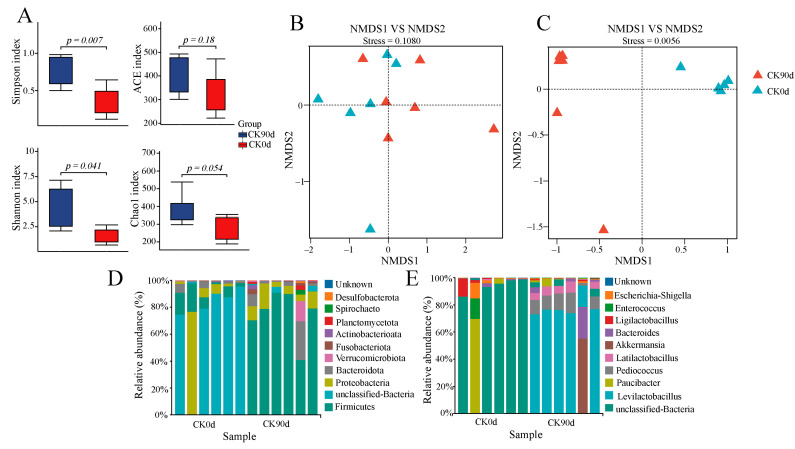
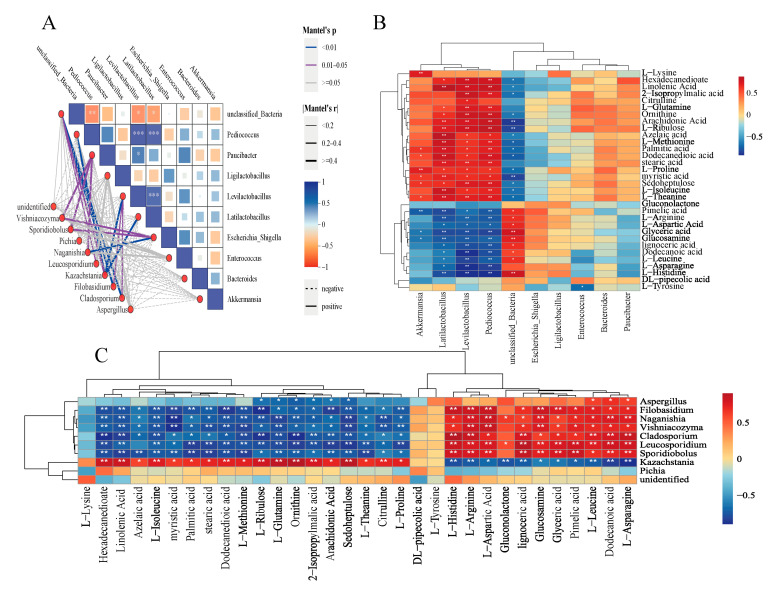
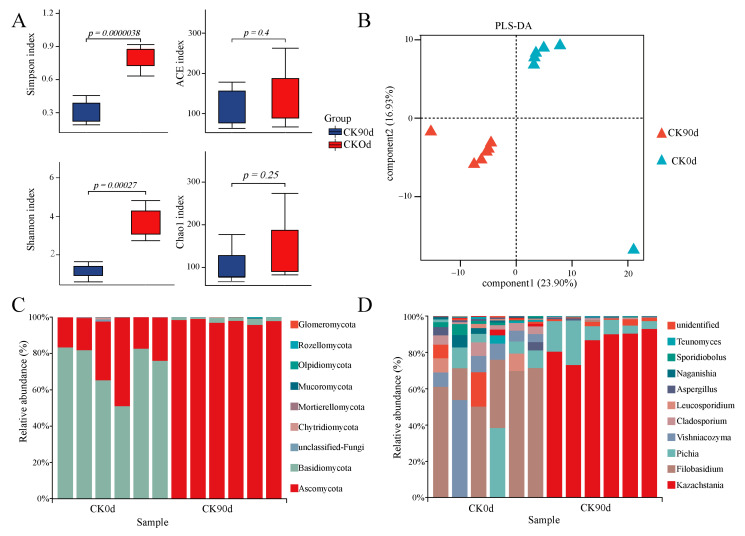
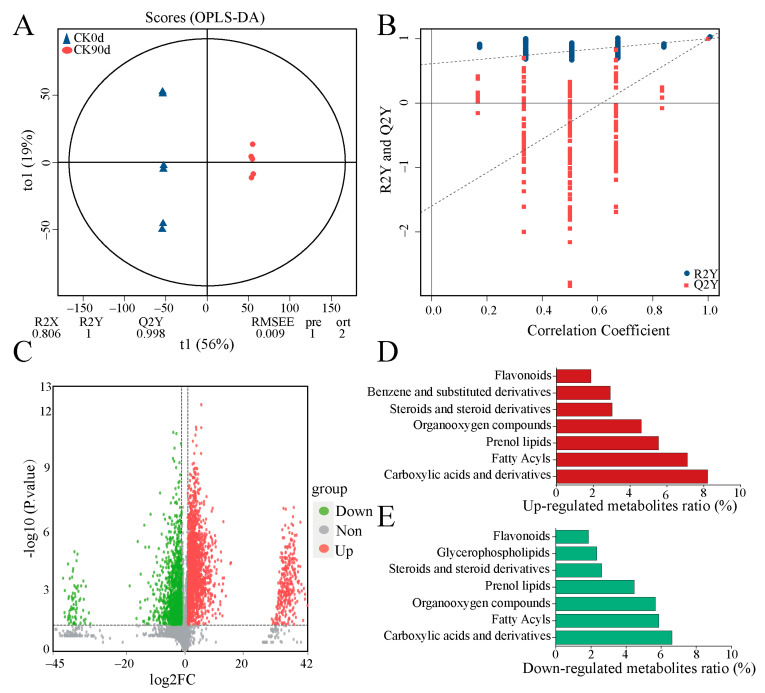
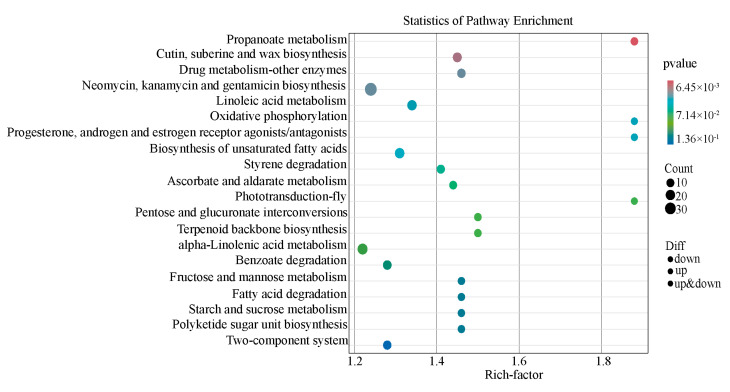
Silage is an effective method for alleviating winter feed shortages, but the mechanisms by which the silage microorganisms and metabolites respond to a mixture of oats and vetch at low temperatures remain unclear. In this study, the quality, microorganisms, and metabolites of oats mixed with vetch as a silage material, as well as after 90 days of silage, were analyzed. The traditional view holds that a decrease in microorganism diversity during silage indicates successful fermentation. However, in the present study, microorganism diversity was found to increase after silage under alpine and low-temperature conditions, with a significant rise in the abundance of microorganisms such as and . This phenomenon may be explained by the inhibition of rapid lactic acid bacteria proliferation by low temperatures, which allows for the survival of other cold-tolerant microorganisms and their involvement in metabolism. These microorganisms significantly increased the levels of metabolites such as l-methionine, l-glutamine, arachidonic acid, and linolenic acid in the mixed feeds, while simultaneously significantly decreasing the levels of metabolites such as l-leucine, l-arginine, l-asparagine, and glyceric acid. These metabolites possess antioxidant and anti-inflammatory properties that enhance the nutritional value of the feed and indirectly improve the immunity and performance of ruminants. This study comprehensively revealed the complex network of interactions between microorganisms and metabolites in the mixed forage of oats and vetch in alpine pastures and elucidated the regulatory mechanism of silage under low temperatures. The subsequent development of microorganism preparations for the targeted regulation of silage quality provides a theoretical foundation for producing high-quality silage in alpine pastures.
青贮是缓解冬季饲料短缺的有效方法,但青贮微生物及其代谢产物在低温下对燕麦和紫云英混合物的响应机制尚不清楚。本研究分析了燕麦与紫云英混合青贮原料及其青贮90天后的品质、微生物和代谢产物。传统观点认为青贮过程中微生物多样性的降低表明发酵成功。然而,在本研究中,发现在高山低温条件下青贮后微生物多样性增加, 等微生物的丰度显著上升。这种现象可能是由于低温抑制了乳酸菌的快速增殖,使得其他耐寒微生物得以存活并参与代谢。这些微生物显著提高了混合饲料中L-蛋氨酸、L-谷氨酰胺、花生四烯酸和亚麻酸等代谢产物的水平,同时显著降低了L-亮氨酸、L-精氨酸、L-天冬酰胺和甘油酸等代谢产物的水平。这些代谢产物具有抗氧化和抗炎特性,可提高饲料的营养价值,并间接提高反刍动物的免疫力和生产性能。本研究全面揭示了高寒草甸燕麦和紫云英混合饲草中微生物与代谢产物之间复杂的相互作用网络,阐明了低温下青贮的调控机制。后续针对性调控青贮品质的微生物制剂的开发,为高寒草甸生产优质青贮饲料提供了理论依据。