Aydin Barkin, Arol Nihat, Burak Nimet, Usta Aybala, Ceylan Muhammet
Department of Mechanical Engineering, Engineering Faculty, Marmara University, 34854 Istanbul, Türkiye.
Department of Mechatronics Engineering, Engineering Faculty, Istanbul Ticaret University, 34854 Istanbul, Türkiye.
Gels. 2025 Jan 4;11(1):39. doi: 10.3390/gels11010039.
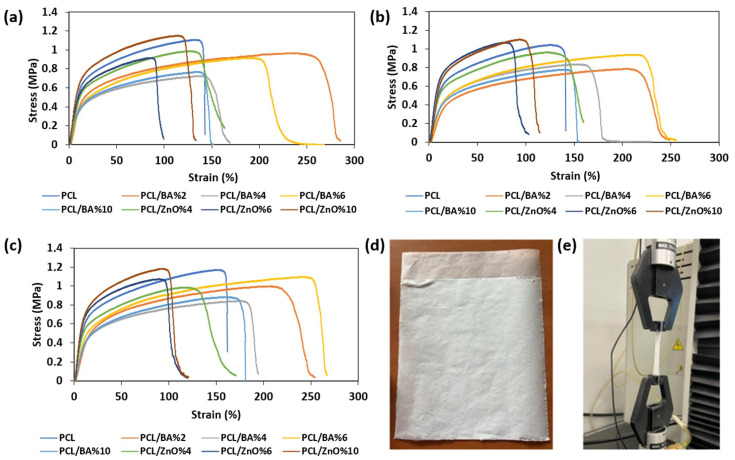
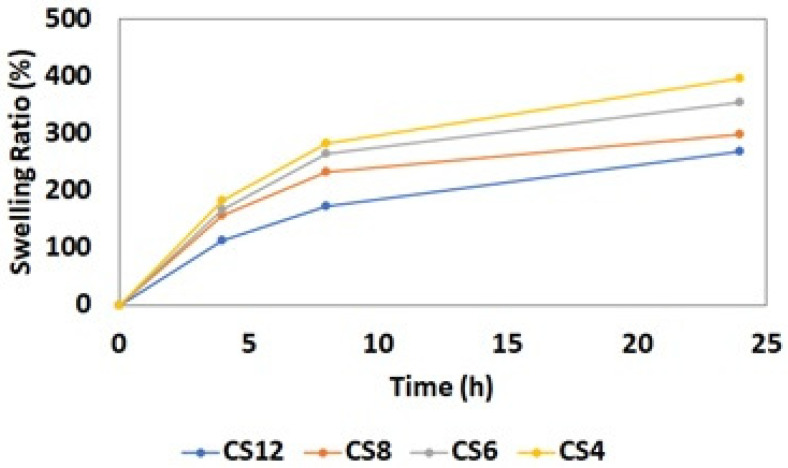
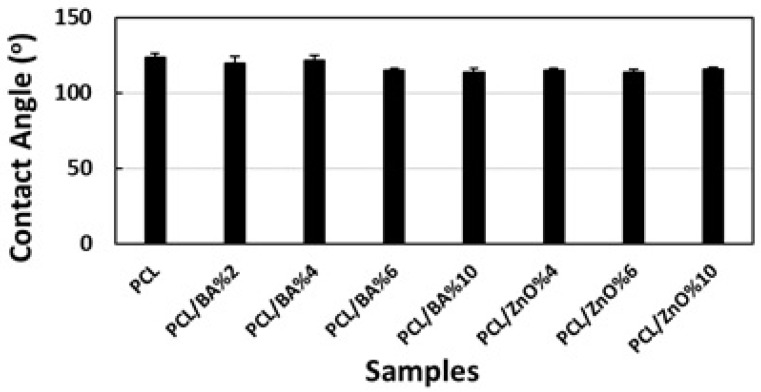
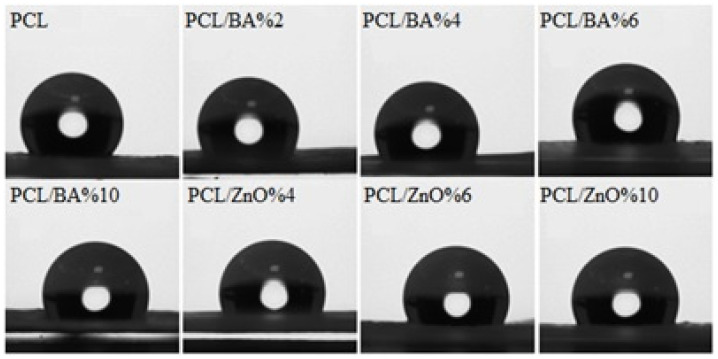
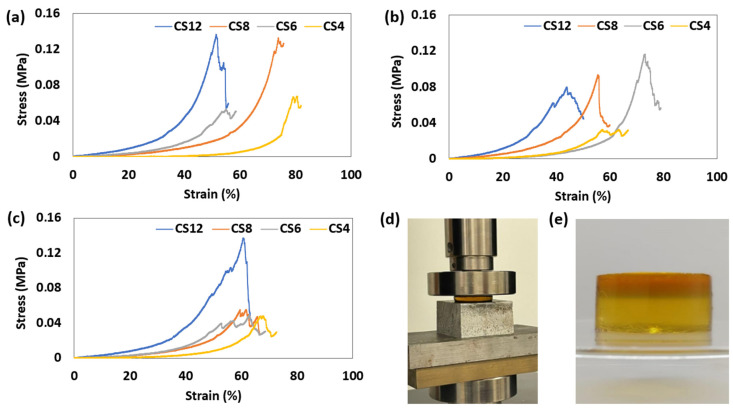
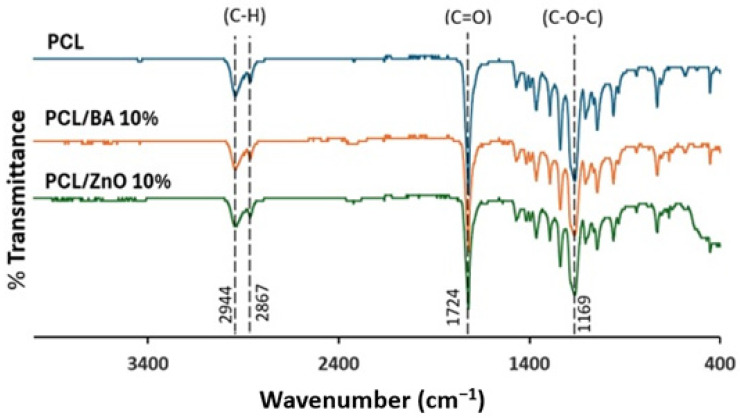
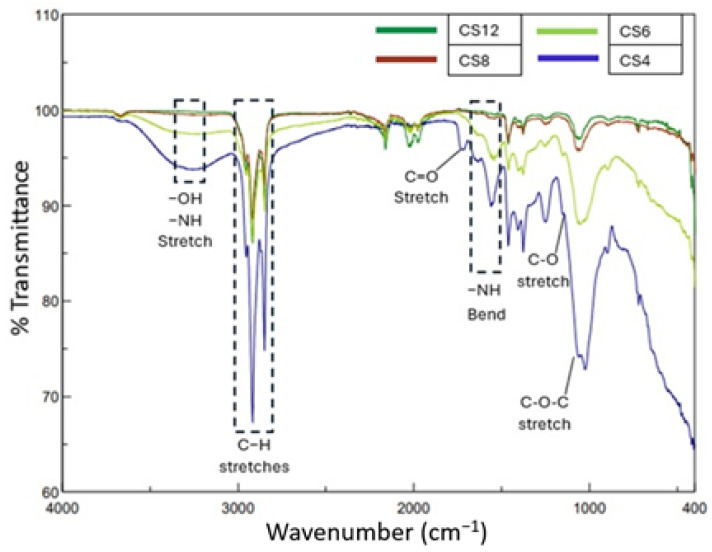
The aim of this project is to fabricate fiber mats and hydrogel materials that constitute the two main components of a wound dressing material. The contributions of boric acid (BA) and zinc oxide (ZnO) to the physical and mechanical properties of polycaprolactone (PCL) is investigated. These materials are chosen for their antimicrobial and antifungal effects. Additionally, since chitosan forms brittle hydrogels, it is reinforced with polyvinyl alcohol (PVA) to improve ductility and water uptake properties. For these purposes, PCL, BA, ZnO, PVA, and chitosan are used in different ratios to fabricate nanofiber mats and hydrogels. Mechanical, physical, and chemical characteristics are examined. The highest elastic modulus and tensile strength are obtained from samples with 6% BA and 10% ZnO concentrations. ZnO-decorated fibers exhibit a higher elastic modulus than those with BA, though BA-containing fibers exhibit greater elongation before breakage. All fibers exhibit hydrophobic properties, which help to prevent biofilm formation. In compression tests, CS12 demonstrates the highest strength. Increasing the PVA content enhances ductility, while a higher concentration of chitosan results in a denser structure. This outcome is confirmed by FTIR and swelling tests. These findings highlight the optimal combinations of nanofibrous mats and hydrogels, offering guidance for future wound dressing designs that balance mechanical strength, water absorption, and antimicrobial properties. By stacking these nanofibrous mats and hydrogels in different orders, it is expected to achieve a wound care material that is suitable for various applications. The authors encourage experimentation with different configurations of these nanofiber and hydrogel stackings to observe their mechanical behavior under real-life conditions in future studies.
本项目的目的是制造构成伤口敷料材料两个主要成分的纤维垫和水凝胶材料。研究了硼酸(BA)和氧化锌(ZnO)对聚己内酯(PCL)物理和机械性能的影响。选择这些材料是因其具有抗菌和抗真菌作用。此外,由于壳聚糖形成的水凝胶易碎,因此用聚乙烯醇(PVA)对其进行增强,以改善延展性和吸水性。出于这些目的,将PCL、BA、ZnO、PVA和壳聚糖以不同比例用于制造纳米纤维垫和水凝胶。对其机械、物理和化学特性进行了检测。在BA浓度为6%和ZnO浓度为10%的样品中获得了最高的弹性模量和拉伸强度。氧化锌修饰的纤维比含BA的纤维表现出更高的弹性模量,尽管含BA的纤维在断裂前表现出更大的伸长率。所有纤维均表现出疏水性,这有助于防止生物膜形成。在压缩试验中,CS12表现出最高强度。增加PVA含量可提高延展性,而较高浓度的壳聚糖会导致结构更致密。傅里叶变换红外光谱(FTIR)和溶胀试验证实了这一结果。这些发现突出了纳米纤维垫和水凝胶的最佳组合,为未来平衡机械强度、吸水性和抗菌性能的伤口敷料设计提供了指导。通过以不同顺序堆叠这些纳米纤维垫和水凝胶,有望获得适用于各种应用的伤口护理材料。作者鼓励在未来的研究中对这些纳米纤维和水凝胶堆叠的不同配置进行试验,以观察它们在实际条件下的机械行为。