Praharaj Prakash P, Li Yang, Mary Charline, Soflaee Mona H, Ryu Kevin, Kim Dohun, Tran Diem H, Dey Trishna, Tom Harrison J, Rion Halie, Gelin Muriel, Lemoff Andrew, Zacharias Lauren G, Patricio João S, Mathews Thomas P, Chen Zhe, Lionne Corinne, Hoxhaj Gerta, Labesse Gilles
Children's Medical Center Research Institute, University of Texas Southwestern Medical Center, 5323 Harry Hines Boulevard, Dallas, TX 75390, USA.
Department of Biophysics, University of Texas Southwestern Medical Center, Dallas, TX 75390, USA.
Sci Adv. 2025 Jan 24;11(4):eads2664. doi: 10.1126/sciadv.ads2664.
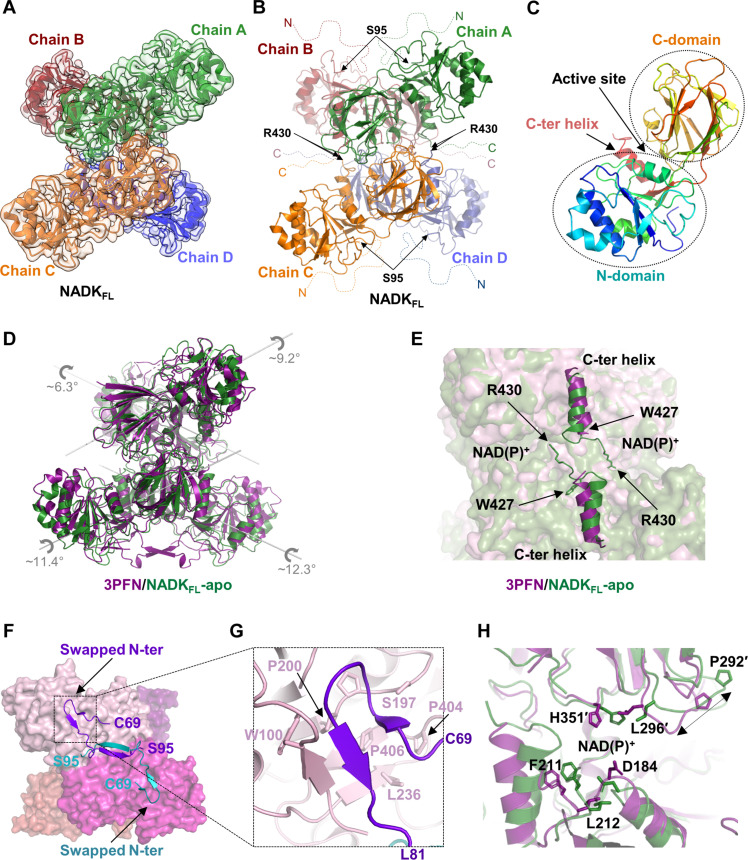
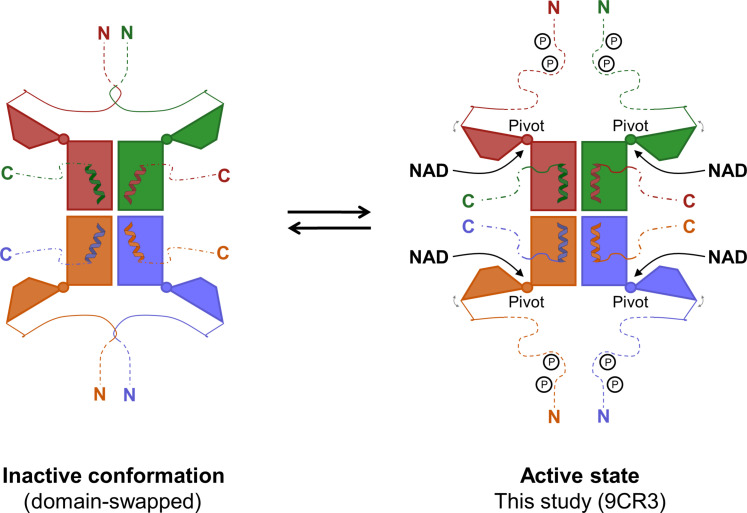
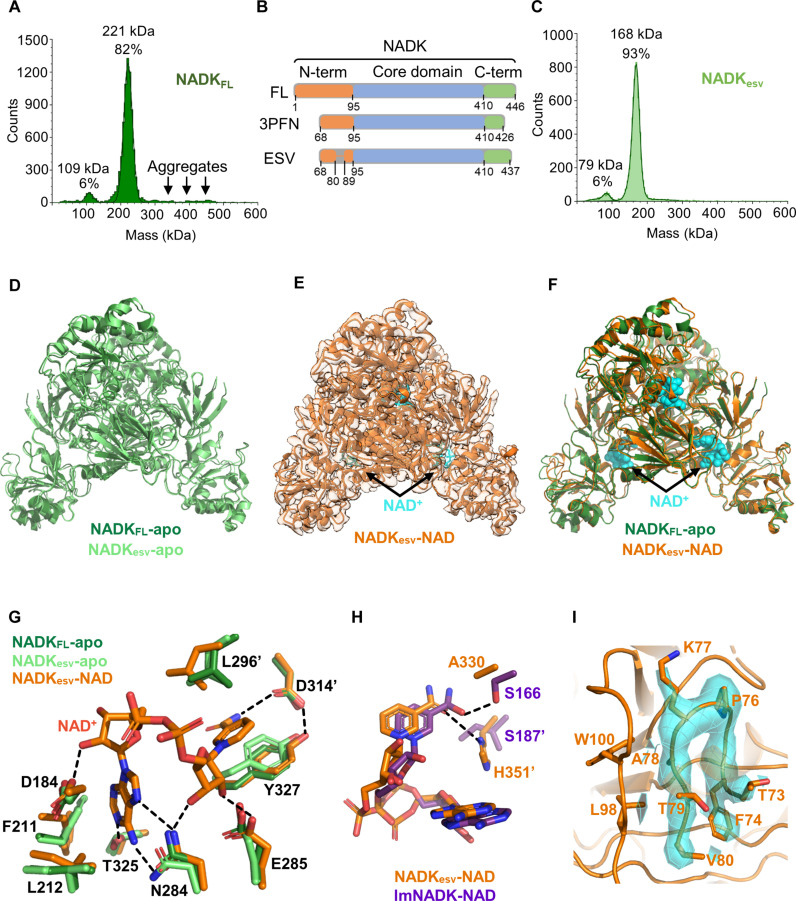
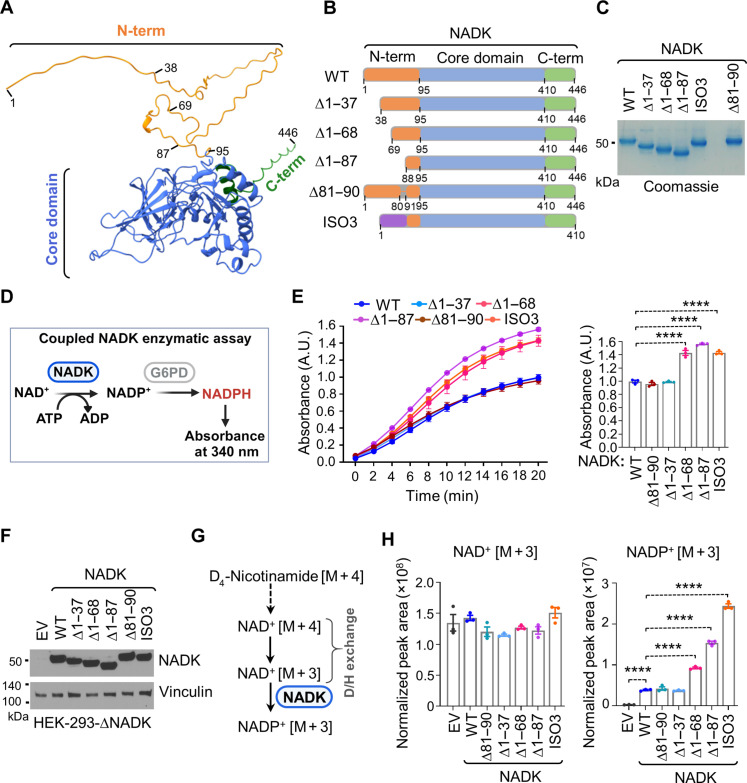
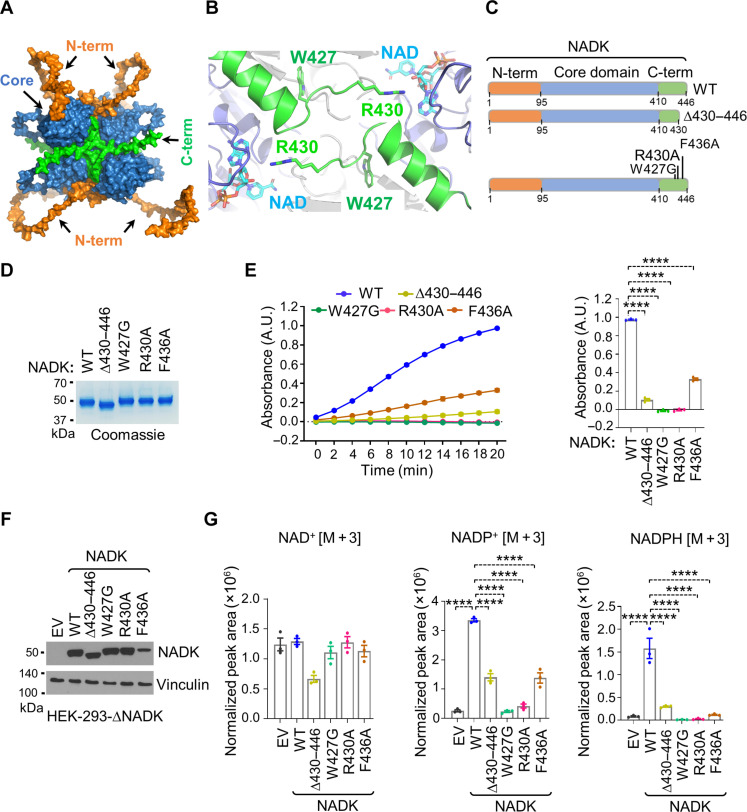
Reduced nicotinamide adenine dinucleotide phosphate (NADPH) is a crucial reducing cofactor for reductive biosynthesis and protection from oxidative stress. To fulfill their heightened anabolic and reductive power demands, cancer cells must boost their NADPH production. Progrowth and mitogenic protein kinases promote the activity of cytosolic NAD kinase (NADK), which produces NADP, a limiting NADPH precursor. However, the molecular architecture and mechanistic regulation of human NADK remain undescribed. Here, we report the cryo-electron microscopy structure of human NADK, both in its apo-form and in complex with its substrate NAD (nicotinamide adenine dinucleotide), revealing a tetrameric organization with distinct structural features. We discover that the amino (N)- and carboxyl (C)-terminal tails of NADK have opposing effects on its enzymatic activity and cellular NADP(H) levels. Specifically, the C-terminal region is critical for NADK activity, whereas the N-terminal region exhibits an inhibitory role. This study highlights molecular insights into the regulation of a vital enzyme governing NADP(H) production.
还原型烟酰胺腺嘌呤二核苷酸磷酸(NADPH)是还原生物合成和抵御氧化应激的关键还原辅因子。为满足其增强的合成代谢和还原能力需求,癌细胞必须提高其NADPH产量。促进生长和有丝分裂的蛋白激酶可促进胞质NAD激酶(NADK)的活性,该酶可产生NADP,即一种有限的NADPH前体。然而,人类NADK的分子结构和机制调控仍未得到描述。在此,我们报告了人类NADK的冷冻电镜结构,包括其无配体形式及其与底物NAD(烟酰胺腺嘌呤二核苷酸)形成的复合物,揭示了具有独特结构特征的四聚体组织。我们发现,NADK的氨基(N)端和羧基(C)端尾巴对其酶活性和细胞NADP(H)水平具有相反的影响。具体而言,C端区域对NADK活性至关重要,而N端区域则表现出抑制作用。这项研究突出了对一种控制NADP(H)产生的重要酶的调控的分子见解。