Li Yuanpeng, Huang Xinmeng, Yang Yuting, Mulati Ailikemu, Hong Jingyang, Wang Jiayi
College of Life Science and Technology, Xinjiang University, Urumqi 830046, China.
Foods. 2025 Jan 7;14(2):149. doi: 10.3390/foods14020149.
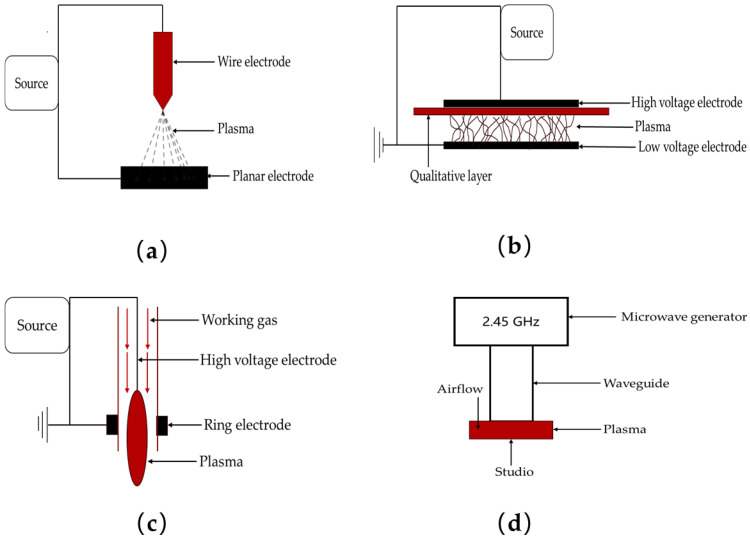
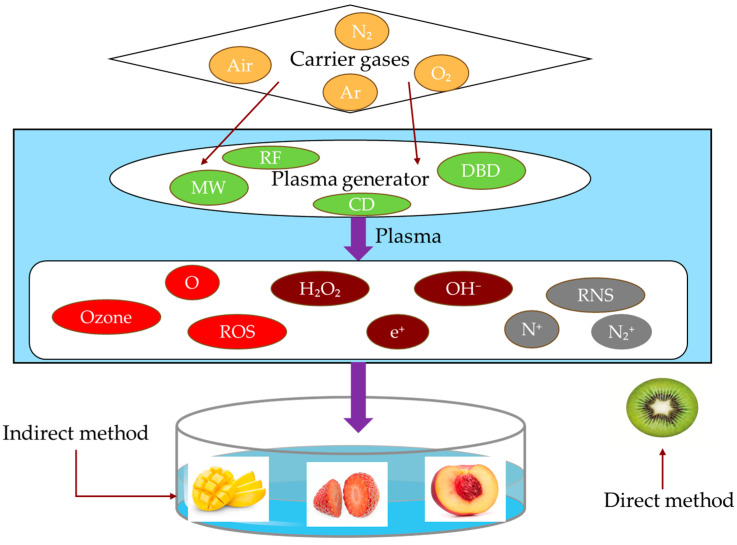
With improving economic conditions, consumer demand for fresh-cut produce is rising. The development of the fresh-cut industry has been hindered by pathogenic contamination and quality deterioration. Scientific communities have developed novel preservation technologies for fresh-cut produce. As an innovative non-thermal processing method, cold plasma effectively preserves the nutritional value and inactivates pathogens in fresh-cut produce. This review delineates the principles of cold-plasma generation and concludes with the primary factors influencing its efficacy. These factors include the specifications and parameters of the equipment utilized, the properties of the conductive gas utilized, the method of treatment, and the intrinsic properties of a sample subjected to treatment. Furthermore, this review delineates various scenarios for cold-plasma applications. This review focuses on its effects on enzymatic activities (including peroxidase, polyphenol oxidase, and pectin methylesterase), pathogenic microorganisms, and nutritional value. This review concludes with the potential application of cold-plasma technology in the processing of fresh-cut products. This study proposes advancing plasma technology in fresh-cut produce processing by (1) optimizing cold-plasma parameters for diverse fruit and vegetable varieties and (2) scaling up to facilitate industrial application.
随着经济状况的改善,消费者对鲜切农产品的需求不断上升。鲜切行业的发展受到病原菌污染和品质劣变的阻碍。科学界已开发出用于鲜切农产品的新型保鲜技术。作为一种创新的非热加工方法,冷等离子体有效地保留了鲜切农产品的营养价值并使病原菌失活。本综述阐述了冷等离子体产生的原理,并总结了影响其效果的主要因素。这些因素包括所使用设备的规格和参数、所使用导电气体的性质、处理方法以及接受处理样品的固有特性。此外,本综述还阐述了冷等离子体应用的各种情况。本综述重点关注其对酶活性(包括过氧化物酶、多酚氧化酶和果胶甲酯酶)、病原微生物和营养价值的影响。本综述最后总结了冷等离子体技术在鲜切产品加工中的潜在应用。本研究建议通过以下方式推动等离子体技术在鲜切农产品加工中的应用:(1)针对不同水果和蔬菜品种优化冷等离子体参数;(2)扩大规模以促进工业应用。