Hamid Yameen, Rabbani Rukhshana Dina, Afsara Rakkan, Nowrin Samarea, Ghose Aruni, Papadopoulos Vasileios, Sirlantzis Konstantinos, Ovsepian Saak V, Boussios Stergios
The University of Edinburgh, Edinburgh EH8 9YL, UK.
Department of Acute Medicine, Medway NHS Foundation Trust, Gillingham ME7 5NY, UK.
Int J Mol Sci. 2025 Jan 18;26(2):802. doi: 10.3390/ijms26020802.
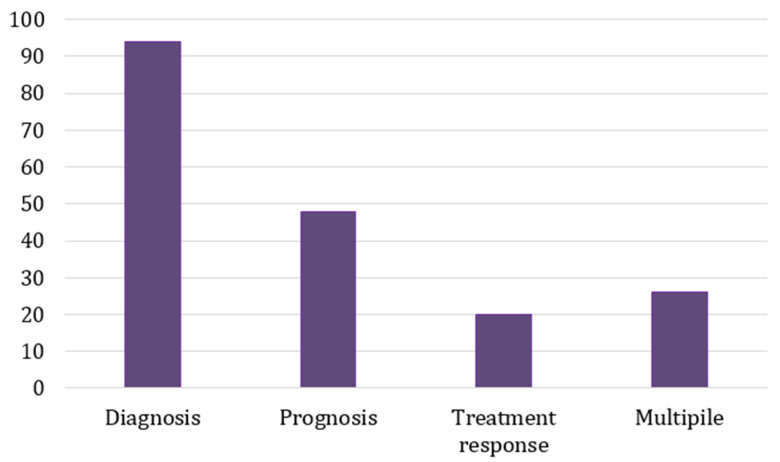
Prostate cancer, a leading cause of cancer-related mortality among men, often presents challenges in accurate diagnosis and effective monitoring. This systematic review explores the potential of exosomal biomolecules as noninvasive biomarkers for the diagnosis, prognosis, and treatment response of prostate cancer. A thorough systematic literature search through online public databases (Medline via PubMed, Scopus, and Web of science) using structured search terms and screening using predefined eligibility criteria resulted in 137 studies that we analyzed in this systematic review. We evaluated the findings from these clinical studies, revealing that the load of exosomes in the blood and urine of prostate cancer patients, which includes microRNAs (miRNAs), proteins, and lipids, demonstrates disease-specific changes. It also shows that some exosomal markers can differentiate between malignant and benign hyperplasia of the prostate, predict disease aggressiveness, and monitor treatment efficacy. Notably, miRNA emerged as the most frequently studied biomolecule, demonstrating superior diagnostic potential compared to traditional methods like prostate-specific antigen (PSA) testing. The analysis also highlights the pressing need for a standardised analytic approach through multi-centre studies to validate the full potential of exosomal biomarkers for the diagnosis and monitoring of prostate cancer.
前列腺癌是男性癌症相关死亡的主要原因之一,在准确诊断和有效监测方面常常面临挑战。本系统综述探讨了外泌体生物分子作为前列腺癌诊断、预后和治疗反应的非侵入性生物标志物的潜力。通过在线公共数据库(通过PubMed检索Medline、Scopus和Web of science),使用结构化检索词进行全面的系统文献检索,并使用预定义的纳入标准进行筛选,最终得到137项研究,我们在本系统综述中对其进行了分析。我们评估了这些临床研究的结果,发现前列腺癌患者血液和尿液中的外泌体含量,包括微小RNA(miRNA)、蛋白质和脂质,呈现出疾病特异性变化。这也表明,一些外泌体标志物可以区分前列腺的恶性增生和良性增生,预测疾病侵袭性,并监测治疗效果。值得注意的是,miRNA是研究最频繁的生物分子,与前列腺特异性抗原(PSA)检测等传统方法相比,显示出卓越的诊断潜力。分析还强调,迫切需要通过多中心研究采用标准化分析方法,以验证外泌体生物标志物在前列腺癌诊断和监测方面的全部潜力。