Dai Wenxia, Kang Qinqing
School of Humanities and Arts, Hunan International Economics University, Changsha, 410205, China.
School of Electronic and Information Engineering, Changsha Institute of Technology, Changsha, 410200, China.
Sci Rep. 2025 Jan 25;15(1):3204. doi: 10.1038/s41598-025-87450-5.
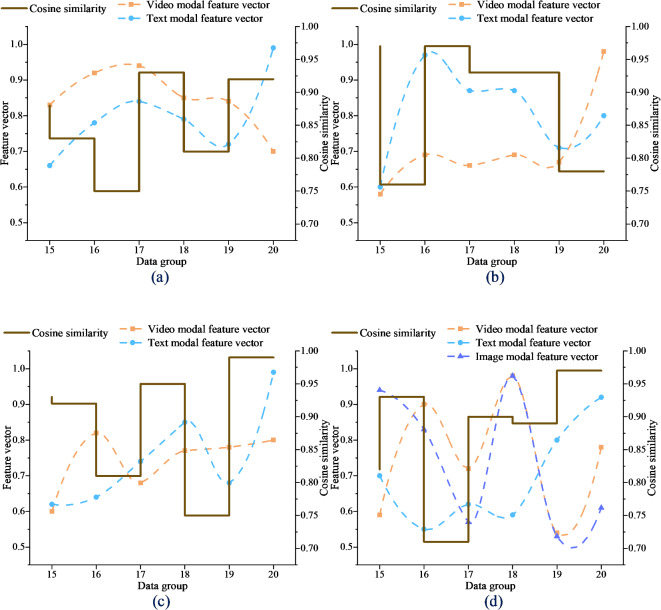
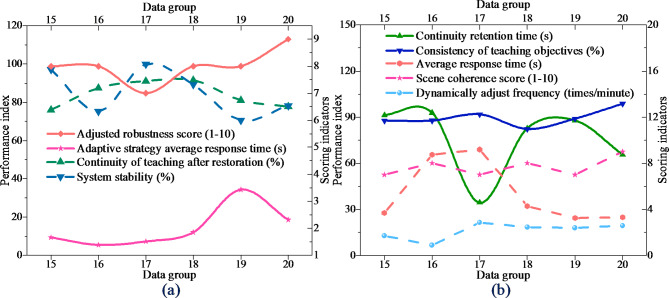
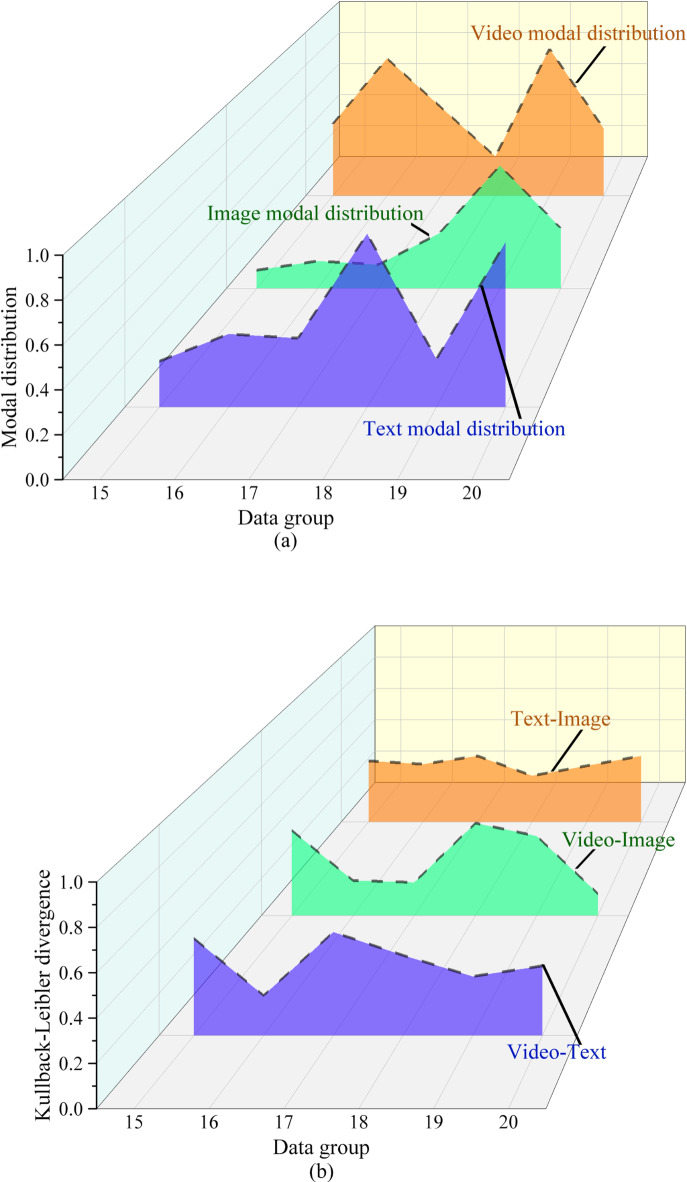
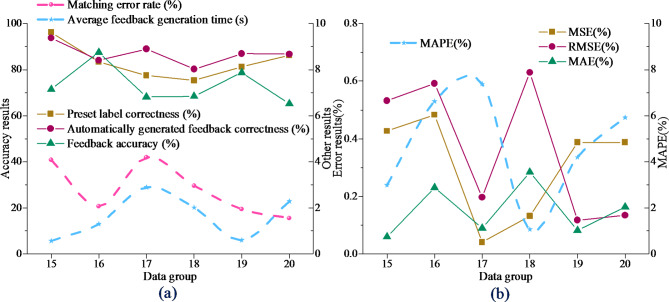
In order to solve the limitations of flipped classroom in personalized teaching and interactive effect improvement, this paper designs a new model of flipped classroom in colleges and universities based on Virtual Reality (VR) by combining the algorithm of Contrastive Language-Image Pre-Training (CLIP). Through cross-modal data fusion, the model deeply combines students' operation behavior with teaching content, and improves teaching effect through intelligent feedback mechanism. The test data shows that the similarity between video and image modes reaches 0.89, which indicates that different modal information can be effectively integrated to ensure the semantic consistency and intuitive understanding of teaching content. The minimum Kullback-Leibler (KL) divergence is 0.12, which ensures the stability of data distribution and avoids information loss. The accuracy of automatically generating feedback reaches 93.72%, which significantly improves the efficiency of personalized learning guidance. In the adaptability test of virtual scene, the frequency of scene adjustment is 2.5 times/minute, and the consistency score is stable above 8.6, ensuring the consistency of teaching goals under complex interaction. This paper aims to enhance personalized learning experience, improve teaching efficiency and autonomous learning effect through VR technology and intelligent feedback, and promote the innovation of interactive teaching mode.
为解决翻转课堂在个性化教学及互动效果提升方面的局限性,本文结合对比语言-图像预训练(CLIP)算法,设计了一种基于虚拟现实(VR)的高校翻转课堂新模式。该模型通过跨模态数据融合,将学生的操作行为与教学内容深度结合,并通过智能反馈机制提高教学效果。测试数据表明,视频与图像模式之间的相似度达到0.89,这表明不同模态信息能够有效整合,以确保教学内容的语义一致性和直观理解。最小库尔贝克-莱布勒(KL)散度为0.12,确保了数据分布的稳定性并避免信息丢失。自动生成反馈的准确率达到93.72%,显著提高了个性化学习指导的效率。在虚拟场景适应性测试中,场景调整频率为每分钟2.5次,一致性得分稳定在8.6以上,确保了复杂交互下教学目标的一致性。本文旨在通过VR技术和智能反馈提升个性化学习体验,提高教学效率和自主学习效果,推动互动教学模式的创新。