de Freitas Vale Janaína, de Azevedo Júnior Wanderson Santiago, de Almeida Paula Regina Barbosa, Moreira Martins Adinaldo, Evangelista Gonçalves Flavine, Pinheiro Botelho Eliã, de Jesus Dias de Sousa Fabianne, Urbano Pauxis Aben-Athar Cintia Yolette, Almeida Machado Luiz Fernando, Oliveira Naiff Ferreira Glenda Roberta
Universidade Federal do Pará, Belém, 66075-110, Brazil.
Sci Rep. 2025 Jan 25;15(1):3176. doi: 10.1038/s41598-025-87580-w.
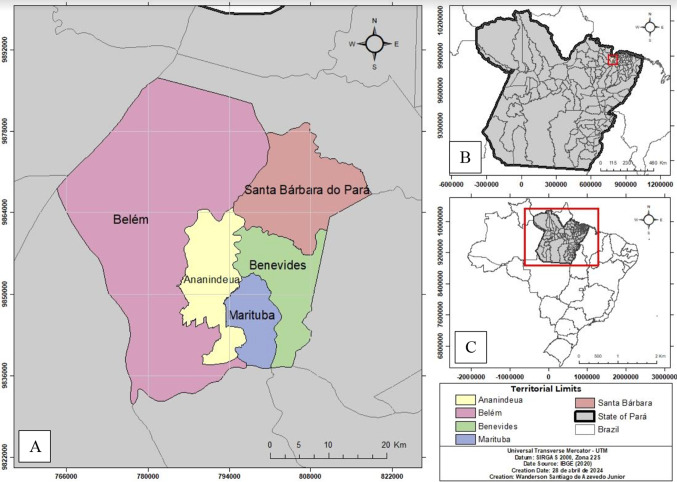
In Brazil, health policies implemented over the last three decades have enabled rapid testing for HIV to be made available in primary health care services. However, although these policies are national, the implementation of actions is not uniform, as they depend on the local management of local health systems. In this context, the study identified the proportion of women from sexual minorities who had never tested for HIV and the factors associated with access, in a Metropolitan Region of the Brazilian Amazon. This was an observational, cross-sectional study, conducted from data collected from July 21, 2022 to April 11, 2024, in the Brazilian Amazon. The study included women, aged 18 or over living in the study area who self-declare and self-identify as lesbian, bisexual, pansexual or asexual. The dependent variable: participants were asked if they had ever been tested for HIV in their lifetime. The independent variables were the access components: predisposing, facilitating and necessary. 301 women from sexual minorities participated in the study, 42.2% of whom had never tested for HIV. In the final model, multiple backward logistic regression was performed, the highest chances of never having been tested for HIV were participants aged 18 to 30 years (OR 2.99; p = 0.038); with income less than or equal to 1 minimum wage (OR 1.91; p = 0.026); participants who did not have children (OR 6.67; p = 0.012); and those who did not have an active sexual life (OR 4.73; p = 0.006). While the lowest chances of never having tested for HIV were among participants who used drugs OR 0.44; p = 0.008) and women who had already had an STI (OR 0.20; p = 0.044). Although the testing prevalence was below 50%, the study identified that the combined prevention strategy has reached the most vulnerable populations.
在巴西,过去三十年实施的卫生政策使初级卫生保健服务能够提供艾滋病毒快速检测。然而,尽管这些政策是全国性的,但行动的实施并不统一,因为它们取决于地方卫生系统的地方管理。在此背景下,该研究确定了巴西亚马逊大都市地区从未进行过艾滋病毒检测的性少数群体女性的比例以及与检测机会相关的因素。这是一项观察性横断面研究,于2022年7月21日至2024年4月11日在巴西亚马逊地区收集的数据基础上进行。该研究纳入了居住在研究区域、年龄在18岁及以上、自我宣称并自我认定为女同性恋、双性恋、泛性恋或无性恋的女性。因变量:询问参与者一生中是否曾接受过艾滋病毒检测。自变量是检测机会的组成部分:易患因素、促进因素和必要因素。301名性少数群体女性参与了该研究,其中42.2%从未接受过艾滋病毒检测。在最终模型中,进行了多重向后逻辑回归,从未接受过艾滋病毒检测可能性最高的是18至30岁的参与者(比值比2.99;p = 0.038);收入低于或等于1个最低工资标准的参与者(比值比1.91;p = 0.026);没有孩子的参与者(比值比6.67;p = 0.012);以及没有活跃性生活的参与者(比值比4.73;p = 0.006)。而从未接受过艾滋病毒检测可能性最低的是使用毒品的参与者(比值比0.44;p = 0.008)和已经感染过性传播感染的女性(比值比0.20;p = 0.044)。尽管检测率低于50%,但该研究确定联合预防策略已覆盖最脆弱人群。