Aquino S-N, de Souza L-L, Alvarenga D, Bonan P-R, Martins H-D, Verner F-S, Lopes M-A, Vargas P-A
Department of Oral Diagnosis, Piracicaba Dental School University of Campinas, 901, Limeira Avenue Postcode: 13414-903. Piracicaba-SP, Brazil
Med Oral Patol Oral Cir Bucal. 2025 Mar 1;30(2):e247-e255. doi: 10.4317/medoral.26896.
Oral squamous cell carcinoma (OSCC) is an aggressive cancer, with prognosis influenced by clinical variables as well grading systems and perineural invasion (PNI), which are associated to poorer outcomes, including higher rates of recurrence and metastasis. This study aims to evaluate OSCC using three grading systems and assess the impact of PNI and clinicopathologic parameters on patient survival.
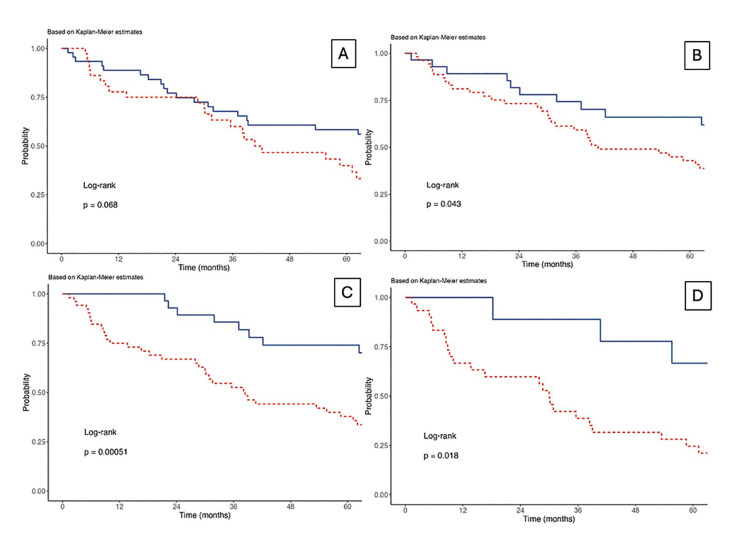
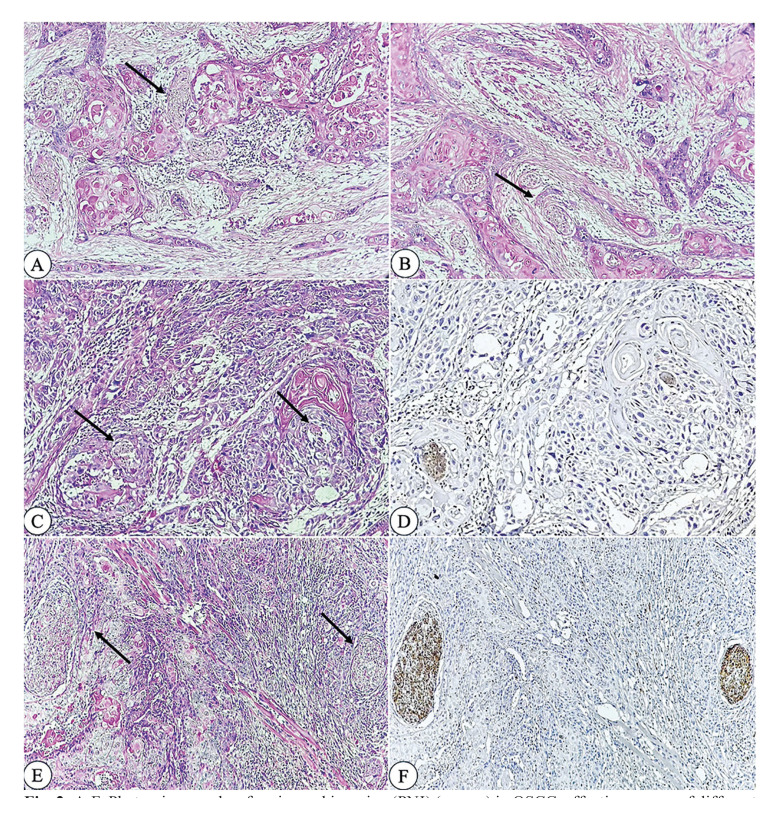
Eighty-one primary OSCC samples were analyzed. Histopathological evaluations were performed utilizing Malignancy Grading of the Deep Invasive Margins, WHO grading system, and the Histologic Risk Assessment. S-100 immunohistochemistry was used to detect PNI. Five-year disease-specific survival (DSS) curves were generated using the Kaplan-Meier method, and the Cox proportional hazards model analyzed prognostic significance.
Advanced clinical stage was significantly associated with reduced survival (p-value <0.001, HR = 4.07). Patients without regional lymph node involvement had better survival (p-value 0.002, HR = 0.37). Higher histologic risk assessment scores were linked to worse outcomes. Multifocal neural invasion significantly correlated with poorer survival compared to unifocal invasion (p-value 0.017, HR = 4.20). Patients undergoing surgery followed by adjuvant therapies had better survival rates.
Besides clinical stage and histological grade, PNI also showed to be a crucial prognostic factor in OSCC, necessitating aggressive treatment strategies.
口腔鳞状细胞癌(OSCC)是一种侵袭性癌症,其预后受临床变量以及分级系统和神经周围侵犯(PNI)的影响,这些因素与较差的预后相关,包括更高的复发率和转移率。本研究旨在使用三种分级系统评估OSCC,并评估PNI和临床病理参数对患者生存的影响。
分析了81例原发性OSCC样本。利用深部浸润边缘恶性分级、世界卫生组织分级系统和组织学风险评估进行组织病理学评估。采用S-100免疫组织化学检测PNI。使用Kaplan-Meier方法生成5年疾病特异性生存(DSS)曲线,并通过Cox比例风险模型分析预后意义。
临床晚期与生存率降低显著相关(p值<0.001,HR = 4.)。无区域淋巴结受累的患者生存率更高(p值0.002,HR = 0.37)。较高的组织学风险评估分数与较差的预后相关。与单灶性侵犯相比,多灶性神经侵犯与较差的生存率显著相关(p值0.017,HR = 4.20)。接受手术加辅助治疗的患者生存率更高。
除临床分期和组织学分级外,PNI在OSCC中也是一个关键的预后因素,需要积极的治疗策略。