Faculty of Dental Medicine and Oral Health Sciences, McGill University, Montreal, QC H3A 0G4, Canada.
Department of Oral and Maxillofacial Surgery, King Khalid University, Abha 61421, Saudi Arabia.
Curr Oncol. 2023 Mar 27;30(4):3721-3734. doi: 10.3390/curroncol30040283.
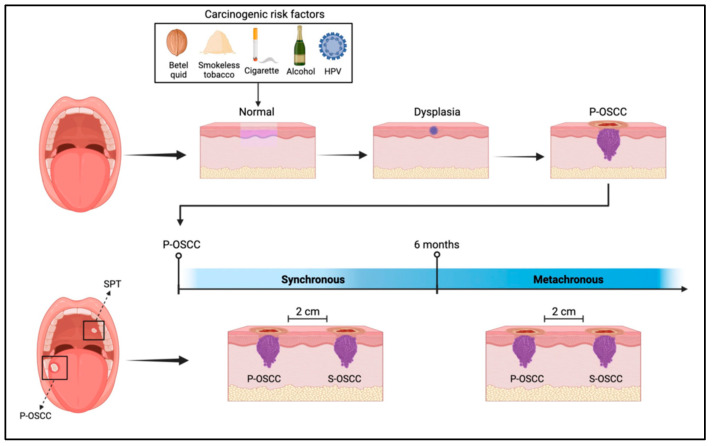
Head and neck cancer is among the top ten cancers worldwide, with most lesions in the oral cavity. Oral squamous cell carcinoma (OSCC) accounts for more than 90% of all oral malignancies and is a significant public health concern. Patients with OSCC are at increased risk for developing concomitant tumors, especially in the oral cavity, due to widely genetically susceptible mucosa to carcinogenic factors. Based on fulfilling specific criteria, these concomitant tumors can be called second primary tumors (SPTs), which can be further categorized into metachronous and synchronous tumors. This research reviews the literature that investigated the concurrent OSCC with second or multiple primaries to improve understanding of the definition, classification guidelines, and its effect on cancer survival. It also highlights the current investigation methods, the variation of standard treatment approaches due to such a phenomenon, and preventive measures discussed in the literature.
头颈部癌症是全球十大癌症之一,大多数病变发生在口腔。口腔鳞状细胞癌(OSCC)占所有口腔恶性肿瘤的 90%以上,是一个重大的公共卫生问题。由于口腔黏膜普遍对致癌因素具有遗传易感性,因此 OSCC 患者发生伴发肿瘤的风险增加,尤其是在口腔内。基于满足特定标准,这些伴发肿瘤可以被称为第二原发肿瘤(SPTs),它们可以进一步分为异时性和同时性肿瘤。本研究回顾了调查同时性 OSCC 与第二原发或多发肿瘤的文献,以增进对其定义、分类指南以及对癌症生存影响的理解。它还强调了目前的研究方法、由于这种现象而导致的标准治疗方法的变化,以及文献中讨论的预防措施。