
2.8吉赫兹和9.3吉赫兹微波的复合暴露会导致大鼠学习和记忆受损。
Compound exposure of 2.8 GHz and 9.3 GHz microwave causes learning and memory impairment in rats.
作者信息
Sun Liu, Wang Xiaoya, Ren Ke, Yao Chuanfu, Wang Haoyu, Xu Xinping, Wang Hui, Dong Ji, Zhang Jing, Yao Binwei, Wei Xiaohui, Peng Ruiyun, Zhao Li
机构信息
Beijing Institute of Radiation Medicine, Beijing, 100850, China.
Anhui Medical University School of Basic Medicine, Hefei, 230032, China.
出版信息
Heliyon. 2025 Jan 3;11(1):e41626. doi: 10.1016/j.heliyon.2025.e41626. eCollection 2025 Jan 15.
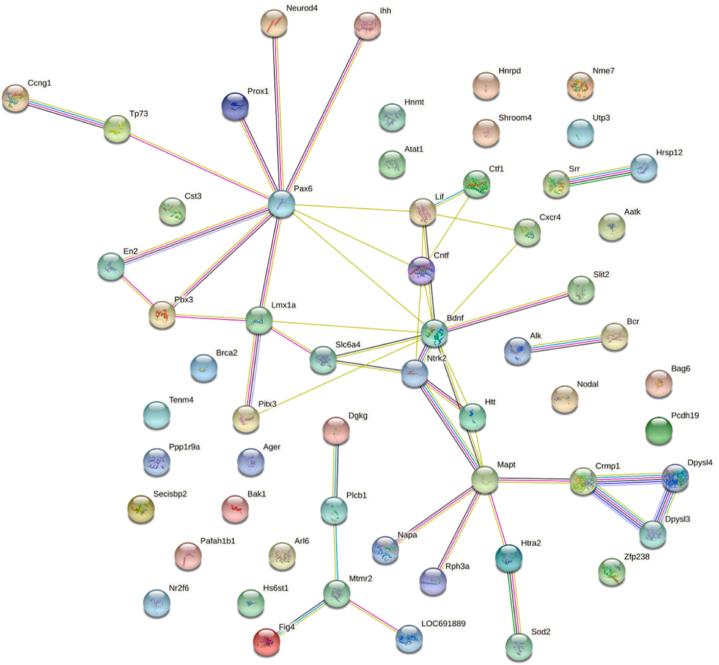
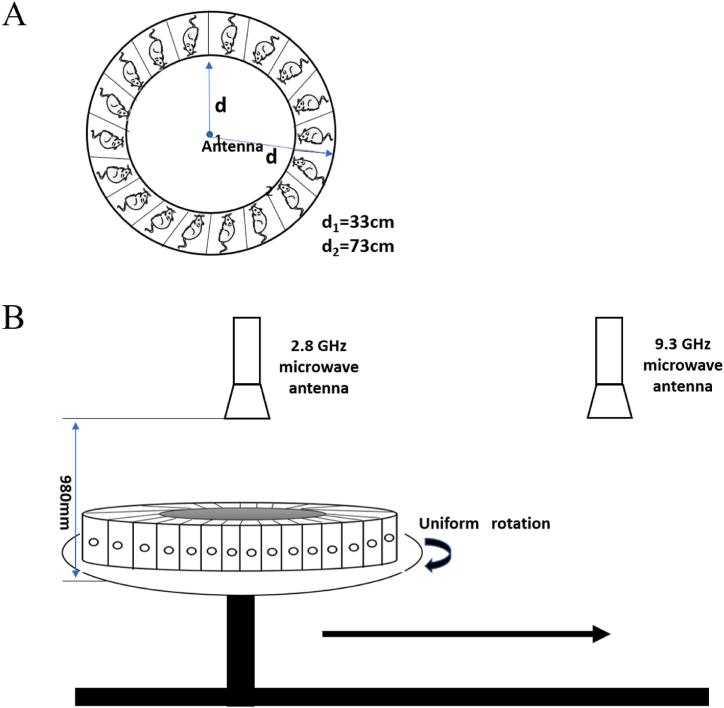
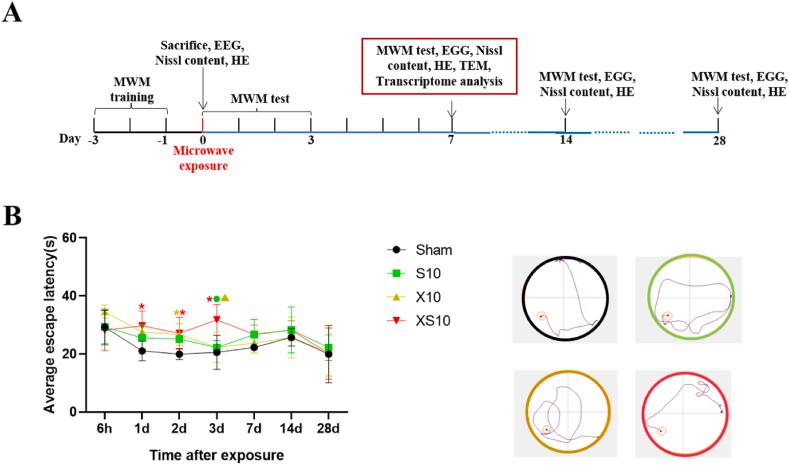
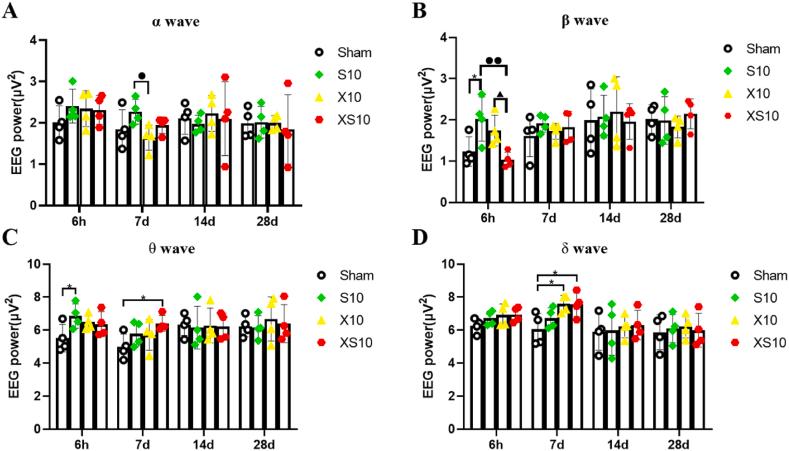
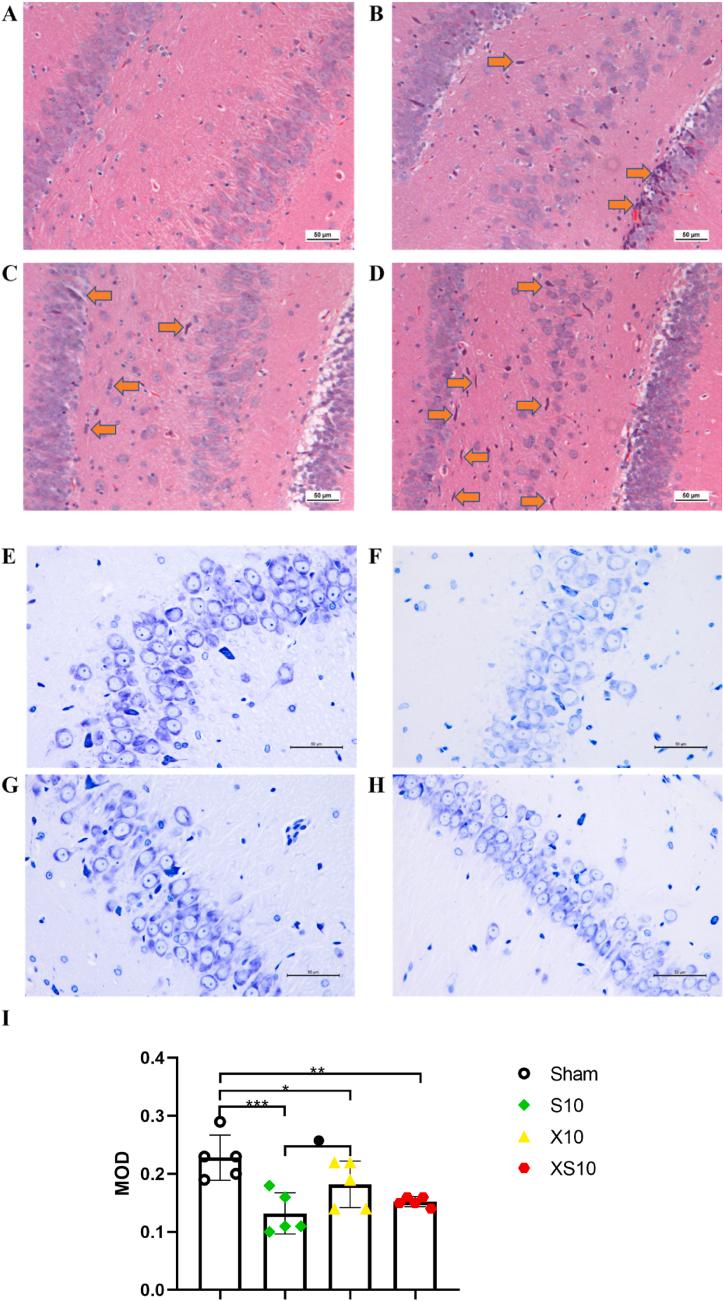
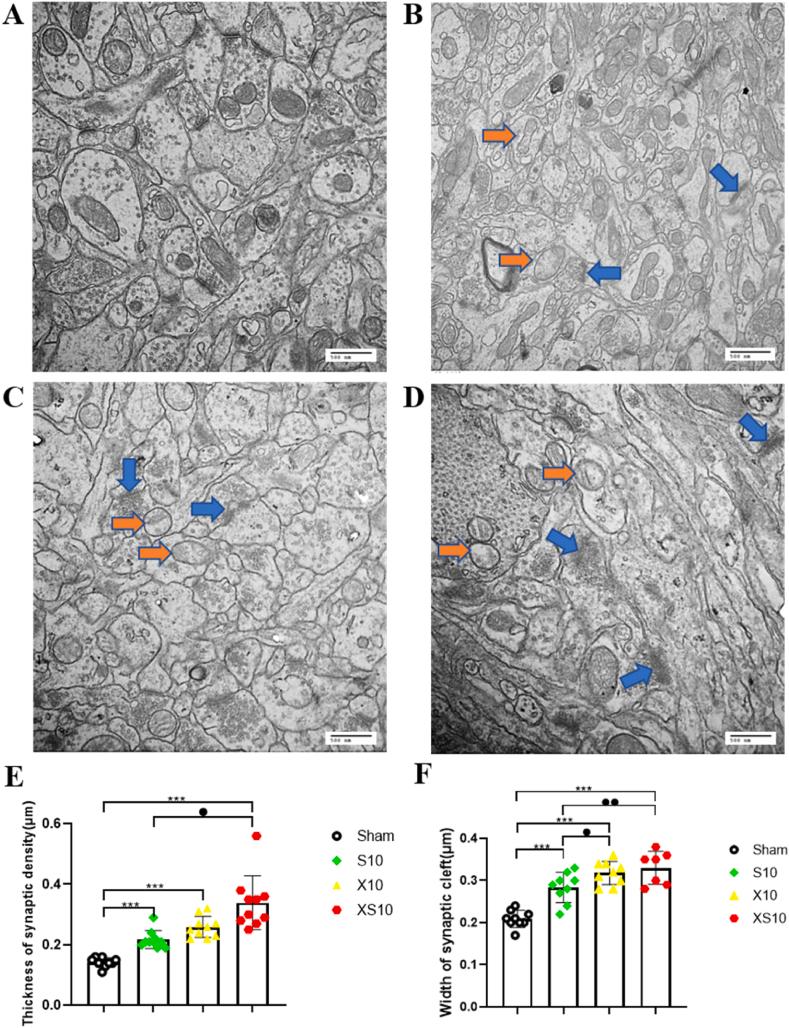
The anxieties and concerns about health hazards caused by microwave has been growing recently. Previous studies have reported microwave induced structural and functional injuries to brain. However, the biological effects caused by compound microwave were largely unexplored. In this study, we investigated the biological effects on rat's hippocampus after sequentially exposure to 2.8 GHz and 9.3 GHz at average power density of 10 mW/cm. Morris water maze (MWM) navigation tests showed that microwave exposure significantly extended the average escape latency (AEL) at 1d and 3d after exposure, suggesting reduced learning and memory ability. Importantly, compound microwave produced strongest responses at 3 d after exposure. Moreover, microwave also could induce abnormal electroencephalogram (EEG), such as increasing the power of θ wave and δ wave, suggesting brain damage or dysfunction. Histopathological analysis suggested that microwave resulted in obvious structural injuries in hippocampus at 7 d after exposure, and most serious injuries were observed in compound microwave exposed rats. Moreover, disorder of mitochondria and reduced Nissl bodies in hippocampus might contribute to the decrease of cognitive function. However, both the cognitive function and hippocampal structure restored to normal at 28 d after exposure, which might be attributed to self-recovery mechanisms. Gene ontology (GO) and Protein-protein interaction (PPI) analyses of differential expressed genes (DEGs) in peripheral blood suggested that Htt and Bdnf might be potential indicators to predict microwave. In conclusion, compound microwave of 2.8 GHz and 9.3 GHz could elicit reversible structural injuries to hippocampus, which could decrease the cognitive function of rats.
最近,人们对微波所造成的健康危害的焦虑和担忧日益增加。先前的研究报道了微波对大脑造成的结构和功能损伤。然而,复合微波所引起的生物学效应在很大程度上尚未得到探索。在本研究中,我们调查了大鼠在以10 mW/cm的平均功率密度依次暴露于2.8 GHz和9.3 GHz微波后对其海马体产生的生物学效应。莫里斯水迷宫(MWM)导航测试表明,微波暴露显著延长了暴露后1天和3天的平均逃避潜伏期(AEL),这表明学习和记忆能力下降。重要的是,复合微波在暴露后3天产生的反应最为强烈。此外,微波还可诱发异常脑电图(EEG),如增加θ波和δ波的功率,提示脑损伤或功能障碍。组织病理学分析表明,微波暴露后7天可导致海马体出现明显的结构损伤,在复合微波暴露的大鼠中观察到的损伤最为严重。此外,海马体中线粒体紊乱和尼氏体减少可能导致认知功能下降。然而,暴露后28天,认知功能和海马体结构均恢复正常,这可能归因于自我恢复机制。对外周血中差异表达基因(DEG)的基因本体(GO)和蛋白质-蛋白质相互作用(PPI)分析表明,Htt和Bdnf可能是预测微波的潜在指标。总之,2.8 GHz和9.3 GHz的复合微波可引起海马体可逆性结构损伤,进而降低大鼠的认知功能。
 Zotero 插件