• 文献检索
  • 文档翻译
  • 深度研究
  • 学术资讯
  • Suppr Zotero 插件Zotero 插件
  • 邀请有礼
  • 套餐&价格
  • 历史记录
应用&插件
Suppr Zotero 插件Zotero 插件浏览器插件Mac 客户端Windows 客户端微信小程序
定价
高级版会员购买积分包购买API积分包
服务
文献检索文档翻译深度研究API 文档MCP 服务
关于我们
关于 Suppr公司介绍联系我们用户协议隐私条款
关注我们

Suppr 超能文献

核心技术专利:CN118964589B侵权必究
粤ICP备2023148730 号-1Suppr @ 2026

文献检索

告别复杂PubMed语法,用中文像聊天一样搜索,搜遍4000万医学文献。AI智能推荐,让科研检索更轻松。

立即免费搜索

文件翻译

保留排版,准确专业,支持PDF/Word/PPT等文件格式,支持 12+语言互译。

免费翻译文档

深度研究

AI帮你快速写综述,25分钟生成高质量综述,智能提取关键信息,辅助科研写作。

立即免费体验

对两种常见皮肤癌的计算网络分析为分子机制提供了见解,并揭示了共同的治疗靶点。

Computational network analysis of two popular skin cancers provides insights into the molecular mechanisms and reveals common therapeutic targets.

作者信息

Mahmud Md Sujan, Paul Bikash Kumar, Hasan Md Rakibul, Islam K M Tanjida, Mahmud Imran, Mahmud Shahin

机构信息

Department of Software Engineering, Daffodil International University, Bangladesh.

Department of Information and Communication Technology, Mawlana Bhashani Science and Technology University, Santosh, Tangail-1902, Bangladesh.

出版信息

Heliyon. 2025 Jan 3;11(1):e41688. doi: 10.1016/j.heliyon.2025.e41688. eCollection 2025 Jan 15.

DOI:10.1016/j.heliyon.2025.e41688
PMID:39866430
原文链接:https://pmc.ncbi.nlm.nih.gov/articles/PMC11761328/
Abstract

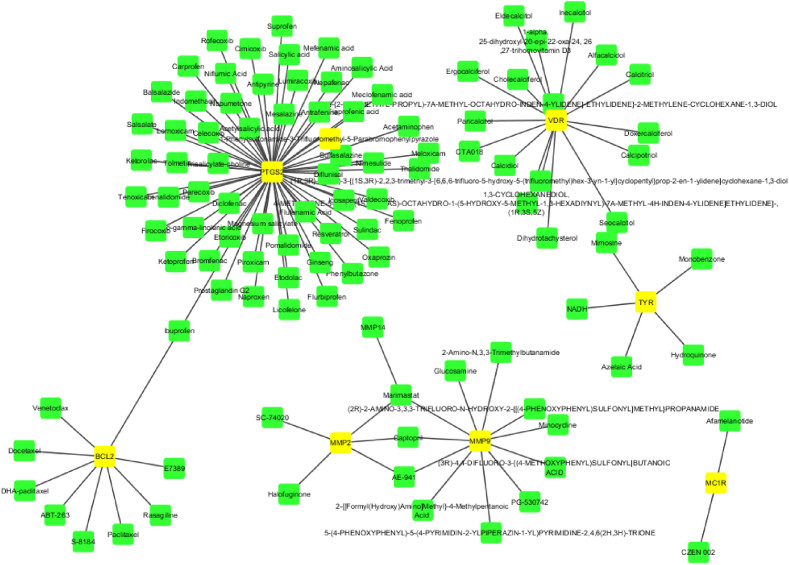
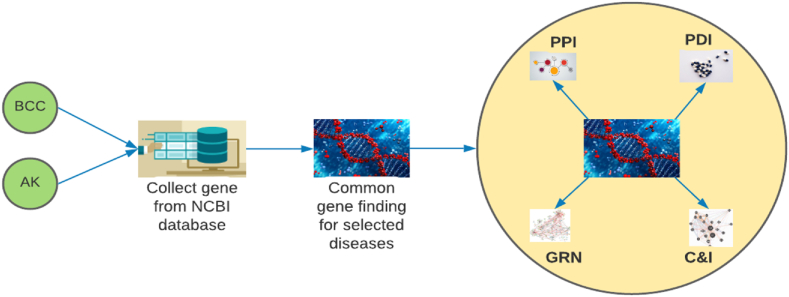
Basal Cell Carcinoma (BCC) and Actinic Keratosis (AK) are prevalent skin conditions with significant health complications. The molecular mechanisms underlying these conditions and their potential shared pathways remain ambiguous despite their prevalence. Therefore, this study aims to elucidate the common molecular pathways and potential therapeutic targets for BCC and AK through comprehensive computational network analysis. Linkage analysis was performed to identify common liable genes between BCC and AK. Protein-protein interactions (PPIs), Topological properties, GO enrichment, pathway enrichment, and gene regulatory network analyses were also performed to reveal potential molecular mechanisms and pathways. Furthermore, we evaluated protein-drug interactions (PDIs) to identify potential therapeutic targets. Our analysis revealed 22 common genes between BCC and AK: , , , , , , , , , , , , , , , , , , , , , and . PPI network analysis highlighted TP53 and EGFR as central hubs, validated using RNA-seq data. Co-expression and physical interaction analysis revealed a strong interplay between the common genes at the transcriptional and functional levels. GO analysis identified skin cancer-relevant terms: "skin development", "immune system development", and "response to radiation" as significantly enriched biological processes, while pathway enrichment analysis highlighted several cancer-related pathways enrichment. Gene regulatory network analysis revealed complex interactions between genes, miRNAs, and transcription factors, with , , and playing central roles. PDI network analysis identified ibuprofen as a potential therapeutic agent targeting PTGS2 and BCL2, while other proteins VDR, MMP2, MMP9, and TYR showed interactions with multiple drugs. This computational analysis provides valuable insights into the shared molecular mechanisms of BCC and AK, revealing common pathways and potential therapeutic targets for developing novel treatment strategies and repurposing existing drugs for these prevalent skin cancers. Therefore, these findings may guide future research in understanding and developing targeted therapies for both conditions.

摘要

基底细胞癌(BCC)和光化性角化病(AK)是常见的皮肤疾病,会引发严重的健康并发症。尽管这些疾病很常见,但其潜在的分子机制以及可能的共同途径仍不明确。因此,本研究旨在通过全面的计算网络分析,阐明BCC和AK的共同分子途径及潜在治疗靶点。进行连锁分析以确定BCC和AK之间的共同易感基因。还进行了蛋白质-蛋白质相互作用(PPI)、拓扑性质、基因本体(GO)富集、通路富集和基因调控网络分析,以揭示潜在的分子机制和途径。此外,我们评估了蛋白质-药物相互作用(PDI)以确定潜在的治疗靶点。我们的分析揭示了BCC和AK之间的22个共同基因: , , , , , , , , , , , , , , , , , , , , , , , , , , , , , , , , , , , , , , , , , , , , , , , , , , , , , , , , , , , , , , , , , , , , , , , , , , , , , , , , , , , , , , , , , , , , , , , , , , , , , , , , , , , , , , , , , , , , , , , , , , , , , , , , , , , , , , , , , , , , , , , , , , , , , , , , , , , , , , , , , , , , , , , , , , , , , , , , , , , , , , , , , , , , , , , , , , , , , , , , , , , , , , , , , , , , , , , , , , , , , , , , , , , , , , , , , , , , , , , , , , , , , , , , , , , , , , , , , , , , , , , , , , , , , , , , , , , , , , , , , , , , , , , , , , , , , , , , , , , , , , , , , , , , , , , , , , , , , , , , , , , , , , , , , , , , , , , , , , , , , , , , , , , , , , , , , , , , , , , , , , , , , , , , , , , , , , , , , , , , , , , , , , , , , , , , , , , , , , , , , , , , , , , , , , , , , , , , , , , , , , , , , , , , , , , , , , , , , , , , , , , , , , , , , , , , , , , , , , , , , , , , , , , , , , , , , , ,
https://cdn.ncbi.nlm.nih.gov/pmc/blobs/2e4b/11761328/968bac4681ce/gr10.jpg
https://cdn.ncbi.nlm.nih.gov/pmc/blobs/2e4b/11761328/4e585e50089d/gr1.jpg
https://cdn.ncbi.nlm.nih.gov/pmc/blobs/2e4b/11761328/f22f2e793d5f/gr2.jpg
https://cdn.ncbi.nlm.nih.gov/pmc/blobs/2e4b/11761328/7affee21f9d8/gr3.jpg
https://cdn.ncbi.nlm.nih.gov/pmc/blobs/2e4b/11761328/c8d1750c6bdb/gr4.jpg
https://cdn.ncbi.nlm.nih.gov/pmc/blobs/2e4b/11761328/d6d1975b1f0c/gr5.jpg
https://cdn.ncbi.nlm.nih.gov/pmc/blobs/2e4b/11761328/ff5732f42a84/gr6.jpg
https://cdn.ncbi.nlm.nih.gov/pmc/blobs/2e4b/11761328/15df71300778/gr7.jpg
https://cdn.ncbi.nlm.nih.gov/pmc/blobs/2e4b/11761328/f5c0c2fe4c2b/gr8.jpg
https://cdn.ncbi.nlm.nih.gov/pmc/blobs/2e4b/11761328/178e8e0c8a01/gr9.jpg
https://cdn.ncbi.nlm.nih.gov/pmc/blobs/2e4b/11761328/968bac4681ce/gr10.jpg
https://cdn.ncbi.nlm.nih.gov/pmc/blobs/2e4b/11761328/4e585e50089d/gr1.jpg
https://cdn.ncbi.nlm.nih.gov/pmc/blobs/2e4b/11761328/f22f2e793d5f/gr2.jpg
https://cdn.ncbi.nlm.nih.gov/pmc/blobs/2e4b/11761328/7affee21f9d8/gr3.jpg
https://cdn.ncbi.nlm.nih.gov/pmc/blobs/2e4b/11761328/c8d1750c6bdb/gr4.jpg
https://cdn.ncbi.nlm.nih.gov/pmc/blobs/2e4b/11761328/d6d1975b1f0c/gr5.jpg
https://cdn.ncbi.nlm.nih.gov/pmc/blobs/2e4b/11761328/ff5732f42a84/gr6.jpg
https://cdn.ncbi.nlm.nih.gov/pmc/blobs/2e4b/11761328/15df71300778/gr7.jpg
https://cdn.ncbi.nlm.nih.gov/pmc/blobs/2e4b/11761328/f5c0c2fe4c2b/gr8.jpg
https://cdn.ncbi.nlm.nih.gov/pmc/blobs/2e4b/11761328/178e8e0c8a01/gr9.jpg
https://cdn.ncbi.nlm.nih.gov/pmc/blobs/2e4b/11761328/968bac4681ce/gr10.jpg

相似文献

1
Computational network analysis of two popular skin cancers provides insights into the molecular mechanisms and reveals common therapeutic targets.对两种常见皮肤癌的计算网络分析为分子机制提供了见解,并揭示了共同的治疗靶点。
Heliyon. 2025 Jan 3;11(1):e41688. doi: 10.1016/j.heliyon.2025.e41688. eCollection 2025 Jan 15.
2
Exploring the Targets and Molecular Mechanisms of Curcumin for the Treatment of Bladder Cancer Based on Network Pharmacology, Molecular Docking and Molecular Dynamics.基于网络药理学、分子对接和分子动力学探索姜黄素治疗膀胱癌的靶点及分子机制
Mol Biotechnol. 2025 May;67(5):2138-2159. doi: 10.1007/s12033-024-01190-x. Epub 2024 Jun 1.
3
Combining network pharmacology, machine learning, molecular docking and molecular dynamic to explore the mechanism of Chufeng Qingpi decoction in treating schistosomiasis.运用网络药理学、机器学习、分子对接和分子动力学探究处方除风清脾汤治疗血吸虫病的作用机制。
Front Cell Infect Microbiol. 2024 Sep 6;14:1453529. doi: 10.3389/fcimb.2024.1453529. eCollection 2024.
4
Genetic and functional interaction network analysis reveals global enrichment of regulatory T cell genes influencing basal cell carcinoma susceptibility.遗传和功能相互作用网络分析揭示了影响基底细胞癌易感性的调节性 T 细胞基因的全局富集。
Genome Med. 2021 Feb 6;13(1):19. doi: 10.1186/s13073-021-00827-9.
5
Viscum Album Lipophilic Extract in Actinic Keratosis, Cutaneous Squamous Cell Carcinoma, and Basal Cell Carcinoma: A Retrospective Case Series.白皮杉醇亲脂提取物治疗光化性角化病、皮肤鳞状细胞癌和基底细胞癌:回顾性病例系列研究。
Complement Med Res. 2024;31(3):241-252. doi: 10.1159/000537979. Epub 2024 Mar 8.
6
A Strategy based on Bioinformatics and Machine Learning Algorithms Reveals Potential Mechanisms of Shelian Capsule against Hepatocellular Carcinoma.基于生物信息学和机器学习算法的策略揭示了蛇莲胶囊治疗肝癌的潜在机制。
Curr Pharm Des. 2024;30(5):377-405. doi: 10.2174/0113816128284465240108071554.
7
Bioinformatics and network-based screening and discovery of potential molecular targets and small molecular drugs for breast cancer.基于生物信息学和网络的乳腺癌潜在分子靶点及小分子药物的筛选与发现
Front Pharmacol. 2022 Sep 20;13:942126. doi: 10.3389/fphar.2022.942126. eCollection 2022.
8
Targeted deep sequencing reveals genomic alterations of actinic keratosis/cutaneous squamous cell carcinoma in situ and cutaneous squamous cell carcinoma.靶向深度测序揭示光化性角化病/原位皮肤鳞状细胞癌和皮肤鳞状细胞癌的基因组改变。
Exp Dermatol. 2023 Apr;32(4):447-456. doi: 10.1111/exd.14730. Epub 2022 Dec 26.
9
Awareness of, knowledge of and attitudes to nonmelanoma skin cancer (NMSC) and actinic keratosis (AK) among physicians.医生对非黑色素瘤皮肤癌(NMSC)和光化性角化病(AK)的知晓情况、了解程度及态度。
Int J Dermatol. 2004 Sep;43(9):638-42. doi: 10.1111/j.1365-4632.2004.02124.x.
10
Unraveling the Molecular Complexity of Adenoid Cystic Carcinoma (ACC): A Comprehensive Exploration of Hub Genes, Protein-Protein Interaction (PPI) Networks, microRNA (miRNA) Involvement, and Drug-Gene Interactions (DGIs).解析腺样囊性癌(ACC)的分子复杂性:对枢纽基因、蛋白质-蛋白质相互作用(PPI)网络、微小RNA(miRNA)参与情况及药物-基因相互作用(DGI)的全面探索
Cureus. 2024 Feb 22;16(2):e54730. doi: 10.7759/cureus.54730. eCollection 2024 Feb.

本文引用的文献

1
Immunotherapy in Basal Cell Carcinoma.基底细胞癌的免疫疗法
J Clin Med. 2024 Sep 26;13(19):5730. doi: 10.3390/jcm13195730.
2
Therapeutic advances of targeting receptor tyrosine kinases in cancer.靶向治疗癌症受体酪氨酸激酶的治疗进展。
Signal Transduct Target Ther. 2024 Aug 14;9(1):201. doi: 10.1038/s41392-024-01899-w.
3
Advancements in elucidating the pathogenesis of actinic keratosis: present state and future prospects.光化性角化病发病机制研究进展:现状与未来展望
Front Med (Lausanne). 2024 Mar 19;11:1330491. doi: 10.3389/fmed.2024.1330491. eCollection 2024.
4
Risk Factors and Innovations in Risk Assessment for Melanoma, Basal Cell Carcinoma, and Squamous Cell Carcinoma.黑色素瘤、基底细胞癌和鳞状细胞癌的风险因素及风险评估创新
Cancers (Basel). 2024 Feb 29;16(5):1016. doi: 10.3390/cancers16051016.
5
Targeting the RAS/RAF/MAPK pathway for cancer therapy: from mechanism to clinical studies.靶向 RAS/RAF/MAPK 通路治疗癌症:从机制到临床研究。
Signal Transduct Target Ther. 2023 Dec 18;8(1):455. doi: 10.1038/s41392-023-01705-z.
6
TarBase-v9.0 extends experimentally supported miRNA-gene interactions to cell-types and virally encoded miRNAs.TarBase-v9.0 将实验支持的 miRNA-基因相互作用扩展到细胞类型和病毒编码的 miRNA。
Nucleic Acids Res. 2024 Jan 5;52(D1):D304-D310. doi: 10.1093/nar/gkad1071.
7
DrugBank 6.0: the DrugBank Knowledgebase for 2024.DrugBank 6.0:2024 年版 DrugBank 知识库。
Nucleic Acids Res. 2024 Jan 5;52(D1):D1265-D1275. doi: 10.1093/nar/gkad976.
8
NCBI GEO: archive for gene expression and epigenomics data sets: 23-year update.NCBI GEO:基因表达和表观基因组数据集的归档:23 年的更新。
Nucleic Acids Res. 2024 Jan 5;52(D1):D138-D144. doi: 10.1093/nar/gkad965.
9
High-throughput screening and clinical importance of autophagy-associated genes in basal cell carcinoma.基底细胞癌中自噬相关基因的高通量筛选及其临床意义
Pathol Res Pract. 2023 Oct;250:154786. doi: 10.1016/j.prp.2023.154786. Epub 2023 Aug 29.
10
Topical Treatments for Basal Cell Carcinoma and Actinic Keratosis in the United States.美国基底细胞癌和光化性角化病的局部治疗方法
Cancers (Basel). 2023 Aug 2;15(15):3927. doi: 10.3390/cancers15153927.