Zhu Airu, Chen Zhao, Yan Qihong, Jiang Mei, Liu Xuesong, Li Zhengtu, Li Na, Tang Chunli, Jian Wenhua, He Jiangping, Chen Lan, Cheng Jinling, Chen Canjie, Tang Tian, Xu Zhiwei, Hu Qingtao, Li Fang, Wang Yanqun, Sun Jing, Zhuang Zhen, Wen Liyan, Zhuo Jianfen, Liu Donglan, Zhang Yanjun, Huang Xiaofang, Li Suxiang, Zeng Qiuhui, Chen Fangli, Zhou Liang, Liu Dongdong, Zhong Changhao, Chen Yu, Li Shiyue, Liang Kangli, Zhong Na, Zhang Xinmei, Chen Jiekai, Chen Xiaobo, Xu Yonghao, Zhong Nanshan, Zhao Jingxian, Zhao Jincun
State Key Laboratory of Respiratory Disease, National Clinical Research Centre for Respiratory Disease, Guangzhou Institute of Respiratory Health, The First Affiliated Hospital of Guangzhou Medical University, Guangzhou, China.
Department of Critical Care Medicine, State Key Laboratory of Respiratory Diseases, Guangzhou Institute of Respiratory Health, National Clinical Research Center for Respiratory Disease, The First Affiliated Hospital of Guangzhou Medical University, Guangzhou, China.
Nat Immunol. 2025 Mar;26(3):459-472. doi: 10.1038/s41590-024-02072-9. Epub 2025 Jan 28.
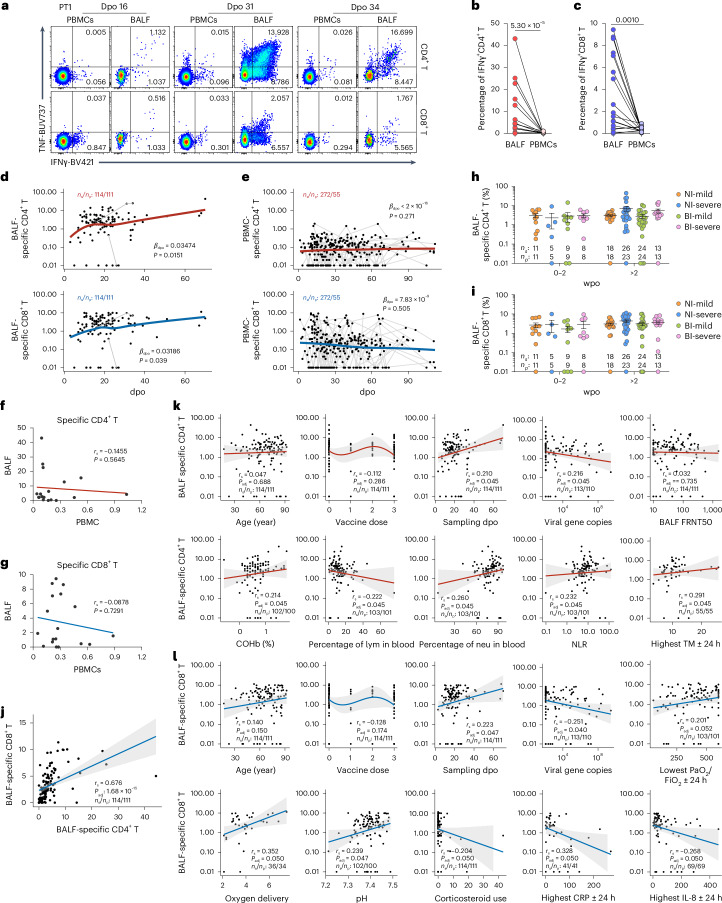
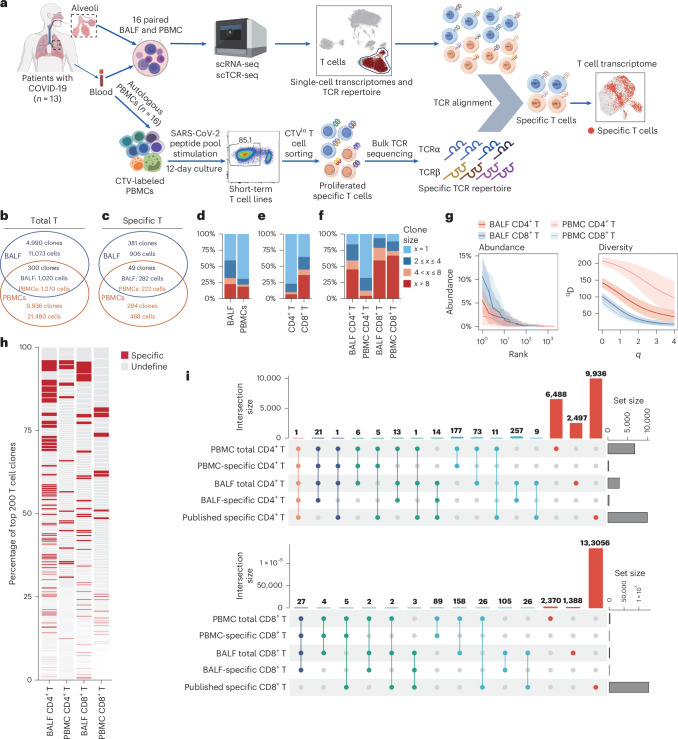
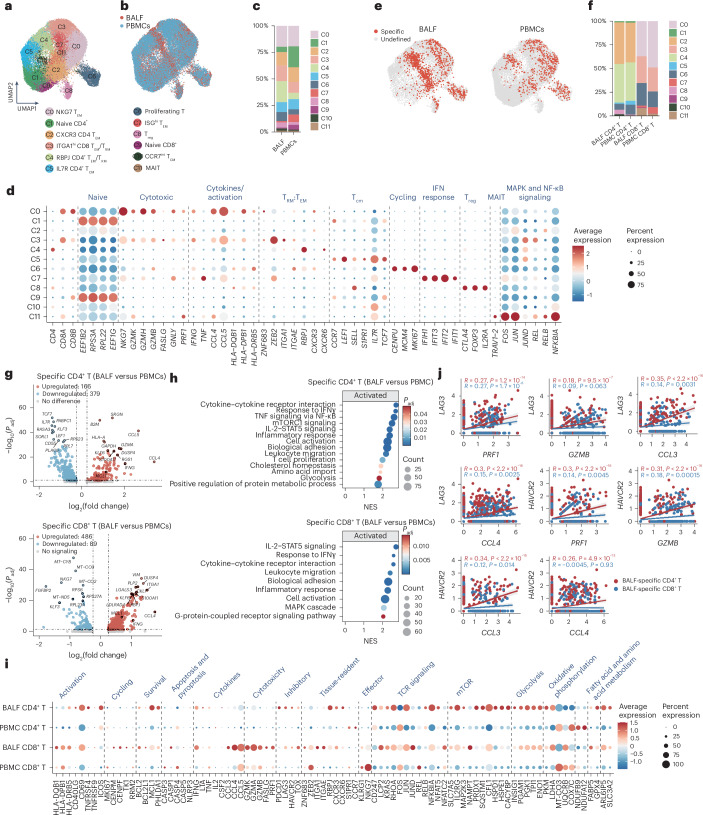
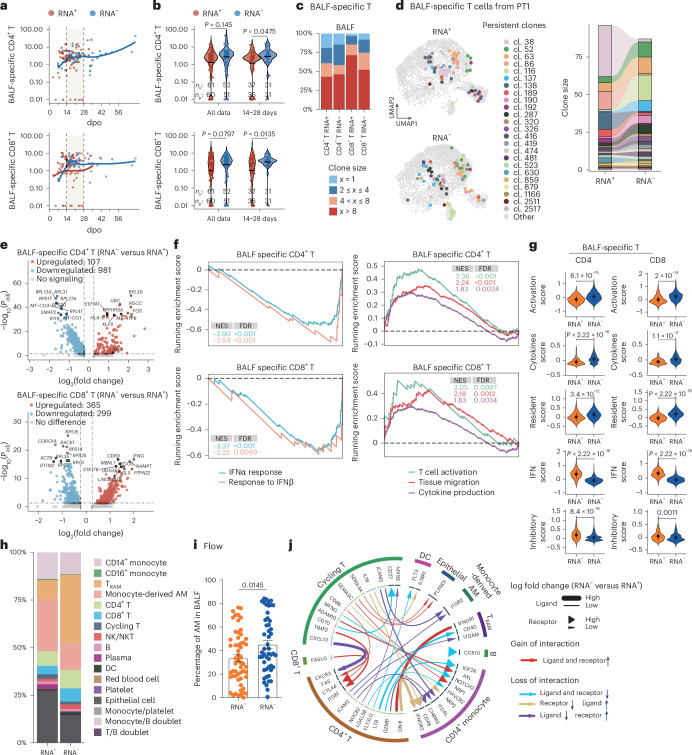
Mucosal antigen-specific T cells are pivotal for pathogen clearance and immune modulation in respiratory infections. Dysregulated T cell responses exacerbate coronavirus disease 2019 severity, marked by cytokine storms and respiratory failure. Despite extensive description in peripheral blood, the characteristics of severe acute respiratory syndrome coronavirus 2 (SARS-CoV-2)-specific T cells in the lungs remain elusive. Here we conducted integrated single-cell profiling of SARS-CoV-2-specific T cells in 122 bronchoalveolar lavage fluid (BALF) and 280 blood samples from 159 patients, including 27 paired BALF and blood samples from 24 patients. SARS-CoV-2-specific T cells were robustly elicited in BALF irrespective of prior vaccination, correlating with diminished viral loads, lessened systemic inflammation and improved respiratory function. SARS-CoV-2-specific T cells in BALF exhibited profound activation, along with proliferative and multi-cytokine-producing capabilities and a glycolysis-driven metabolic signature, which were distinct from those observed in peripheral blood mononuclear cells. After viral clearance, these specific T cells maintained a polyfunctional tissue-resident memory phenotype, highlighting their critical roles in infection control and long-term protection.
黏膜抗原特异性T细胞对于呼吸道感染中的病原体清除和免疫调节至关重要。失调的T细胞反应会加剧2019冠状病毒病的严重程度,其特征为细胞因子风暴和呼吸衰竭。尽管外周血中已有广泛描述,但肺部严重急性呼吸综合征冠状病毒2(SARS-CoV-2)特异性T细胞的特征仍不清楚。在此,我们对159例患者的122份支气管肺泡灌洗液(BALF)和280份血液样本中的SARS-CoV-2特异性T细胞进行了综合单细胞分析,其中包括24例患者的27对配对BALF和血液样本。无论先前是否接种疫苗,BALF中均能强烈诱导出SARS-CoV-2特异性T细胞,这与病毒载量降低、全身炎症减轻和呼吸功能改善相关。BALF中的SARS-CoV-2特异性T细胞表现出深度激活,以及增殖和多细胞因子产生能力以及糖酵解驱动的代谢特征,这些特征与外周血单个核细胞中观察到的不同。病毒清除后,这些特异性T细胞维持多功能组织驻留记忆表型,突出了它们在感染控制和长期保护中的关键作用。