Guan Gaopeng, Liu Jie, Zhang Qin, He Meiqi, Liu Hong, Chen Ke, Wan Xinxing, Jin Ping
Department of Endocrinology, Central South University Third Xiangya Hospital, Changsha, China.
Cell Mol Life Sci. 2025 Jan 29;82(1):64. doi: 10.1007/s00018-024-05563-y.
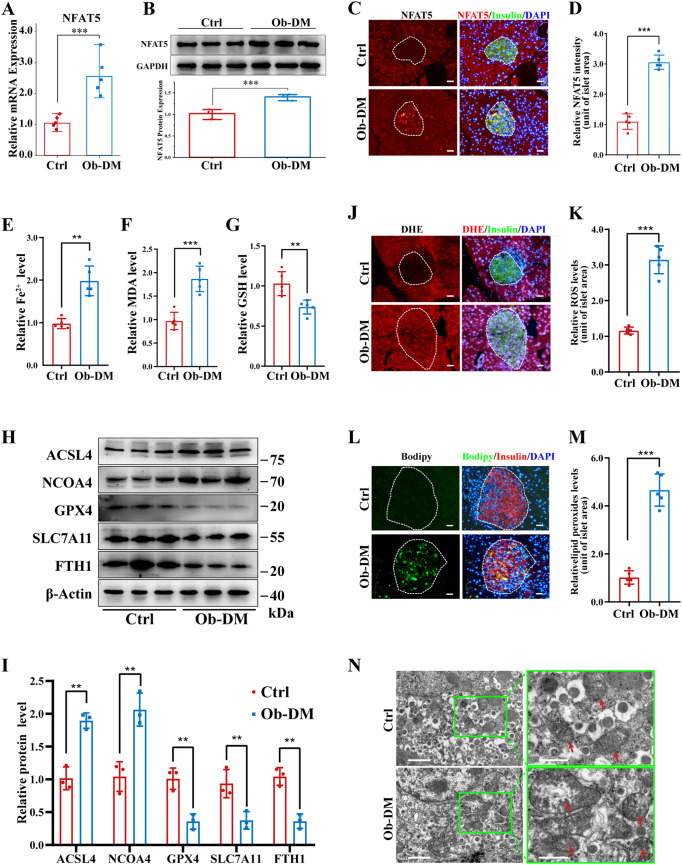
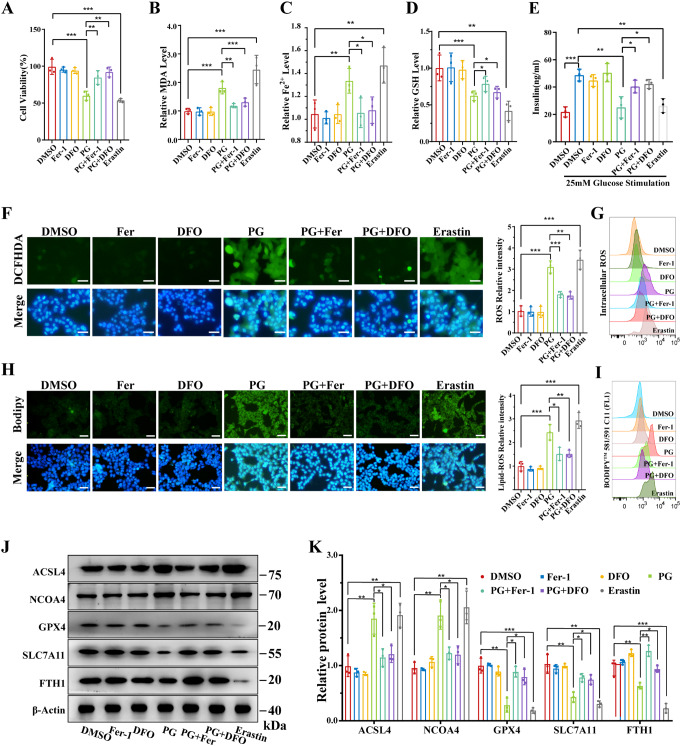
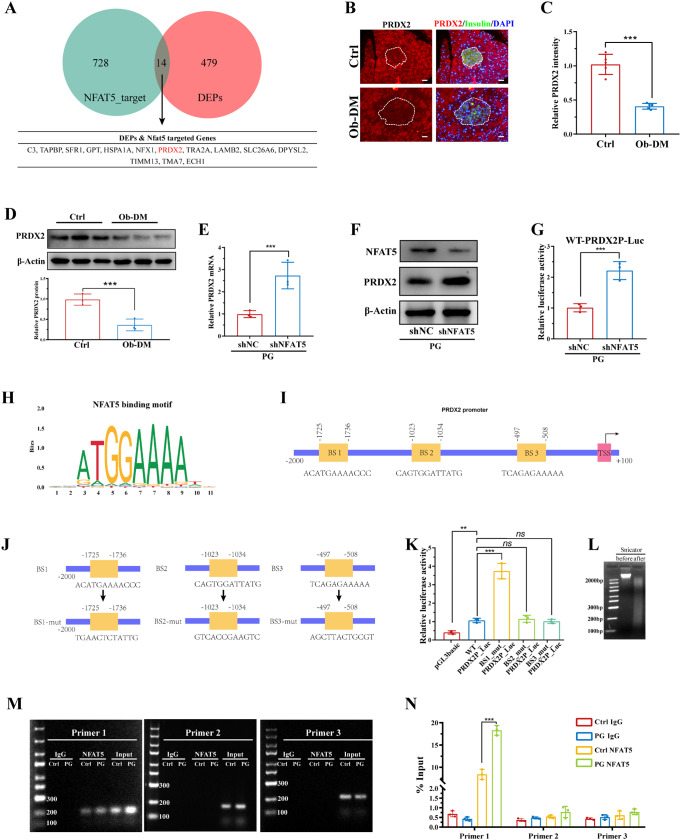
Pancreatic β-cell damage is a critical pathological mechanism in the progression of obese type 2 diabetes mellitus (T2DM). However, the exact underlying mechanism remains unclear. We established an obese T2DM mouse model via high-fat diet feeding. The protein expression profiles of pancreatic tissues from normal and obese T2DM mice were analyzed, revealing that nuclear factor of activated T cells 5 (NFAT5) and ferroptosis are potential mediators and mechanisms of β-cell damage in obese T2DM mice. In vitro, high glucose and palmitate treatment resulted in increased NFAT5 expression and nuclear translocation in MIN6 cells. Inhibition of NFAT5 expression by shRNA significantly reduced ferroptosis and improved the reduction in insulin secretion in palmitic acid and high glucose (PG)-treated MIN6 cells. Luciferase reporter and chromatin immunoprecipitation (ChIP) assays confirmed the ability of NFAT5 to bind to the peroxiredoxin 2 (PRDX2) promoter, leading to the downregulation of PRDX2 transcription. Subsequent rescue experiments confirmed that NFAT5 is involved in PG-induced ferroptosis in MIN6 cells by inhibiting the expression of PRDX2. Finally, we demonstrated that the use of the AAV8-RIP2-miR30-shNFAT5 vector to specifically inhibit the expression of NFAT5 in β-cells significantly diminishes ferroptosis in obese T2DM mice, thereby increasing insulin secretion and improving abnormal glucose tolerance. These findings collectively highlight the therapeutic potential of targeting NFAT5 in β cells to counteract obesity-induced T2DM.
胰腺β细胞损伤是肥胖型2型糖尿病(T2DM)进展中的关键病理机制。然而,确切的潜在机制仍不清楚。我们通过高脂饮食喂养建立了肥胖T2DM小鼠模型。分析了正常和肥胖T2DM小鼠胰腺组织的蛋白质表达谱,发现活化T细胞核因子5(NFAT5)和铁死亡是肥胖T2DM小鼠β细胞损伤的潜在介质和机制。在体外,高糖和棕榈酸处理导致MIN6细胞中NFAT5表达增加和核转位。通过shRNA抑制NFAT5表达可显著降低铁死亡,并改善棕榈酸和高糖(PG)处理的MIN6细胞中胰岛素分泌的减少。荧光素酶报告基因和染色质免疫沉淀(ChIP)分析证实NFAT5能够结合过氧化物酶体增殖物激活受体2(PRDX2)启动子,导致PRDX2转录下调。随后的挽救实验证实NFAT5通过抑制PRDX2的表达参与PG诱导的MIN6细胞铁死亡。最后,我们证明使用AAV8-RIP2-miR30-shNFAT5载体特异性抑制β细胞中NFAT5的表达可显著减少肥胖T2DM小鼠的铁死亡,从而增加胰岛素分泌并改善异常糖耐量。这些发现共同突出了靶向β细胞中NFAT5以对抗肥胖诱导的T2DM的治疗潜力。