Goswami Ishan, Kim Yongdeok, Neiman Gabriel, Siemons Brian, Velazquez Jazmin I, Yazgan Kerem, Ng Tammy, Healy Kevin E
Department of Bioengineering, University of California Berkeley.
Department of Materials Science and Engineering, University of California Berkeley.
Res Sq. 2025 Jan 16:rs.3.rs-5776581. doi: 10.21203/rs.3.rs-5776581/v1.
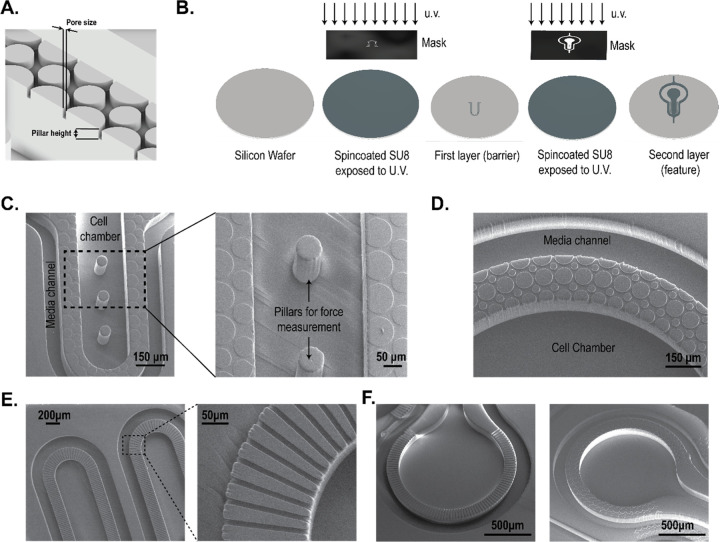
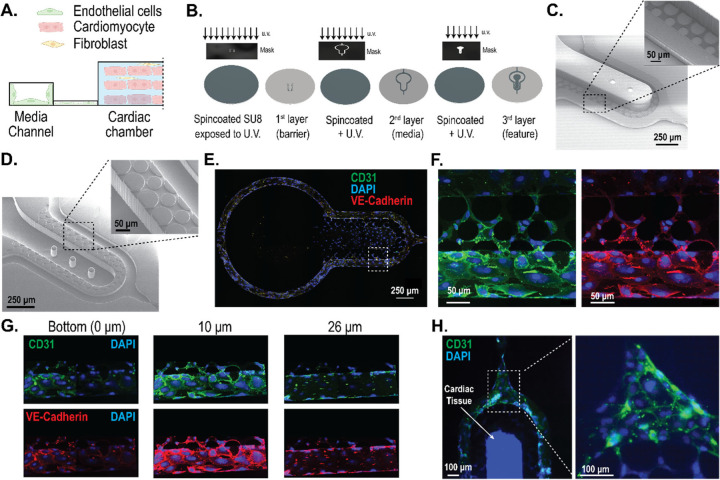
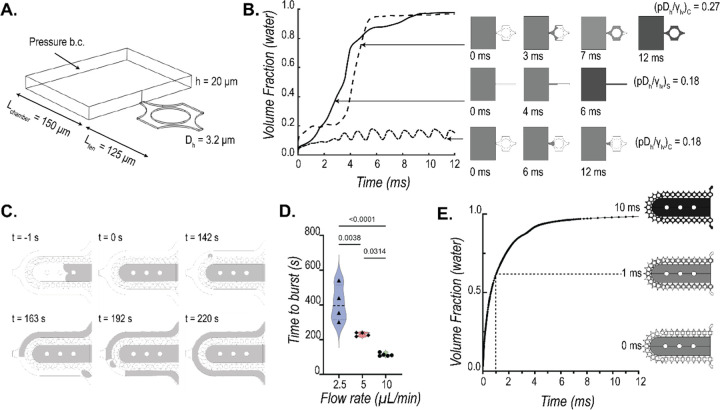
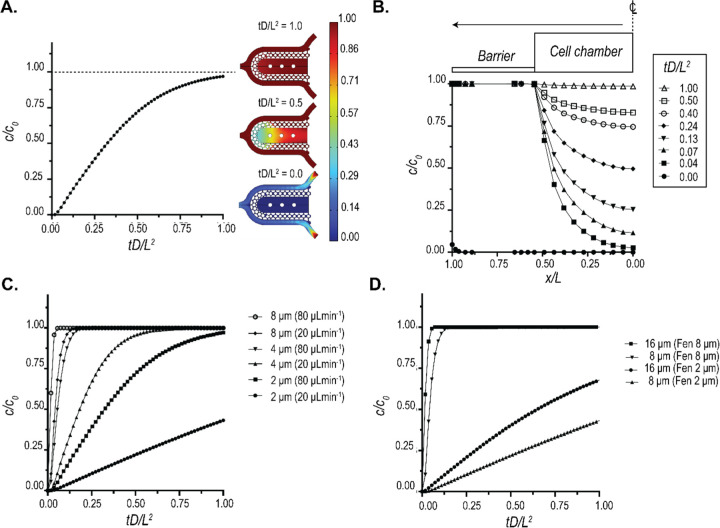
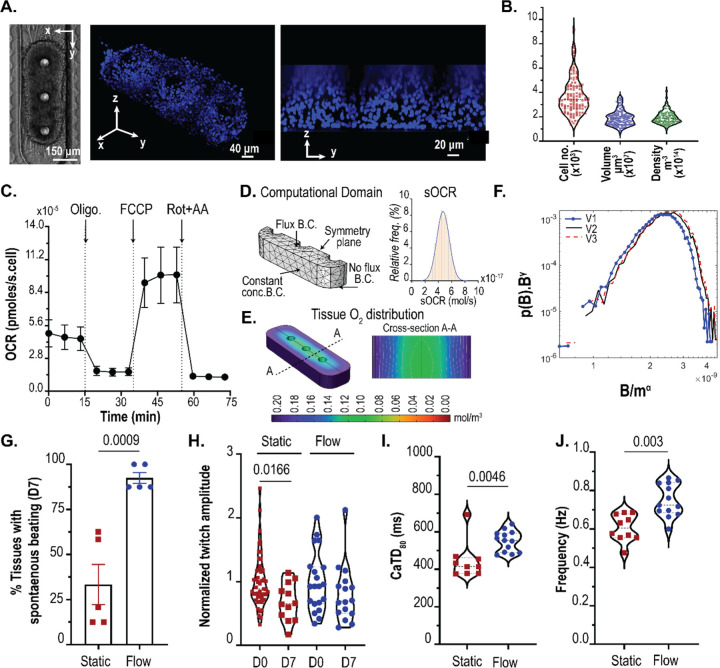
We report on the design and fabrication of a novel circular pillar array as an interfacial barrier for microfluidic microphysiological systems (). Traditional barrier interfaces, such as porous membranes and microchannel arrays, present limitations due to inconsistent pore size, complex fabrication and device assembly, and lack of tunability using a scalable design. Our pillar array overcomes these limitations by providing precise control over pore size, porosity, and hydraulic resistance through simple modifications of pillar dimensions. Serving as an interface between microfluidic compartments, it facilitates cell aggregation for tissue formation and acts as a tunable diffusion barrier that mimics diffusion in vivo. We demonstrate the utility of barrier design to engineer physiologically relevant cardiac microtissues and a heterotypic model with vasculature within the device. Its tunable properties offer significant potential for drug screening/testing and disease modeling, enabling comparisons of drug permeability and cell migration in MPS tissue with or without vasculature.
我们报道了一种新型圆形柱阵列的设计与制造,该阵列可作为微流控微生理系统的界面屏障。传统的屏障界面,如多孔膜和微通道阵列,由于孔径不一致、制造和器件组装复杂以及缺乏可扩展设计的可调性而存在局限性。我们的柱阵列通过简单修改柱尺寸,实现了对孔径、孔隙率和水力阻力的精确控制,从而克服了这些局限性。作为微流控隔室之间的界面,它有助于细胞聚集以形成组织,并作为可调扩散屏障,模拟体内扩散。我们展示了屏障设计在构建生理相关的心脏微组织和器件内具有脉管系统的异型模型方面的实用性。其可调特性为药物筛选/测试和疾病建模提供了巨大潜力,能够比较有或没有脉管系统的微生理系统组织中的药物渗透性和细胞迁移。