Mudalige Tharanga, Pathiraja Vindya, Delanerolle Gayathri, Cavalini Heitor, Wu Shuqi, Taylor Julie, Kurmi Om, Elliot Kathryn, Hinchliff Sharron, Atkinson Carol, Potocnik Kristina, Briggs Paula, Saraswat Lucky, Kemp Helen Felicity, Eleje George, Hock Toh Teck, Benetti-Pinto Cristina Laguna, Muhammad Irfan, Kareem Rabia, Bouchareb Yassine, Phiri Peter, Zhang Ruishu, Weng Yunfei, Aggarwal Ieera, Shi Jian Qing, Shetty Ashish, Litchfield Ian, Rathnayake Nirmala, Elneil Sohier
University of Ruhuna Matara Sri Lanka.
Southern Health NHS Foundation Trust Southampton UK.
BJUI Compass. 2024 Dec 10;6(1):e464. doi: 10.1002/bco2.464. eCollection 2025 Jan.
Pelvic organ prolapse (POP) occurs when one or more pelvic organs (uterus, bowel, bladder or top of the vagina) descend from their normal position and bulge into the vagina. Symptoms include pelvic discomfort, fullness, and changes in bladder or bowel function. Treatment ranges from conservative approaches to surgery, depending on symptom severity. Surgical methods include vaginal wall repair, with or without hysterectomy, or via laparoscopic, robotic or open techniques. Common complications include bleeding, infection, and urinary or bowel dysfunction.
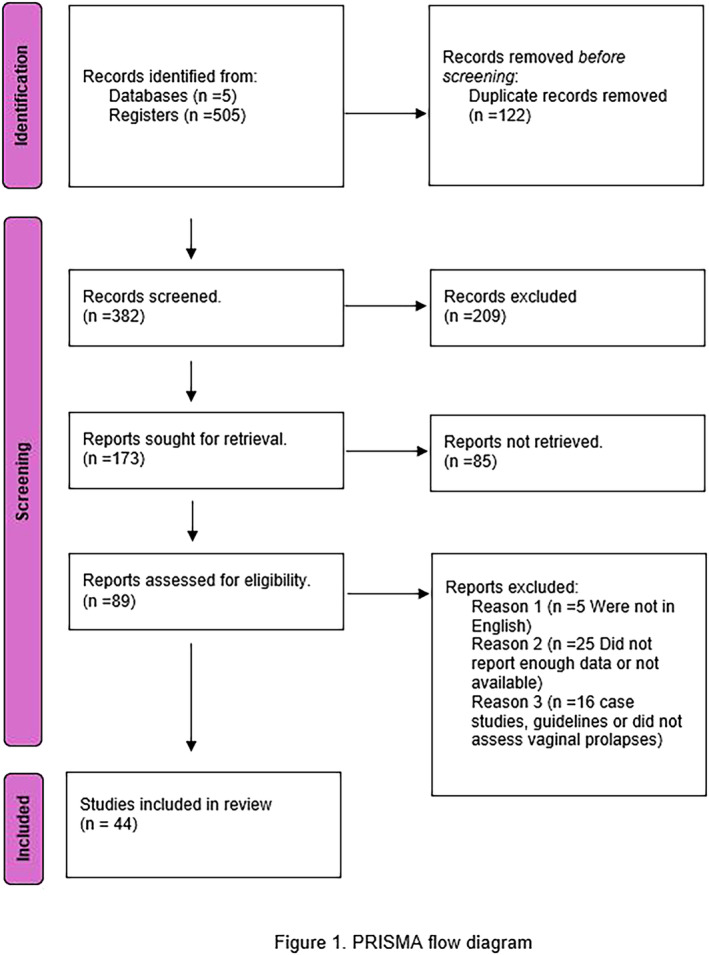
A systematic review was conducted, and a protocol was registered with PROSPERO (CRD42022346051). Publications from 30 April 1980 to 30 April 2023 were retrieved from multiple databases. Data were analysed using random-effects and common-effects models with subgroup and sensitivity analyses.
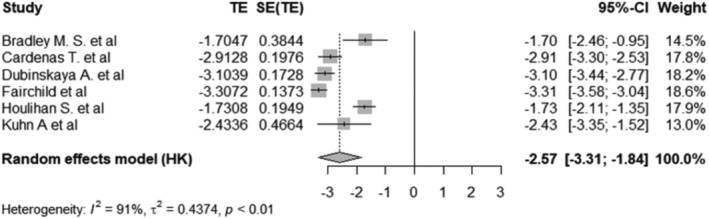
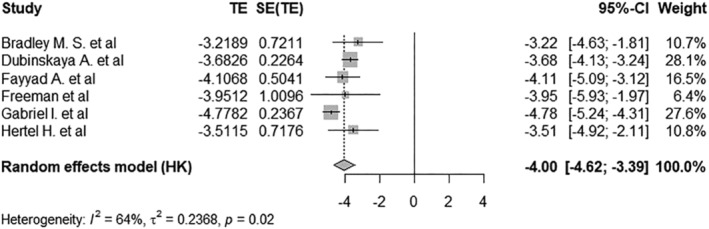
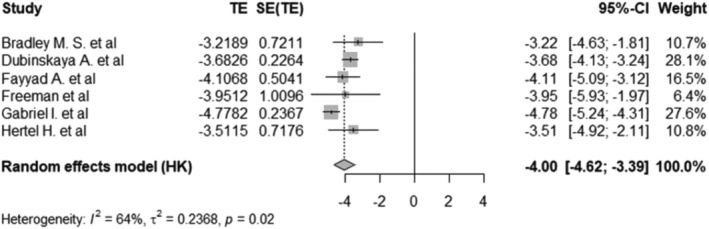
Forty-four studies met the inclusion criteria, with 29 studies used for meta-analysis of vaginal prolapse surgery outcomes. Sixteen studies focused on patients who had undergone hysterectomy alongside prolapse repair.
Patients who underwent vaginal prolapse surgery with hysterectomy experienced higher operative and postoperative complication rates than those without hysterectomy. Increased risks included hospital readmission, POP recurrence and re-operation. The review highlighted a lack of diversity in terms of ethnicity, age and comorbidity status, which are essential to fully understanding the impact of POP. Future research should focus on these underrepresented factors.
盆腔器官脱垂(POP)是指一个或多个盆腔器官(子宫、肠道、膀胱或阴道顶端)从其正常位置下降并突入阴道。症状包括盆腔不适、胀满以及膀胱或肠道功能改变。治疗方法根据症状严重程度从保守治疗到手术治疗不等。手术方法包括阴道壁修补术,可同时或不同时进行子宫切除术,或通过腹腔镜、机器人或开放技术进行。常见并发症包括出血、感染以及泌尿或肠道功能障碍。
进行了一项系统评价,并在国际前瞻性系统评价注册库(PROSPERO,注册号:CRD42022346051)登记了方案。从多个数据库检索了1980年4月30日至2023年4月30日期间的出版物。使用随机效应模型和固定效应模型进行数据分析,并进行亚组分析和敏感性分析。
44项研究符合纳入标准,其中29项研究用于对阴道脱垂手术结果进行荟萃分析。16项研究关注的是在脱垂修复的同时接受子宫切除术的患者。
接受阴道脱垂手术并同时进行子宫切除术的患者,其手术中和术后并发症发生率高于未进行子宫切除术的患者。增加的风险包括再次入院、盆腔器官脱垂复发和再次手术。该评价强调在种族、年龄和合并症状况方面缺乏多样性,而这些对于充分理解盆腔器官脱垂的影响至关重要。未来的研究应关注这些代表性不足的因素。