Papadakis Georgios E, Favre Lucie, Zouaghi Yassine, Vionnet Nathalie, Niederländer Nicolas J, Adamo Michela, Acierno James S, Berdous Dassine, Boizot Alexia, Meylan Jenny, Ivanisevic Julijana, Paccou Emmanuelle, Gallart-Ayala Hector, Reyns Tim, Van Caeneghem Elise, Lapauw Bruno, Pasquier Jérôme, Aleman Yasser, Mantziari Styliani, Salamin Olivier, Nicoli Raul, Kuuranne Tiia, Fiers Tom, Hagmann Patric, Santoni Federico, Messina Andrea, Pitteloud Nelly
Department of Endocrinology, Diabetology and Metabolism, Lausanne University Hospital, Avenue de la Sallaz 8, CH-1011, Lausanne, Switzerland.
Faculty of Biology and Medicine, University of Lausanne, Rue du Bugnon 21, CH-1005, Lausanne, Switzerland.
J Transl Med. 2025 Jan 30;23(1):138. doi: 10.1186/s12967-024-06040-7.
Obesity is associated with varying degrees of metabolic dysfunction. In this study, we aimed to discover markers of the severity of metabolic impairment in men with obesity via a multiomics approach.
Thirty-two morbidly men with obesity who were candidates for Roux-en-Y gastric bypass (RYGB) surgery were prospectively followed. Nine healthy adults served as controls. Deep phenotyping, including targeted metabolomics, transcriptomics, and brain magnetic resonance imaging (MRI), was performed.
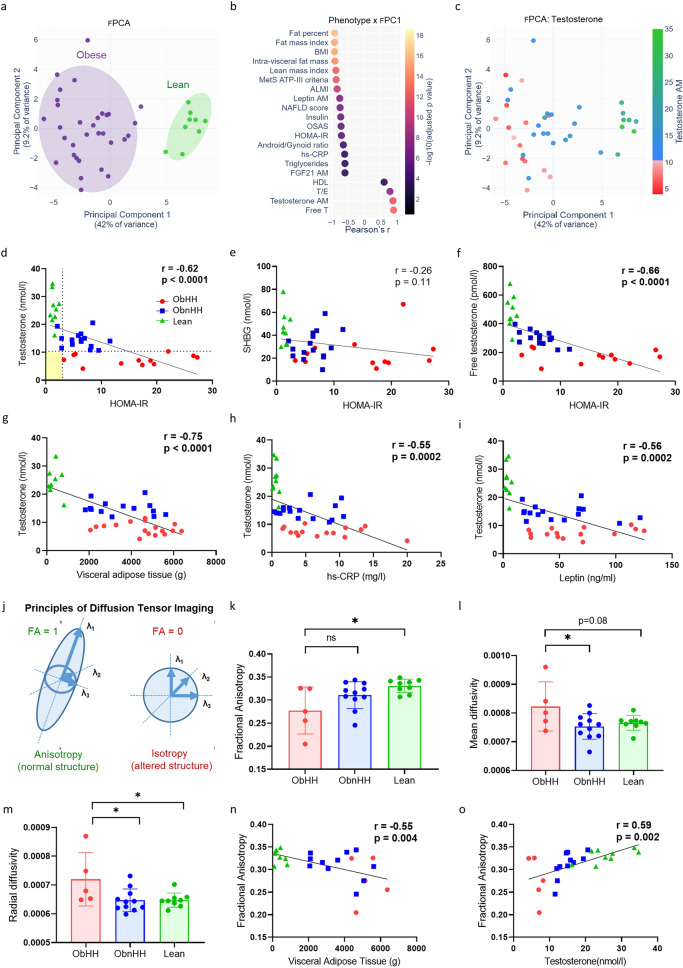
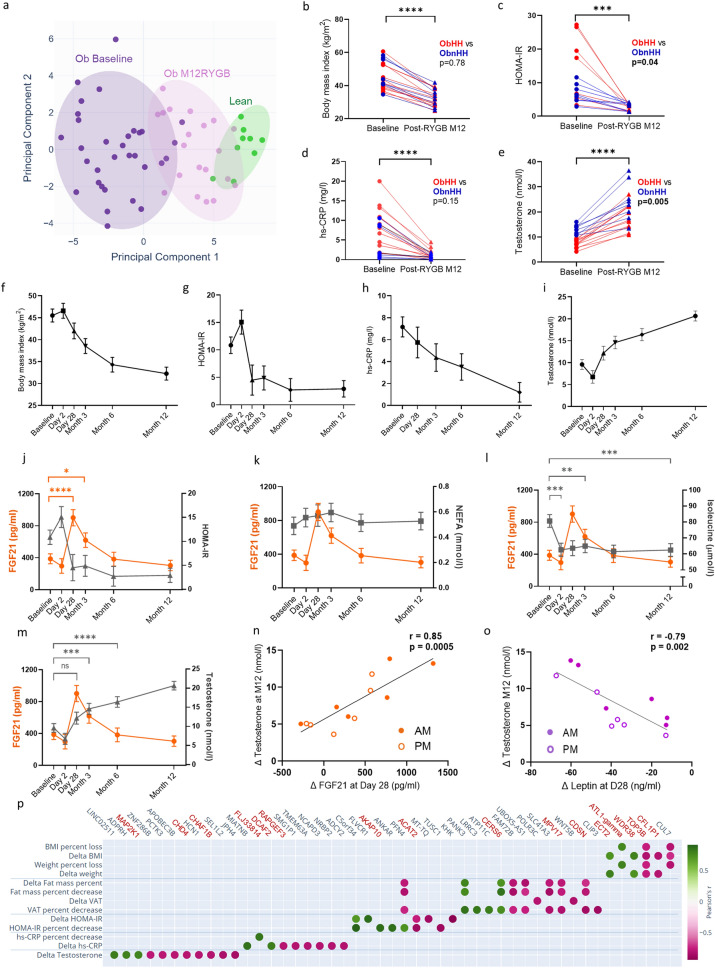
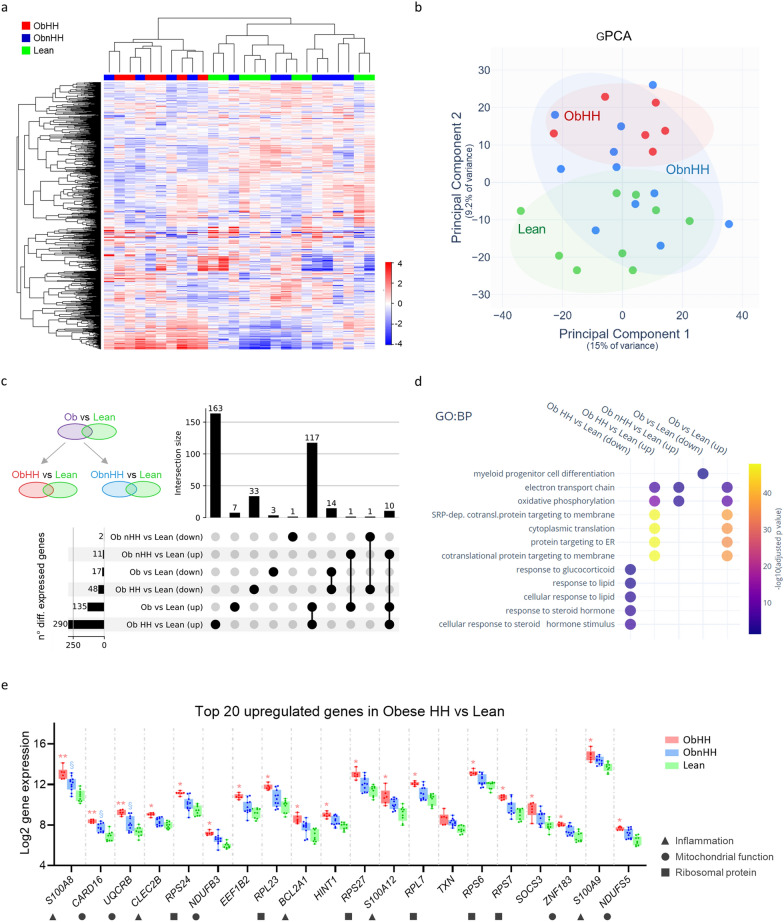
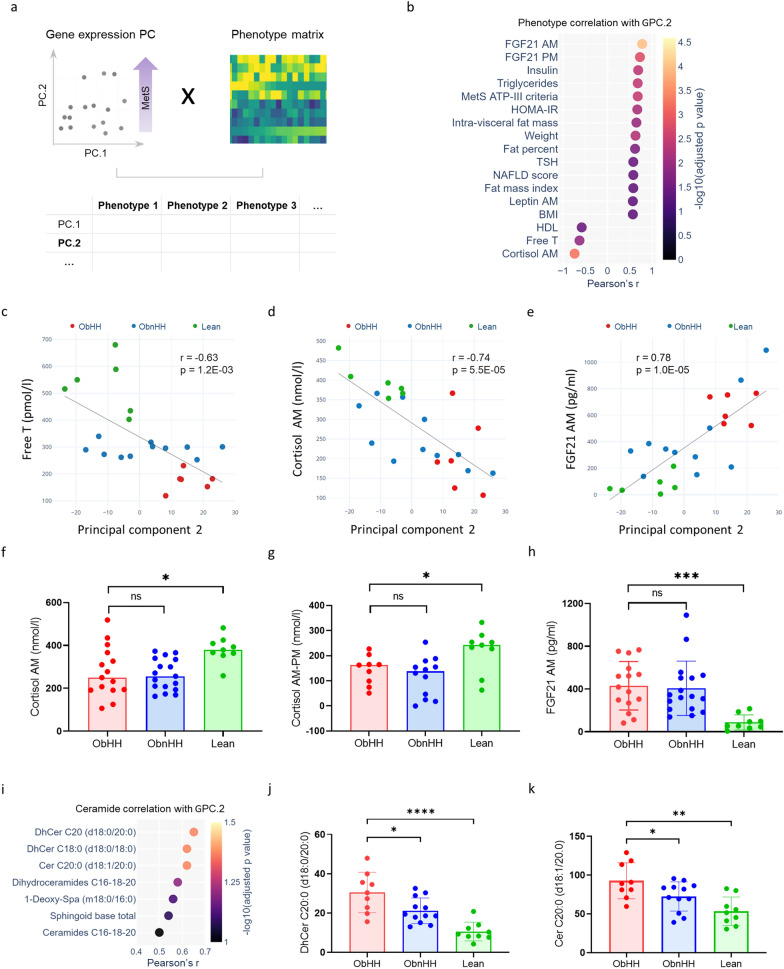
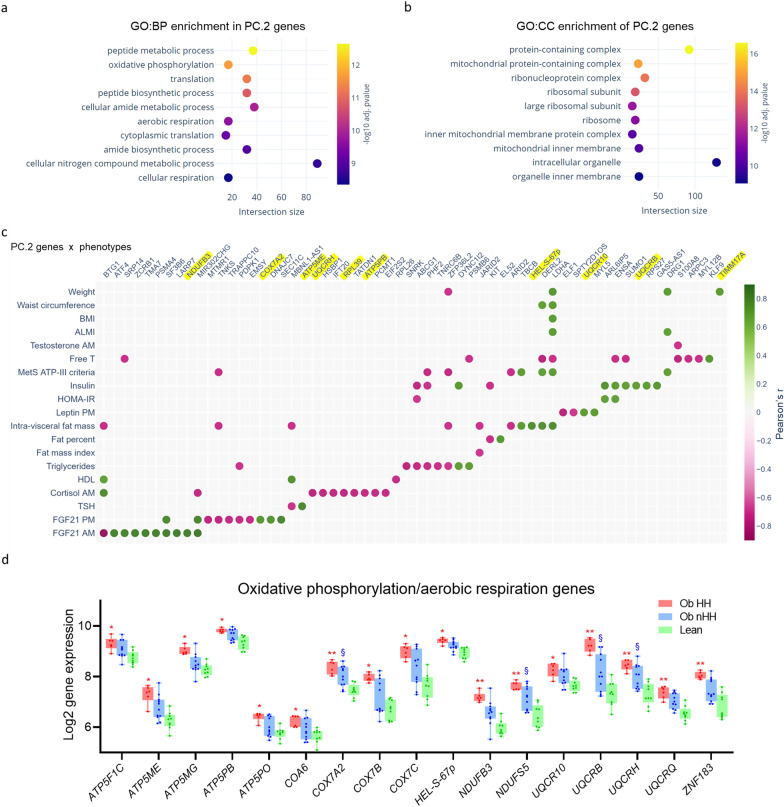
Testosterone emerged as a key contributor to phenotypic variability via principal component analysis and was therefore used to further categorize obese patients as having or not having hypogonadotropic hypogonadism (HH). Despite having comparable body mass indices, obese individuals with HH presented with worse metabolic defects than obese individuals without HH, including higher insulin resistance, as well as MRI signs of hypothalamic inflammation and a specific blood transcriptomics signature. The upregulated genes were involved mainly in inflammation, mitochondrial function, and protein translation. Integration of gene expression and clinical data revealed high FGF21 and low cortisol levels as the top markers correlated with the transcriptomic signature of metabolic risk. Following RYGB-induced substantial weight loss, testosterone levels markedly increased in both obese individuals with and without HH, challenging the current definition of hypogonadism. A longitudinal study in a subset of men with obesity following bariatric surgery revealed a unique FGF21 trajectory with a sharp peak at one month post-RYGB that correlated with metabolic and reproductive improvements.
Combining clinical, biochemical, and molecular markers allows adequate stratification of metabolic risk in men with obesity and provides novel tools for personalized care.
肥胖与不同程度的代谢功能障碍相关。在本研究中,我们旨在通过多组学方法发现肥胖男性代谢损害严重程度的标志物。
对32名拟行 Roux-en-Y 胃旁路术(RYGB)的病态肥胖男性进行前瞻性随访。9名健康成年人作为对照。进行了深度表型分析,包括靶向代谢组学、转录组学和脑磁共振成像(MRI)。
通过主成分分析,睾酮成为表型变异的关键因素,因此被用于进一步将肥胖患者分为有无低促性腺激素性腺功能减退(HH)。尽管体重指数相当,但患有 HH 的肥胖个体比未患 HH 的肥胖个体表现出更严重的代谢缺陷,包括更高的胰岛素抵抗,以及下丘脑炎症的 MRI 征象和特定的血液转录组学特征。上调的基因主要涉及炎症、线粒体功能和蛋白质翻译。基因表达与临床数据的整合显示,高 FGF21 和低皮质醇水平是与代谢风险转录组特征相关的首要标志物。RYGB 导致显著体重减轻后,患有和未患 HH 的肥胖个体的睾酮水平均显著升高,这对目前性腺功能减退的定义提出了挑战。一项对肥胖男性进行减肥手术后的纵向研究显示,FGF21 有独特的变化轨迹,在 RYGB 术后一个月出现 sharp peak,且与代谢和生殖功能的改善相关。
结合临床、生化和分子标志物能够对肥胖男性的代谢风险进行充分分层,并为个性化护理提供新工具。