Kondi Krisztina, Takács Mária, Kovács-Posta Evelyn, Szajli Claudia, Sebők-Welker Tünde, Réthelyi János M, Bunford Nóra
Department of Psychology, Faculty of Humanities and Social Sciences, Pázmány Péter Catholic University, Budapest, Hungary.
Clinical and Developmental Neuropsychology Research Group, Institute of Cognitive Neuroscience and Psychology, HUN-REN Research Centre for Natural Sciences, Budapest, Hungary.
Borderline Personal Disord Emot Dysregul. 2025 Feb 3;12(1):3. doi: 10.1186/s40479-024-00268-x.
Attention-deficit/hyperactivity disorder (ADHD) is associated with emotion dysregulation (ED) and in ADHD, beyond ADHD and comorbidity severity, ED confers increased risk for negative outcomes. First- and second-line ADHD pharmacotherapy is effective at ameliorating core symptoms and improving cognitive functioning and accumulating evidence indicates primairly in children and adults, active ADHD pharmacotherapy has beneficial effects on emotional symptoms. Gaps in knowledge remain about whether in adolescents, ADHD pharmacotherapy has beneficial effects on ED or about the extent to which effects are apparent for discontinued/ past ADHD pharmacotherapy.
Examined, in N = 297 adolescents (M=15.77 years, SD = 1.06; 39.06% girls; n = 86 classified as with ADHD), whether accounting for depression and oppositional symptoms, concurrent and 18-month prospective measures of parent- and self-reported ED (1) differ across adolescents without ADHD, medication-naïve adolescents with ADHD, and ever-medicated (currently or previously) adolescents with ADHD.
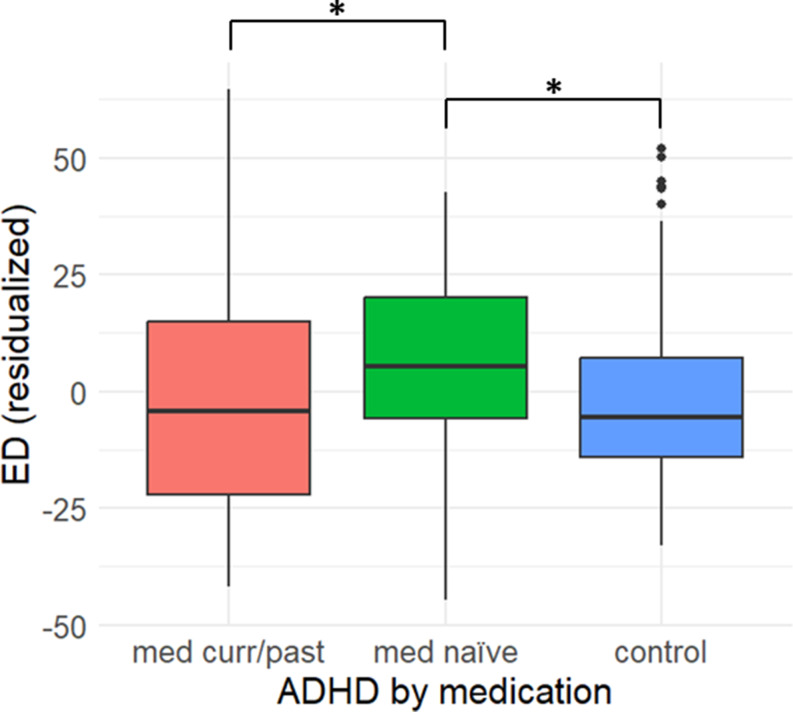
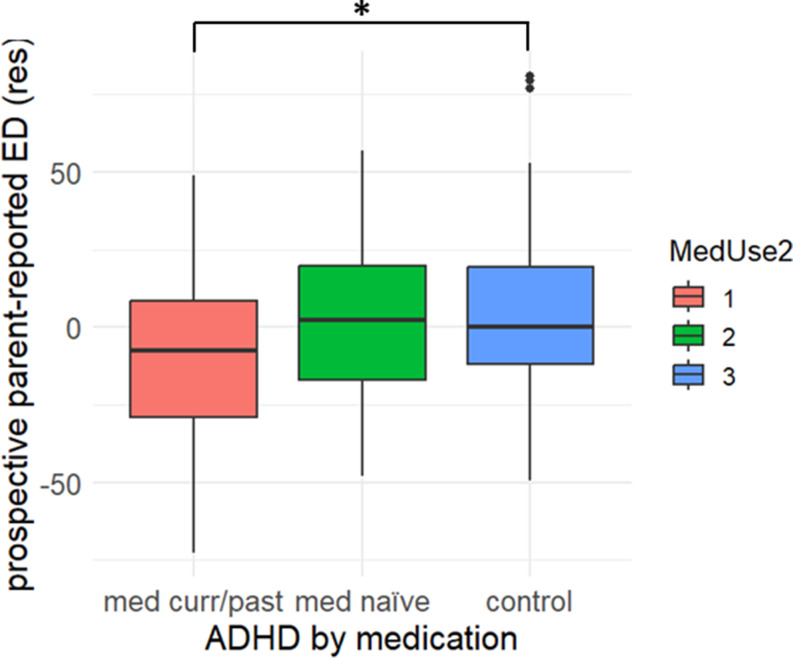
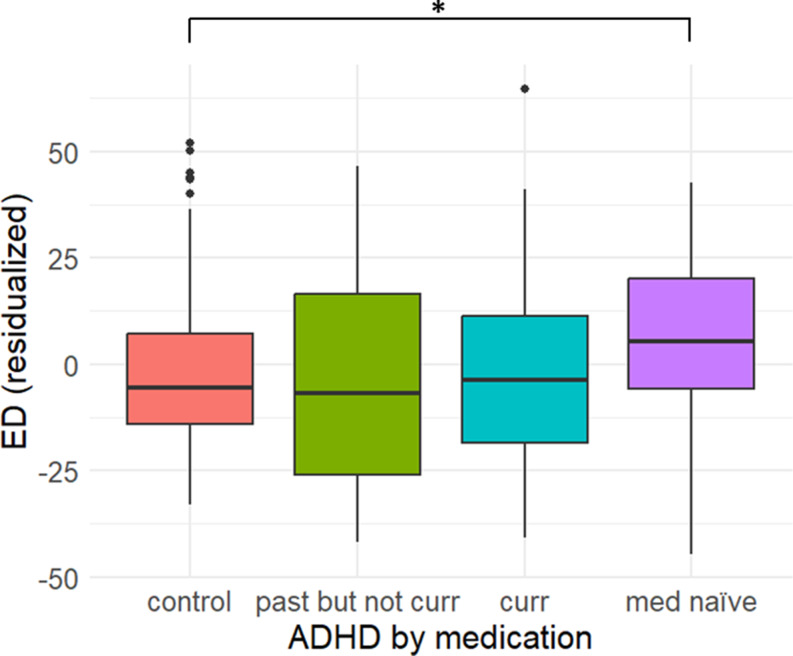
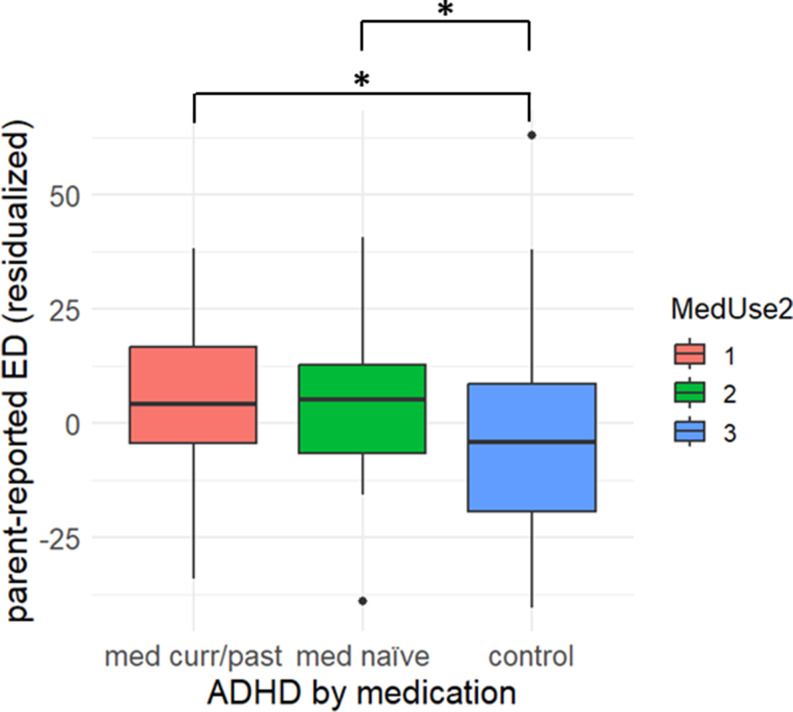
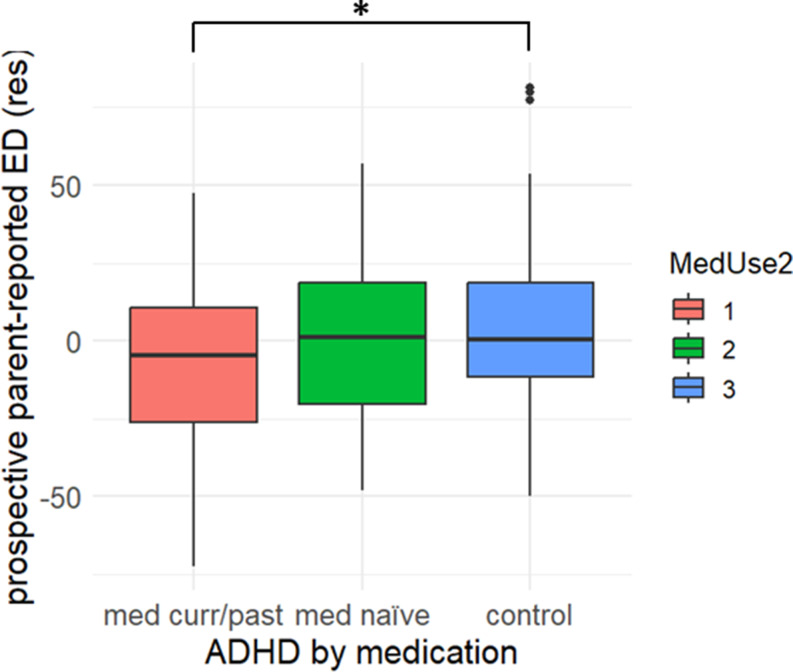
In case of parent-reported ED, ever medicated adolescents with ADHD exhibited a decline in ED over time whereas adolescents without ADHD and never medicated adolescents with ADHD exhibited no changes in ED over time. In case of self-reported ED, ever-medicated adolescents with ADHD exhibited lower ED than never medicated adolescents with ADHD and never medicated adolescents with ADHD exhibited greater ED than adolescents without ADHD. Currently and previously (but not currently) medicated adolescents did not differ in ED. Across parent- and self-reported findings, observed pattern of results held when analyses focused on adolescents who did not change medication status between baseline and follow-up.
ADHD pharmacotherapy may have a boosting effect on longitudinal changes in parent-reported ED and a normalizing effect on concurrent measures of self-reported ED in adolescents.
注意力缺陷多动障碍(ADHD)与情绪调节障碍(ED)相关,在ADHD中,除了ADHD及共病的严重程度外,ED还会增加负面后果的风险。ADHD的一线和二线药物治疗在改善核心症状和提高认知功能方面有效,越来越多的证据表明,主要在儿童和成人中,积极的ADHD药物治疗对情绪症状有有益影响。关于在青少年中ADHD药物治疗是否对ED有有益影响,或者停药/过去的ADHD药物治疗的影响程度如何,仍然存在知识空白。
在N = 297名青少年(平均年龄M = 15.77岁,标准差SD = 1.06;39.06%为女孩;n = 86名被归类为患有ADHD)中,研究在考虑抑郁和对立症状的情况下,父母报告和自我报告的ED的同时期及18个月前瞻性测量结果(1)在无ADHD的青少年、未用药的ADHD青少年和曾用药(目前或以前)的ADHD青少年之间是否存在差异。
在父母报告的ED方面,曾用药的ADHD青少年随时间推移ED有所下降,而无ADHD的青少年和未用药的ADHD青少年随时间推移ED没有变化。在自我报告的ED方面,曾用药的ADHD青少年的ED低于未用药的ADHD青少年,且未用药的ADHD青少年的ED高于无ADHD的青少年。目前用药和以前(但不是目前)用药的青少年在ED方面没有差异。在父母报告和自我报告的结果中,当分析集中在基线和随访期间药物状态未改变的青少年时,观察到的结果模式依然成立。
ADHD药物治疗可能对父母报告的ED的纵向变化有促进作用,对青少年自我报告的ED的同时期测量有正常化作用。