Zhang Qian, Wang Dujuan, Zhuo Guangzheng, Wang Shilin, Yuan Yufen, Wang Liping, Ji Lili, Wan Yuhang, Liu Guohong, Pan Yunbao
Department of Laboratory Medicine, Zhongnan Hospital of Wuhan University, Wuhan University, Wuhan, Hubei, China.
Department of Clinical Pathology, Houjie Hospital of Dongguan, The Affiliated Houjie Hospital of Guangdong Medical University, Dongguan, China.
Int J Biol Sci. 2025 Jan 6;21(3):974-988. doi: 10.7150/ijbs.98260. eCollection 2025.
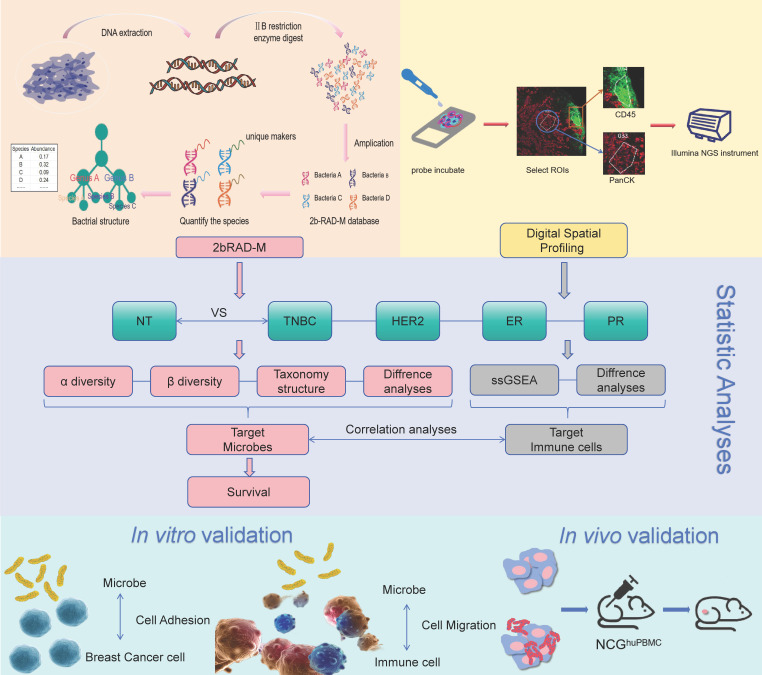
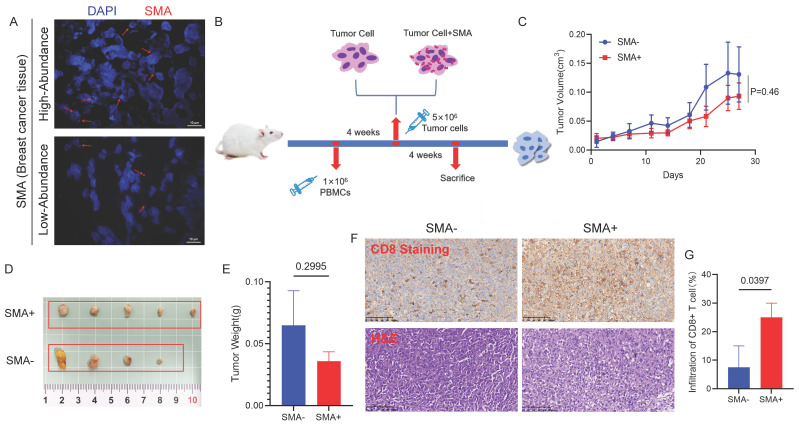
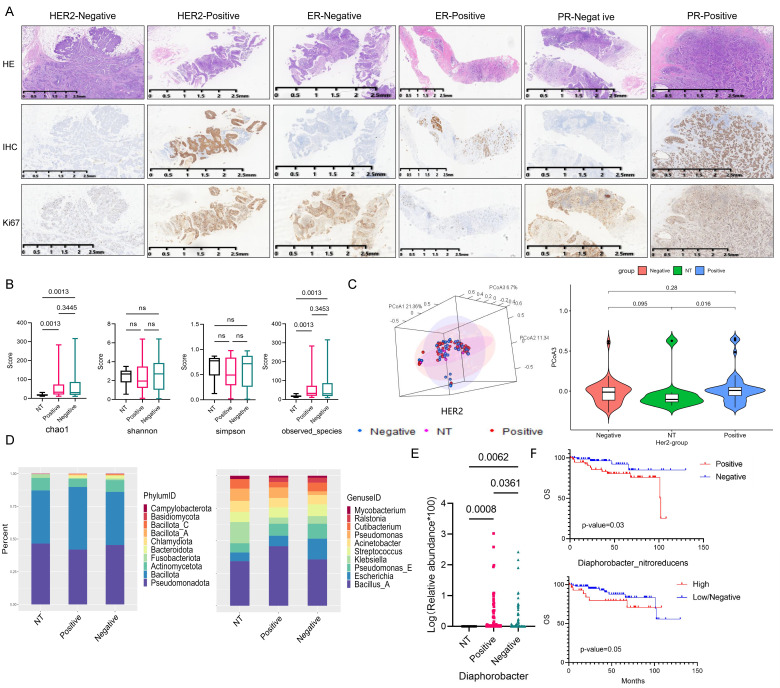
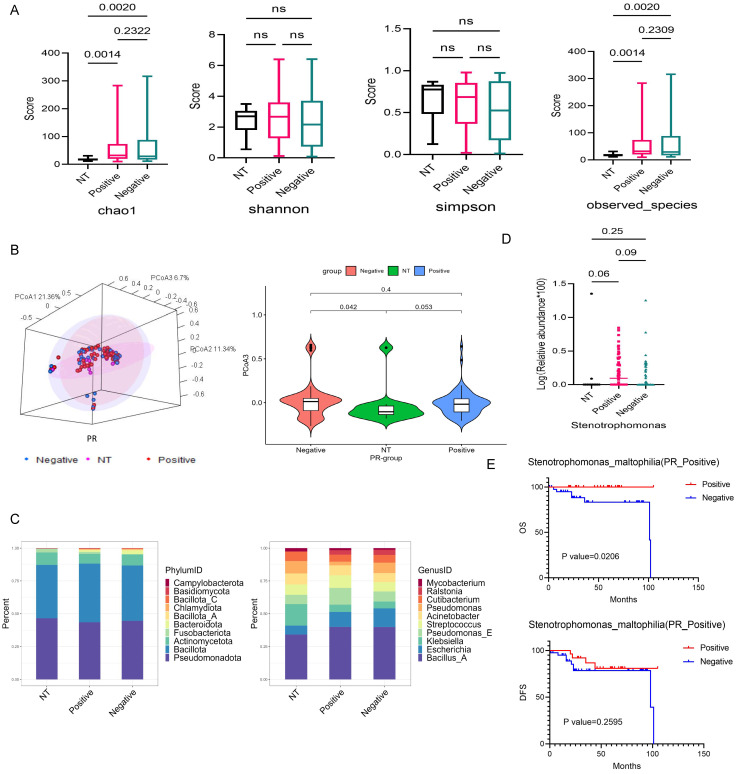
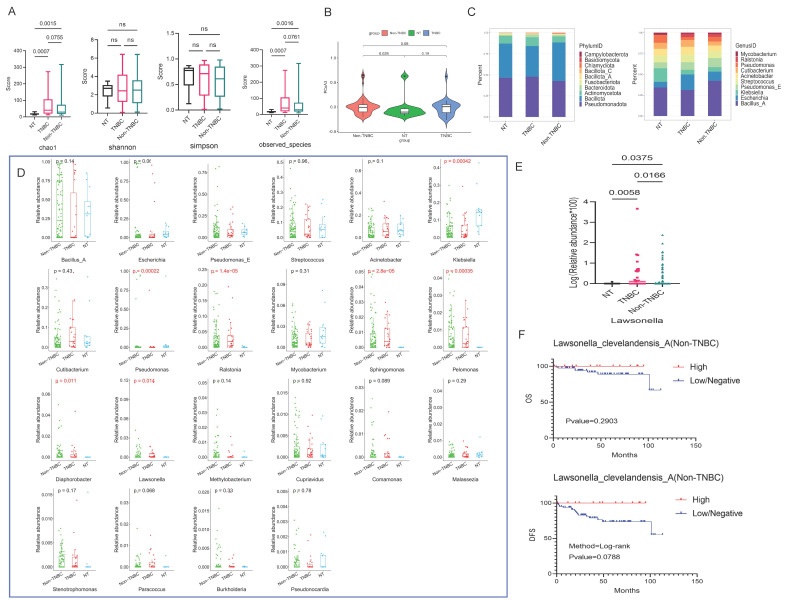
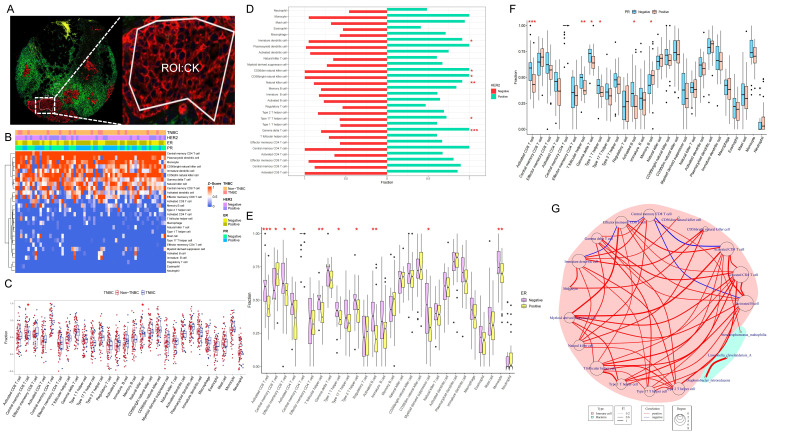
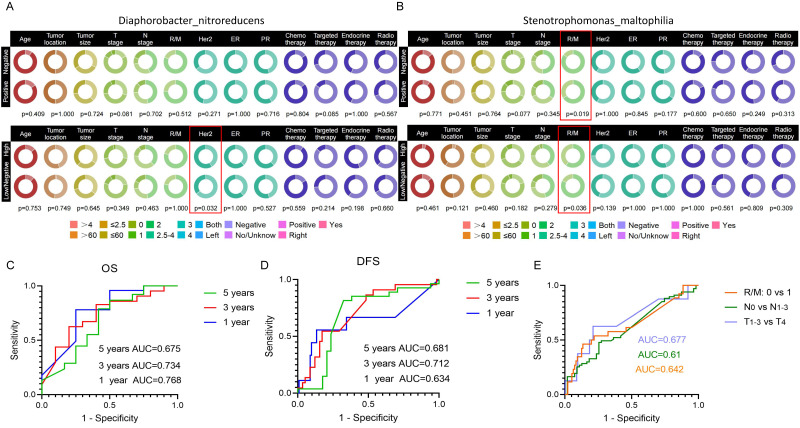
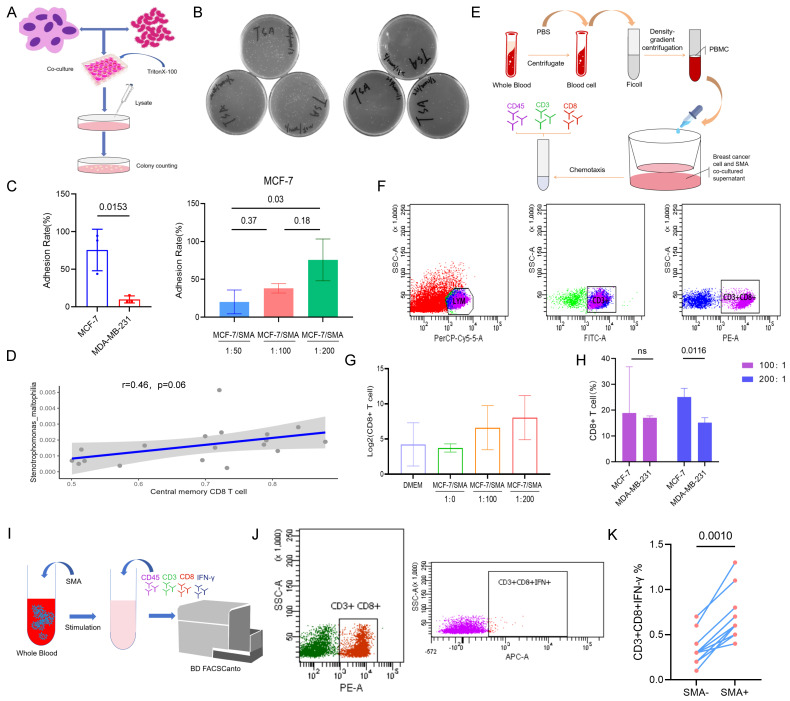
This study aimed to explore the impact of intratumoral microorganisms in conjunction with hormone receptors on the tumor microenvironment and their potential role in predicting patient prognosis. Significant bacterial variations were identified within ER, PR, HER2, and triple-negative breast cancer subtypes. Kaplan-Meier survival analysis was employed to identify bacteria associated with patient survival. Further, a humanized immune system mouse model bearing breast cancer xenografts was used to evaluate the effects of () on tumor growth and CD8+ T cell infiltration. Additional validation experiments included fluorescence in situ hybridization for , CD8+ T cell chemotaxis, and intracellular cytokine detection. , , and were identified as significant prognostic species. Notably, tumor-infiltrating immune cells, particularly CD8+ T cells, exhibited a positive association with the presence of . Experimental validation with clinically isolated further confirmed its positive correlation with CD8+ T cell activation. findings demonstrated that inhibited tumor growth and promoted CD8+ T cell infiltration, highlighting the complex interactions between intratumoral microbiota and tumor immunity in breast cancer. These insights contribute to the understanding of microbial influences on the tumor microenvironment and suggest potential pathways for improving patient prognosis through microbiota modulation.
本研究旨在探讨肿瘤内微生物与激素受体共同作用对肿瘤微环境的影响及其在预测患者预后方面的潜在作用。在雌激素受体(ER)、孕激素受体(PR)、人表皮生长因子受体2(HER2)和三阴性乳腺癌亚型中发现了显著的细菌差异。采用Kaplan-Meier生存分析来确定与患者生存相关的细菌。此外,利用携带乳腺癌异种移植瘤的人源化免疫系统小鼠模型来评估()对肿瘤生长和CD8+ T细胞浸润的影响。额外的验证实验包括针对()的荧光原位杂交、CD8+ T细胞趋化性和细胞内细胞因子检测。()、()和()被确定为显著的预后菌种。值得注意的是,肿瘤浸润免疫细胞,尤其是CD8+ T细胞,与()的存在呈正相关。对临床分离的()进行实验验证进一步证实了其与CD8+ T细胞活化的正相关性。()研究结果表明,()抑制肿瘤生长并促进CD8+ T细胞浸润,突出了乳腺癌肿瘤内微生物群与肿瘤免疫之间的复杂相互作用。这些见解有助于理解微生物对肿瘤微环境的影响,并提示通过调节微生物群改善患者预后的潜在途径。