Tang Jie-Yu, Peng Yun-Xi, Zhu Wei, Qiu Jie-Ya, Huang Wei, Yi Hong, Lu Shan-Shan, Feng Juan, Yu Zheng-Zheng, Wu Di, Wen Qi, Yuan Li, Peng Jinwu, Xiao Zhi-Qiang
Department of Pathology, Xiangya Hospital, Central South University, Changsha 410008, China.
Research Center of Carcinogenesis and Targeted Therapy, Xiangya Hospital, Central South University, Changsha 410008, China.
Int J Biol Sci. 2025 Jan 6;21(3):893-909. doi: 10.7150/ijbs.102461. eCollection 2025.
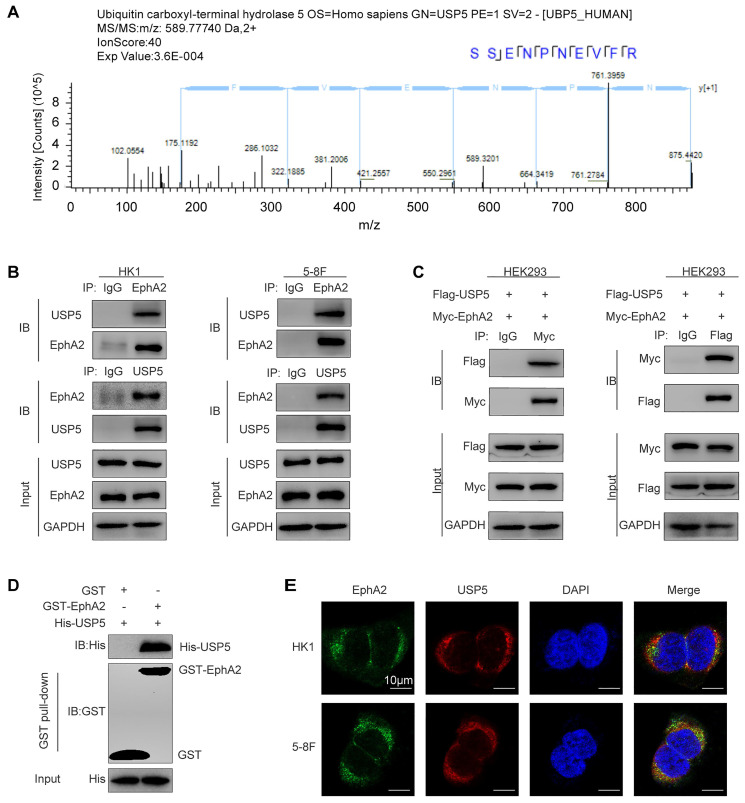
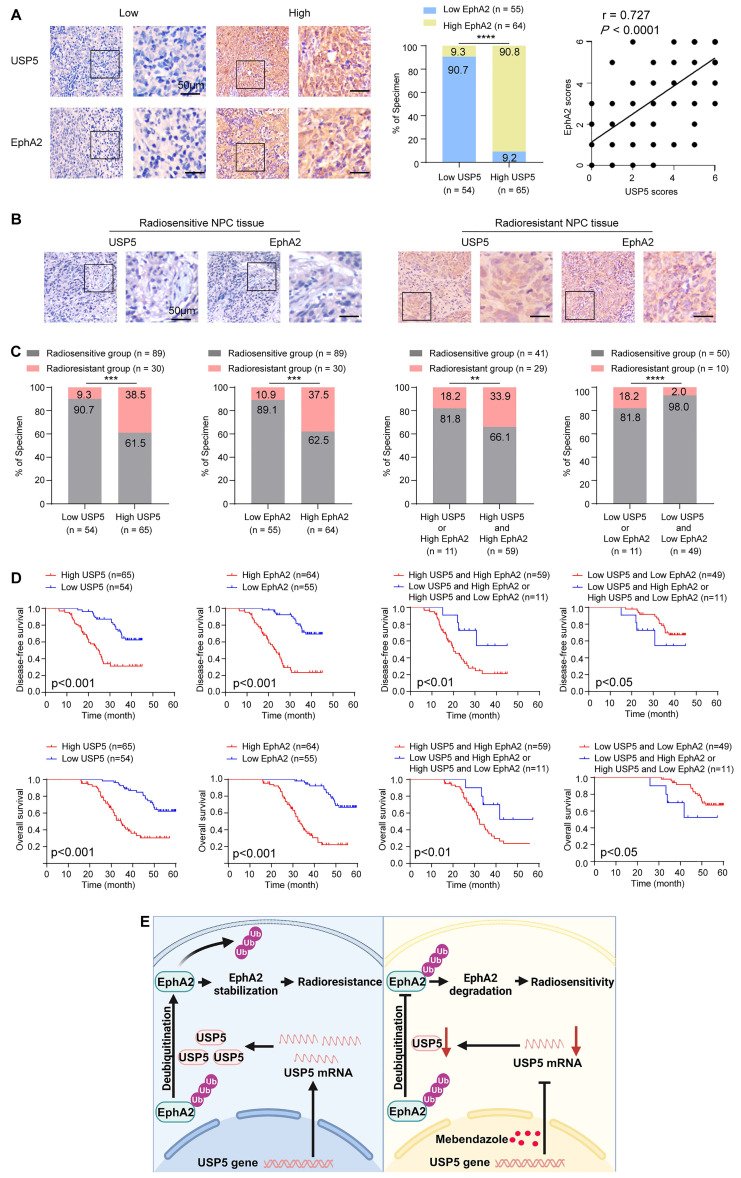
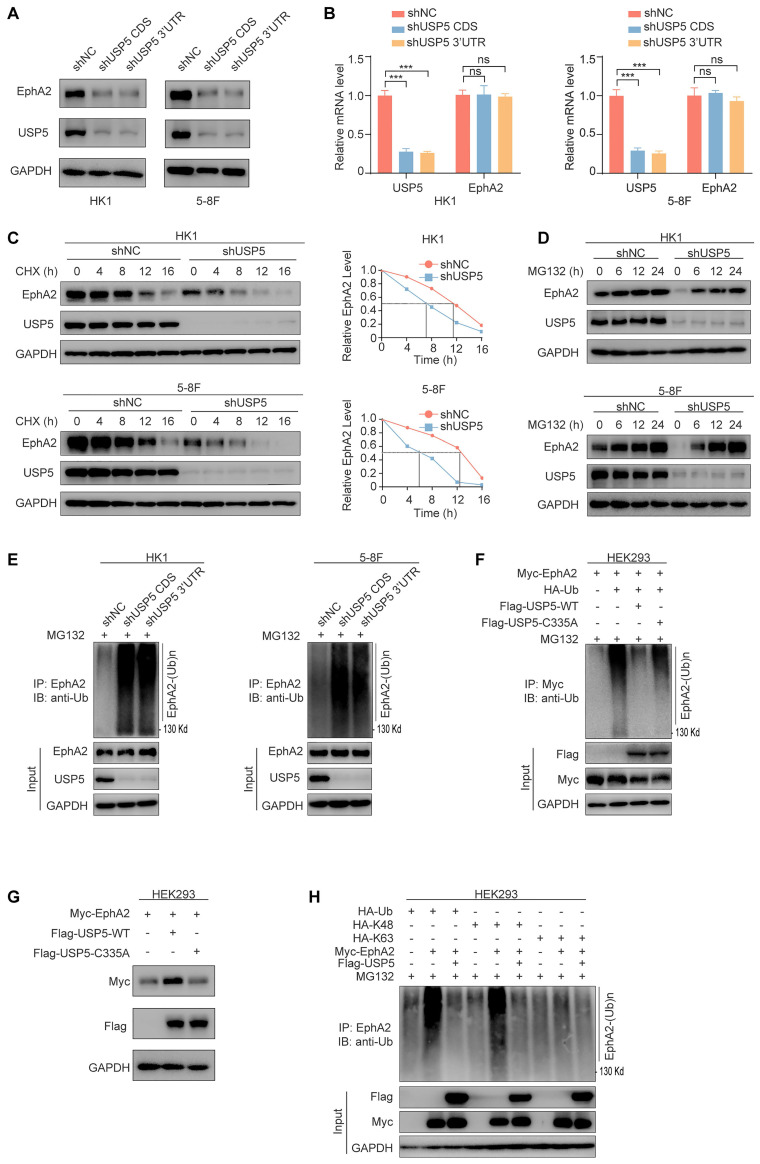
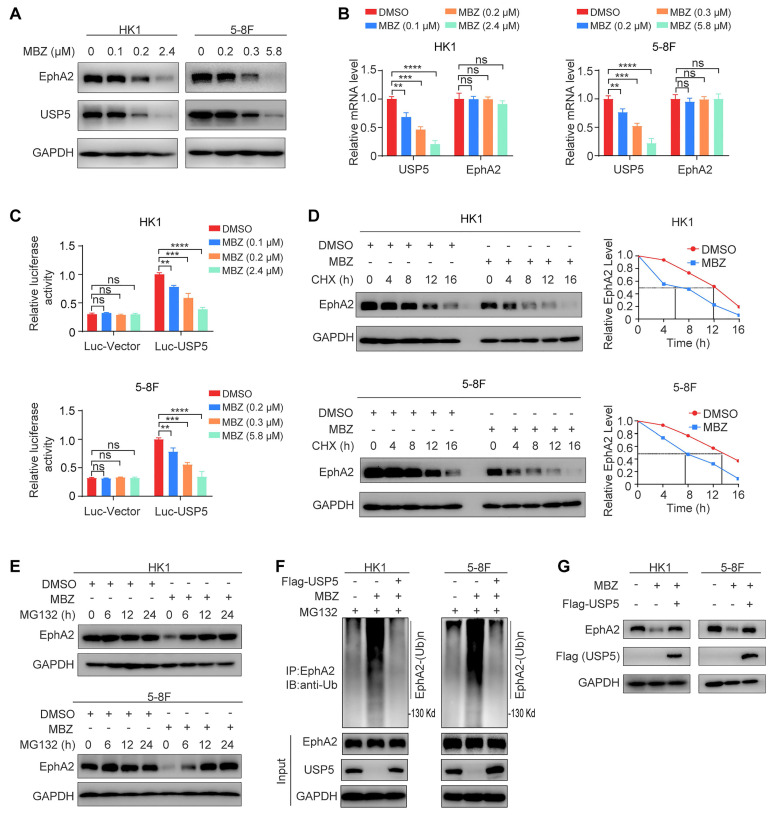
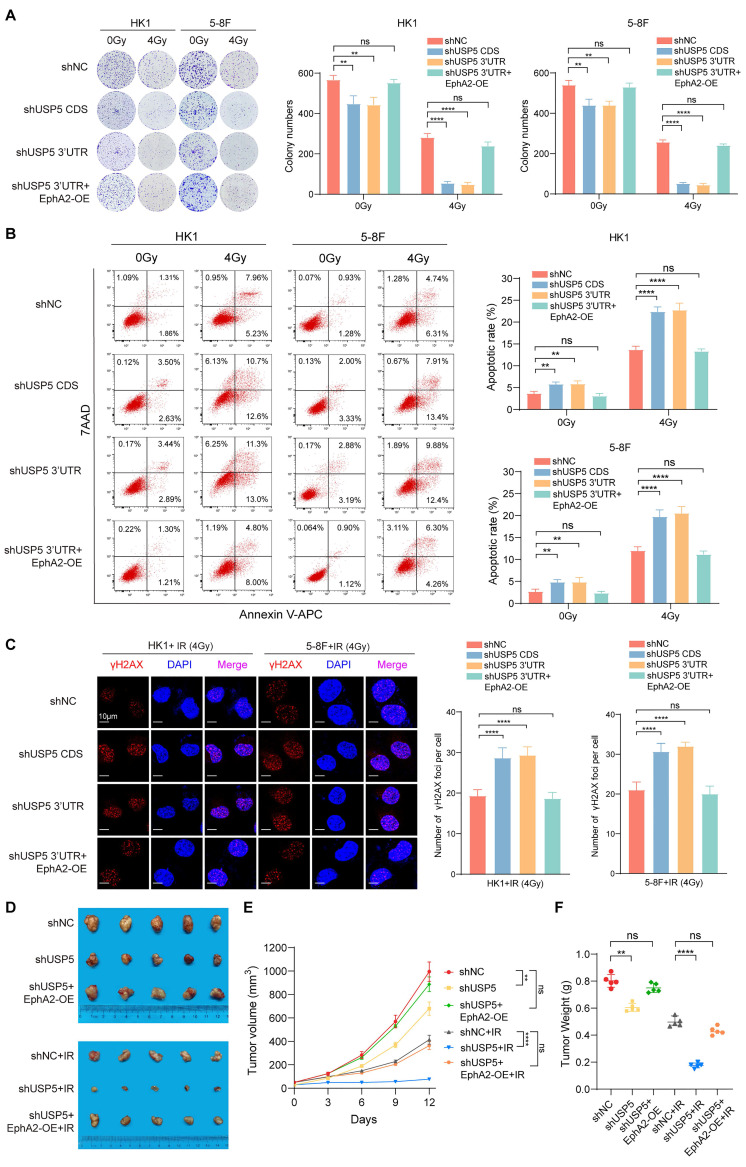
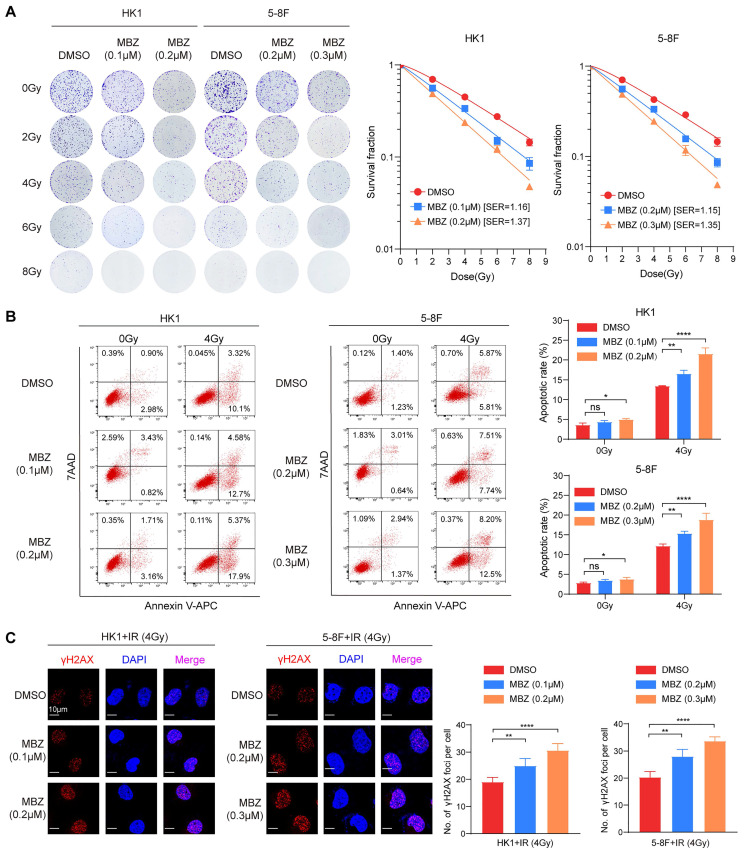
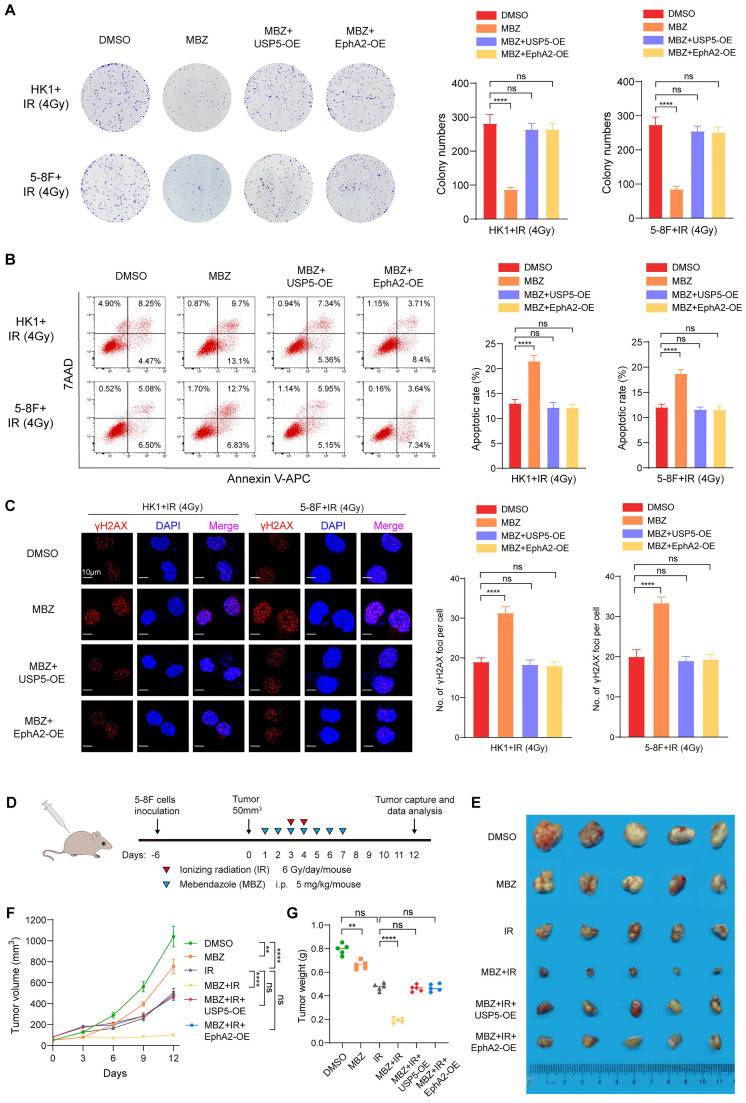
Radioresistance poses a major challenge in nasopharyngeal carcinoma (NPC) treatment. However, the underlying mechanism of NPC radioresistance remains poorly understood, and the promising radiosensitizer for NPC radiotherapy is also lacked. Overexpression of USP5 and EphA2 has been linked to various cancers, and both the proteins have attracted considerable attention for the development of new anti-cancer drugs. Here, we report that USP5 interacts with EphA2, and increases EphA2 protein stability and expression by ubiquitin proteasome pathway in the NPC cells. Mebendazole (MBZ), a broad-spectrum anthelmintic drug, transcriptionally inhibits USP5 expression, and then promotes EphA2 ubiquitination degradation in the NPC cells. Functionally, USP5 enhances and NPC cell radioresistance via stabilizing EphA2, and MBZ decreases and NPC cell radioresistance via targeting USP5/EphA2 axis. Moreover, the levels of USP5 and EphA2 are significantly higher in the radioresistant NPCs than those in the radiosensitive NPCs, and both proteins for predicting patient prognosis are superior to individual protein. These findings suggest that USP5 binds and stabilizes EphA2 by ubiquitin proteasome pathway to promote NPC radioresistance, and MBZ increases NPC radiosensitivity by targeting USP5/EphA2 axis, and is a potential radiosensitizer in NPC and perhaps in other cancers.
放射抗性是鼻咽癌(NPC)治疗中的一个主要挑战。然而,NPC放射抗性的潜在机制仍知之甚少,且缺乏有前景的NPC放疗增敏剂。USP5和EphA2的过表达与多种癌症相关,这两种蛋白在新型抗癌药物的研发中都备受关注。在此,我们报告USP5与EphA2相互作用,并通过泛素蛋白酶体途径增加NPC细胞中EphA2蛋白的稳定性和表达。甲苯达唑(MBZ),一种广谱驱虫药,转录抑制USP5表达,进而促进NPC细胞中EphA2的泛素化降解。在功能上,USP5通过稳定EphA2增强NPC细胞的放射抗性,而MBZ通过靶向USP5/EphA2轴降低NPC细胞的放射抗性。此外,放射抗性NPC中USP5和EphA2的水平显著高于放射敏感NPC,这两种蛋白用于预测患者预后均优于单个蛋白。这些发现表明,USP5通过泛素蛋白酶体途径结合并稳定EphA2以促进NPC放射抗性,而MBZ通过靶向USP5/EphA2轴增加NPC放射敏感性,是NPC乃至其他癌症潜在的放疗增敏剂。