Chugh Seema, Tien Jean C, Hon Jennifer, Kenum Carson, Mannan Rahul, Cheng Yunhui, Li Chi Chiang, Taher Zainab I, Delekta Andrew D, Bawa Pushpinder Singh, Apel Ingrid J, Miner Stephanie J, Cao Xuhong, Mehra Rohit, Dhanasekaran Saravana M, Qiao Yuanyuan, Mody Rajen, Chinnaiyan Arul M
Michigan Center for Translational Pathology, University of Michigan, Ann Arbor, MI 48109, USA; Department of Pathology, University of Michigan, Ann Arbor, MI 48109, USA.
Michigan Center for Translational Pathology, University of Michigan, Ann Arbor, MI 48109, USA; Department of Pediatrics, University of Michigan, Ann Arbor, MI 48109, USA.
Neoplasia. 2025 Feb;60:100964. doi: 10.1016/j.neo.2024.100964. Epub 2024 Jan 6.
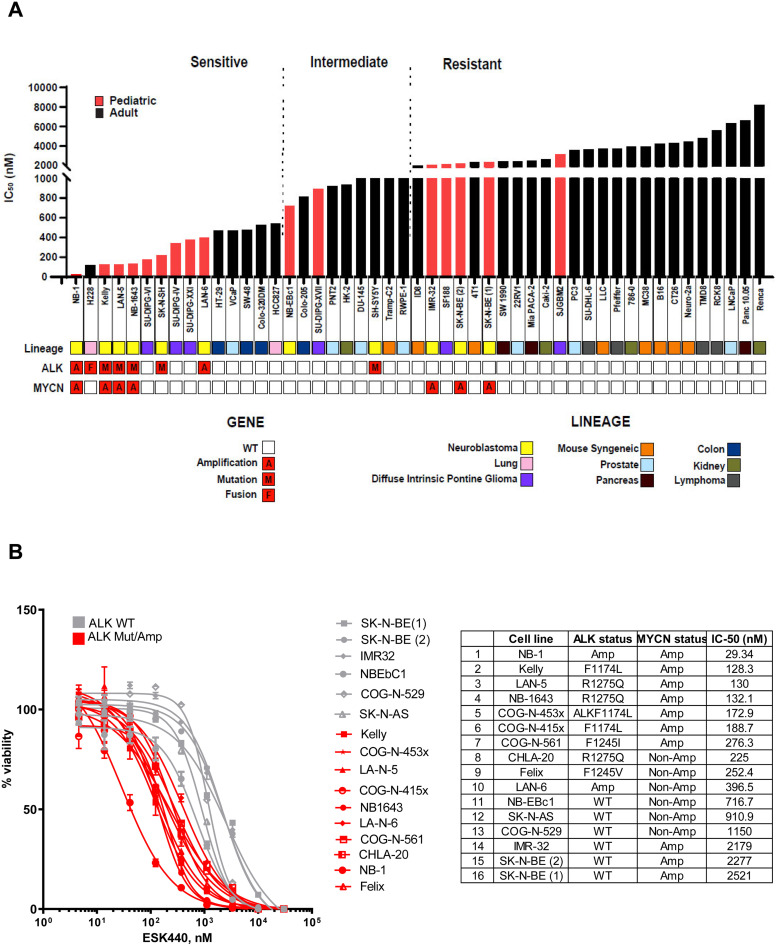
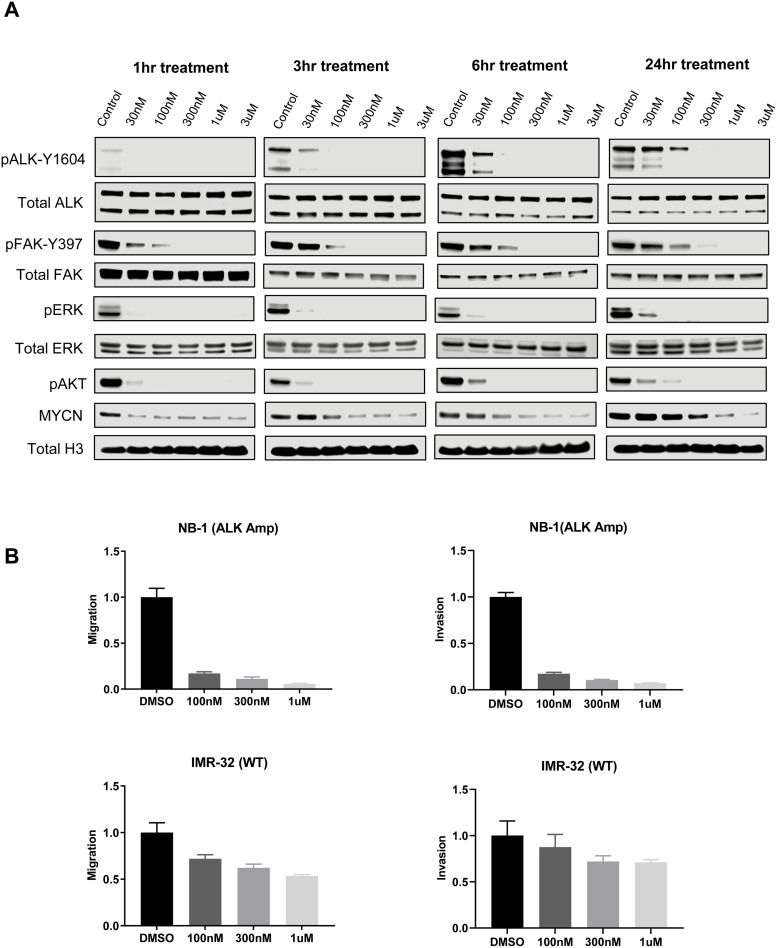
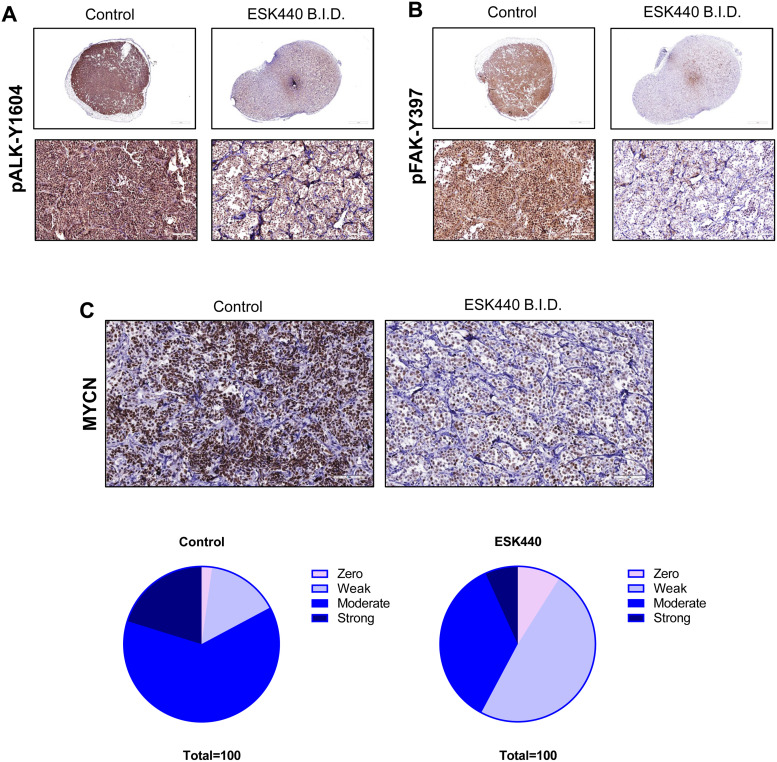
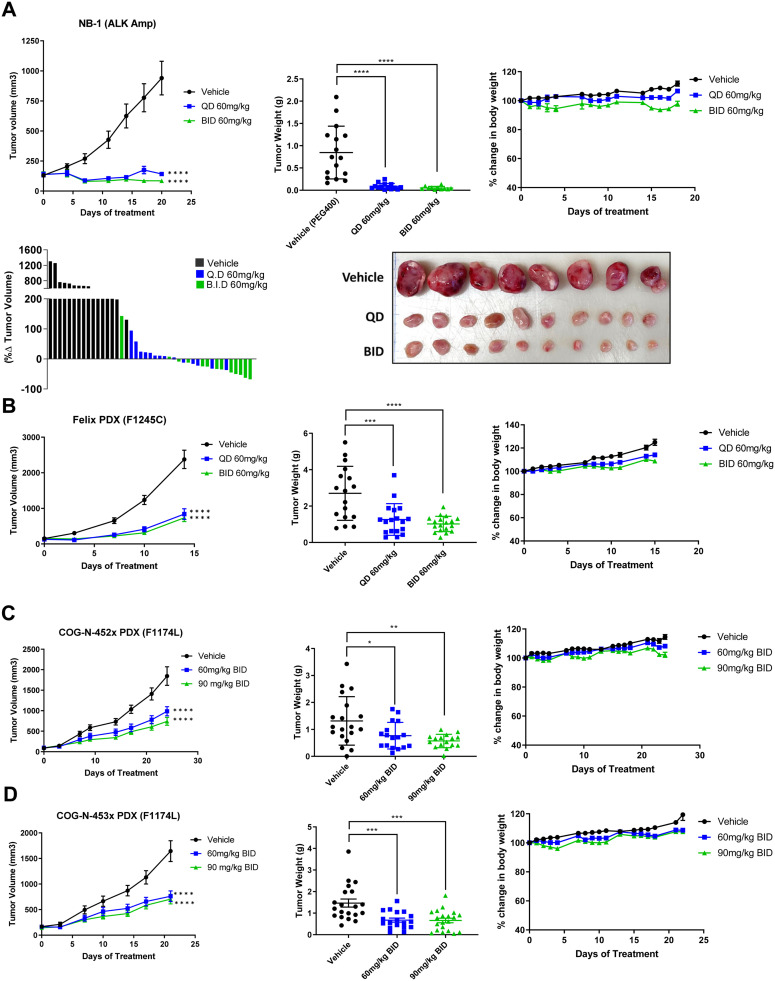
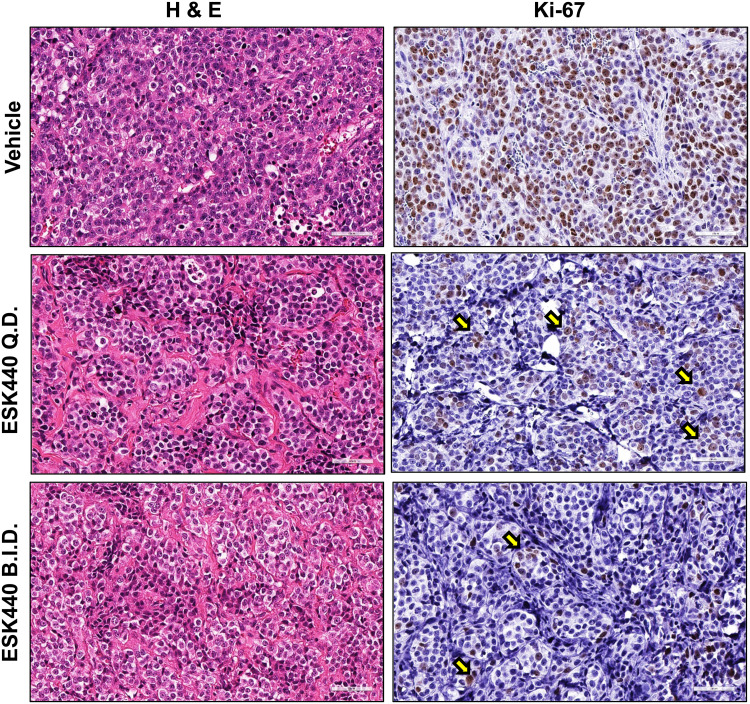
Neuroblastoma (NB) is a predominantly pediatric cancer with greater than 90% of cases arising in children under the age of five. More than half of patients have metastases detected at diagnosis, and high-risk disease is associated with five-year survival rates of only 50-60 %. Standard therapy involves highly toxic chemotherapy, surgery, radiation, and immunotherapy, and less toxic, more specific targeted therapies are urgently needed. Genomic studies have identified common driver aberrations in high-risk NB, such as MYCN amplification. In addition, a proportion of high-risk patients harbor amplification or activating mutations in anaplastic lymphoma kinase (ALK), and co-occurrence of ALK mutations and MYCN amplification have been associated with aggressive disease. In this study, we analyzed the efficacy of a Phase Ia-cleared, orally bioavailable dual ALK and focal adhesion kinase (FAK) inhibitor, ESK440, in multiple preclinical NB models. ESK440 potently inhibited proliferation of NB cell lines, with increased sensitivity in cell lines harboring ALK aberrations. ALK, FAK, and downstream target activation were rapidly decreased upon ESK440 treatment, and this was associated with impaired cellular migration and invasion. Importantly, ESK440 treatment also decreased MYCN levels. NB cell line and patient-derived xenograft studies showed significant reduction in tumor growth in ESK440-treated mice with no signs of toxicity. In certain NB models, ESK440 showed comparable or enhanced efficacy to lorlatinib, another clinical ALK inhibitor, and a lorlatinib-resistant cell line (COG-N-561 LR) retained sensitivity to ESK440. These preclinical results indicate that ESK440 is a promising targeted agent for ALK-driven NB and support future clinical studies to evaluate its efficacy in NB patients.
神经母细胞瘤(NB)是一种主要发生于儿童的癌症,超过90%的病例发生在5岁以下儿童。超过一半的患者在诊断时已发现有转移,高危疾病的五年生存率仅为50 - 60%。标准治疗包括高毒性化疗、手术、放疗和免疫疗法,因此迫切需要毒性更低、更具特异性的靶向疗法。基因组研究已确定高危NB中常见的驱动畸变,如MYCN扩增。此外,一部分高危患者存在间变性淋巴瘤激酶(ALK)的扩增或激活突变,ALK突变与MYCN扩增同时出现与侵袭性疾病有关。在本研究中,我们分析了一种已通过I期临床试验、口服生物利用度良好的双靶点ALK和黏着斑激酶(FAK)抑制剂ESK440在多个临床前NB模型中的疗效。ESK440能有效抑制NB细胞系的增殖,对存在ALK畸变的细胞系敏感性更高。ESK440处理后,ALK、FAK及下游靶点的激活迅速降低,这与细胞迁移和侵袭能力受损有关。重要的是,ESK440处理还降低了MYCN水平。NB细胞系和患者来源的异种移植研究表明,ESK440处理的小鼠肿瘤生长显著减少,且无毒性迹象。在某些NB模型中,ESK440显示出与另一种临床ALK抑制剂劳拉替尼相当或更强的疗效,并且一株劳拉替尼耐药细胞系(COG-N-561 LR)对ESK440仍保持敏感。这些临床前结果表明,ESK440是一种有前景的针对ALK驱动的NB的靶向药物,并支持未来的临床研究以评估其在NB患者中的疗效。